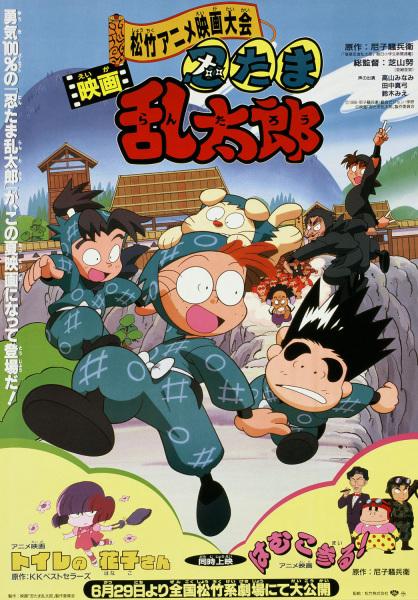
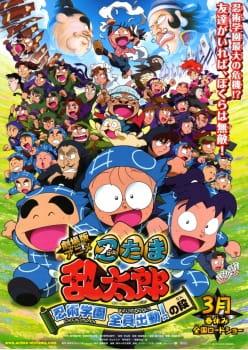
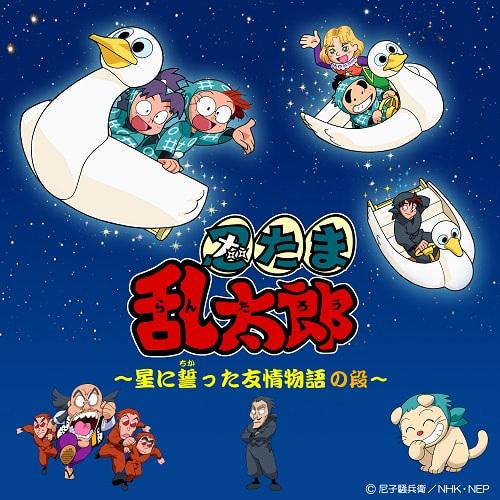
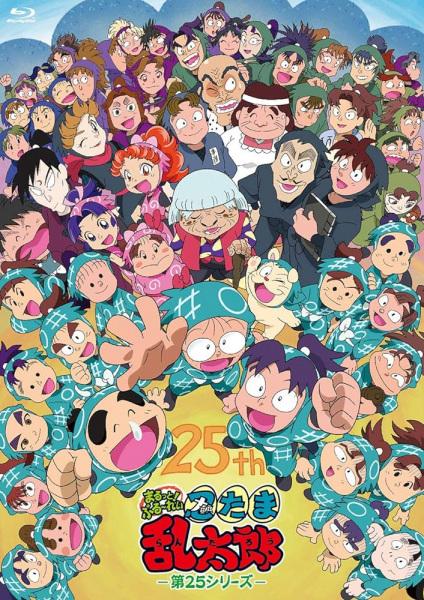
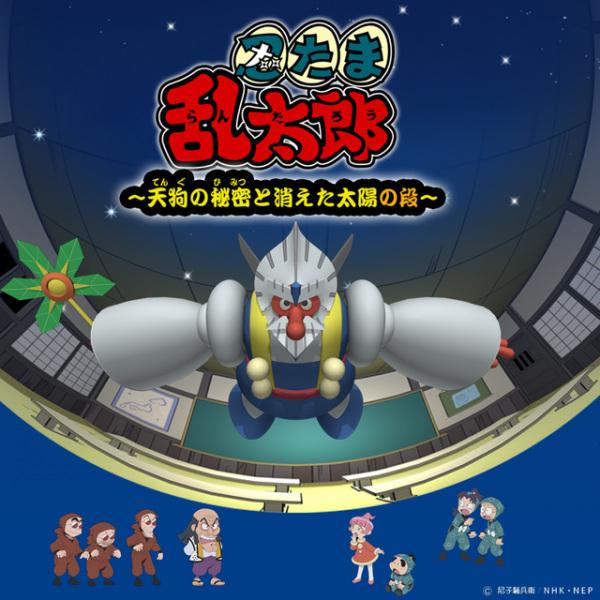
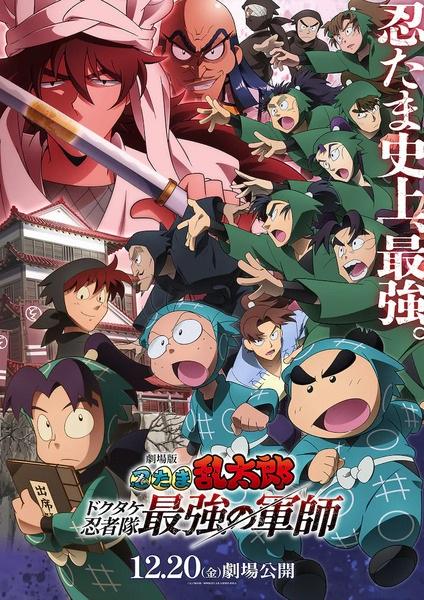
Ninjaboy Rantaro
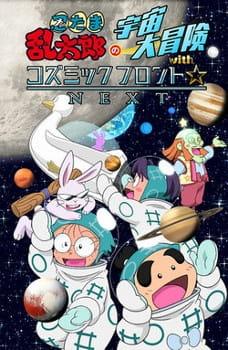
忍たま乱太郎 (Nintama Rantarou)
- Comedy
- Gag Humor
- Historical
- Martial Arts
- School
- Duration
- 10 min
- Aired
- Apr 10, 1993 to ?
- Status
- Currently Airing
Synopsis
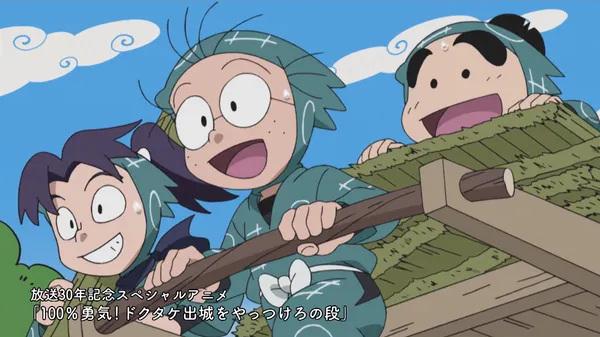
Set against the backdrop of Japan's Sengoku Period, Rantarou, Kirimaru, and Shinbei navigate their way through the whimsical challenges of Ninjutsu Academy, a school dedicated to training young aspiring ninjas. Known collectively as "Nintamas," this trio, along with their fellow students, embarks on a journey filled with laughter and mishaps as they strive to master an array of ninja skills. However, their path to becoming skilled ninjas is anything but straightforward, as they frequently find themselves grappling with the trials of their education.
Under the watchful eyes of strict instructors like Doi-sensei and Yamada-sensei, along with the antics of the spirited Kunoichi class and a motley crew of pirates, the academy's environment is brimming with unexpected twists and colorful characters. Each brief episode, lasting just over seven minutes, invites viewers into a lighthearted exploration of friendship, perseverance, and the humorous side of training to become a ninja. With 29 seasons featuring a remarkable range of episodes, the adventures of Rantarou and his friends promise endless entertainment.
Otaku Consensus
Ninjaboy Rantaro earns modest but durable approval, reflected in a 7.1 MAL score and 65/100 AniList score, because its seven-minute pacing, readable Ajia-do/Gakken TV craft, and long-preserved Soubee Amako gag formula make it more dependable than flashy. The recurring criticism is equally clear: its intentionally low-stakes, highly episodic structure can feel repetitive to viewers expecting modern shounen escalation or a binge-friendly narrative spine.
Why You Should Watch
Ninjaboy Rantaro is for viewers who want ninja comedy without tournament escalation, tragic lore, or power-system homework. Its seven-minute episodes are built like comic strips: a clean setup, one or two character turns, and a punchline before the gag overstays its welcome. The appeal is seeing a 1993 TV-anime rhythm endure across decades: Ajia-do and Gakken keep the staging readable, the voice cast sells tiny personality beats, and the Sengoku flavor is used for jokes rather than exposition. If Doraemon is your comfort-food template and Ninja Hattori-kun is the old-school comparison point, this scratches that same daily-watch itch with a bigger school ensemble. It works especially well as a palate cleanser between heavier shounen because it prizes timing, faces, and recurring comic chemistry over spectacle.
Key Characters
- RRantarou Inadera(VA: Minami Takayama)
Rantarou is the audience’s steady comic anchor, and Minami Takayama gives him a bright, alert delivery that keeps the chaos around him from becoming noise.
- KKirimaru Settsuno(VA: Mayumi Tanaka)
Kirimaru’s sharp, money-conscious practicality makes him the trio’s most pointed source of punchlines, especially with Mayumi Tanaka’s famously elastic comic timing.
- SShinbei Fukutomi(VA: Teiyuu Ichiryuusai)
Shinbei stands out as the soft-bodied, soft-spoken chaos generator whose slower reactions and physical comedy give the trio its gentler rhythm.
What Makes It Stand Out
- 1
The anime began airing on Apr 10, 1993 and is still listed as currently airing, making it less a conventional seasonal title than a long-running fixture of Japanese children’s television.
- 2
Each episode runs just over seven minutes, a structural choice that pushes the comedy toward setup-payoff efficiency rather than the padding or recap rhythms common to longer TV anime episodes.
- 3
Ajia-do and Gakken’s production approach favors clean silhouettes, broad expressions, and easy-to-read staging, which suits a gag series built around reaction timing rather than action spectacle.
- 4
The staff list includes Tomomi Mochizuki across script, episode direction, and storyboard, Kiyoko Sayama on episode direction and storyboard, and Akitarou Daichi on storyboard, giving the series a comedy-first production identity at the episode level.
- 5
Although AniList tags it strongly as Ninja and partially as Shounen, the database genre is simply Comedy, which accurately signals that its appeal is schoolyard gag mechanics rather than combat progression.
Fun Facts & Trivia
- Fun fact 1
- The title Nintama is a Japanese portmanteau combining ninja with tamago, meaning egg, a compact way of labeling the characters as apprentice or fledgling ninjas.
- Fun fact 2
- Soubee Amako is credited as the original creator, while Masaya Fujimori handled character design for the anime adaptation’s long-running TV look.
- Fun fact 3
- The three leads are voiced by major veteran performers: Minami Takayama is widely known for Conan Edogawa in Detective Conan, and Mayumi Tanaka is widely known for Monkey D. Luffy in One Piece and Krillin in Dragon Ball.
- Fun fact 4
- Hey! Say! JUMP is credited with theme song performance, connecting the series’ later TV presence to a mainstream Japanese idol group rather than only in-house anime music talent.
- Fun fact 5
- Its international database footprint is unusually small for such a long-running title: MAL lists only 2,686 votes and popularity rank #7744, while AniList records 37 favourites.
Studios
- Ajia-do
- Gakken
No community data yet. Be the first to add Ninjaboy Rantaro to your list!