Code Geass: Lelouch of the Rebellion - Nunnally in Wonderland
コードギアス 反逆のルルーシュ ナナリーinワンダーランド (Code Geass: Hangyaku no Lelouch - Nunnally in Wonderland)
- Comedy
- Fantasy
- Parody
- Episodes
- 1
- Duration
- 28 min
- Aired
- Jul 27, 2012
- Status
- Finished Airing
Synopsis
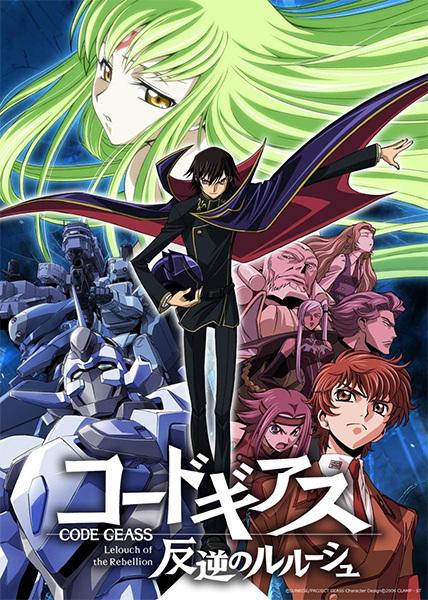
On a clear, quiet afternoon, Nunnally and Lelouch Lamperouge rest beneath a tree. When she asks for a story, Lelouch—ever determined to do everything he can for his sister—puts his Geass to unusual use, pushing past ordinary limits to craft the most captivating tale possible.
Nunnally soon finds herself waking up alone, her sight mysteriously restored, and catches a glimpse of a peculiar rabbit that looks like Anya Alstreim, the Knight of Six. Chasing after it sends her tumbling down a hole and into a vivid wonderland. With Lelouch narrating, Nunnally wanders through this playful, fantastical world in search of a way home, encountering a host of familiar faces along the way.
Otaku Consensus
Nunnally in Wonderland is received as a niche Code Geass curiosity rather than a major franchise pillar: its 6.46 MAL score and 61/100 AniList score match the sense that fans value it most as a playful Nunnally-focused extra. Makoto Baba’s brisk storybook direction and the Alice-inspired parody framing work best when they bend serious Code Geass iconography into absurd comedy, while the common criticism is that the one-episode format leaves it feeling slight, insular, and rewarding mainly to viewers already attached to the cast.
Why You Should Watch
Watch this if you want Code Geass’s imperial melodrama defanged into a cheeky storybook experiment rather than another round of war-room strategy. Nunnally in Wonderland scratches the same itch as Carnival Phantasm or the lighter corners of Isekai Quartet: recognizable serious characters pushed through a parody format where the joke is how far the franchise’s iconography can bend without breaking. The real hook is Nunnally as the emotional center, a perspective the main series often protects more than explores, with Lelouch’s controlling devotion turned into a comic engine. At one episode, it is best treated as a premium extra: brisk, cast-aware, and intentionally nonessential. If you want CLAMP-derived designs, Sunrise production, and Alice-style absurdity without the tactical grimness, this is the Code Geass palate cleanser.
Key Characters
- NNunnally
Nunnally is the OVA’s emotional anchor, giving a character usually framed through Lelouch’s protectiveness a rare chance to carry the fantasy-comedy perspective herself.
- LLelouch Lamperouge
Lelouch becomes funny here because the same obsessive devotion and theatrical control that define him in Code Geass are redirected into a deliberately low-stakes act of imagination.
- AAnya Alstreim
Anya stands out as a knowingly odd choice for the rabbit role, turning a Knight of Six into one of the OVA’s clearest signals that this is parody-first alternate-universe play.
What Makes It Stand Out
- 1
Sunrise produced it as a single finished OVA episode released on July 27, 2012, which makes its pacing closer to a concentrated bonus feature than a conventional side story.
- 2
The production keeps the Code Geass visual identity intact through CLAMP’s original character design foundation and Takahiro Kimura’s character design work, rather than redesigning the cast into a completely separate fairy-tale style.
- 3
Makoto Baba is credited as both director and storyboard artist, giving the episode a tightly controlled storybook structure instead of the multi-director texture common in longer TV runs.
- 4
The music credits pair Hitomi with Koutarou Nakagawa, while Yasuo Urakami serves as sound director, an unusually robust sound staff listing for a short comedy-fantasy parody.
- 5
AniList’s tag spread captures its hybrid identity with unusually high Parody weighting at 96%, alongside Fairy Tale at 70%, Alternate Universe at 65%, and Classic Literature at 60%.
Fun Facts & Trivia
- Fun fact 1
- Yuuichi Nomura wrote the script, while Makoto Baba handled both direction and storyboard, making the episode’s gag timing and structure unusually centralized.
- Fun fact 2
- Takahiro Kimura has three major credits on the project in the provided staff data: character design, animation direction, and the responsibility of translating CLAMP’s original character designs into the OVA’s look.
- Fun fact 3
- Sayaka Ono is listed among the key animation staff, a reminder that even this one-off parody was built through standard hand-drawn anime production roles rather than treated as a purely disposable extra.
- Fun fact 4
- Its audience footprint is bigger than its reputation suggests: MAL lists 38,004 votes with a popularity rank of #2883, while AniList records 74 favourites.
- Fun fact 5
- The OVA’s comedy-fantasy identity is not just fan labeling; the database genre and tag data consistently classify it as Comedy, Fantasy, Parody, Fairy Tale, Alternate Universe, and Classic Literature.
Studios
- Sunrise