Fairy Tail Final Series
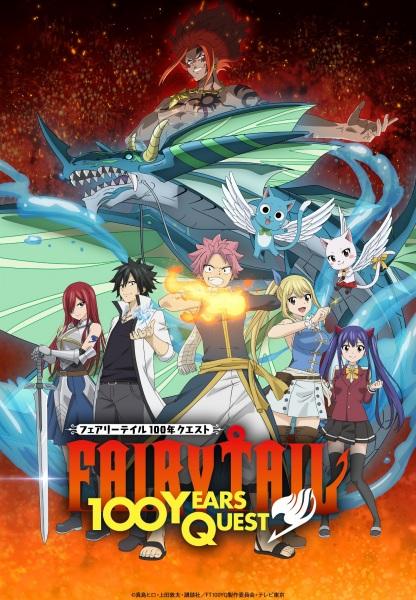
FAIRY TAIL ファイナルシリーズ (Fairy Tail: Final Series)
- Action
- Adventure
- Fantasy
- Super Power
- Episodes
- 51
- Duration
- 23 min per ep
- Aired
- Oct 7, 2018 to Sep 29, 2019
- Status
- Finished Airing
Synopsis
With Fairy Tail dissolved and its wizards scattered throughout Fiore, Natsu Dragneel refuses to let the guild’s story end. Determined to bring everyone back together, he sets out alongside Happy and Lucy Heartfilia to rekindle the home they once shared.
Their efforts are tested by the gravest threat yet: Fiore faces an invasion from the Alvarez Empire, whose vast forces march under the command of a ruler the guild knows all too well. As the conflict closes in, the spirit of Fairy Tail is pushed to its limits.
Otaku Consensus
Fairy Tail Final Series lands as character-driven closure rather than prestige adaptation: Shinji Ishihira and Masashi Sogo keep the 51-episode run moving with familiar guild chemistry, large-scale magic battles, and the emotional payoff long-term viewers came for. The recurring criticism is adaptation quality, especially static or low-effort animation that readers felt failed to match Hiro Mashima’s improving late-manga art, leaving the season respected more as a completion piece than as a standout shounen production.
Why You Should Watch
Watch this if you want the endgame energy of a long-running shounen without the grim fatalism of darker fantasy. Fairy Tail Final Series scratches the same itch as Naruto Shippuden’s war-arc roll call and One Piece’s found-family sentiment, but with a heavier emphasis on magic systems, dragons, demons, gods, and loud emotional reversals. Its appeal is not surgical plotting or cutting-edge sakuga; it is the accumulated charge of seeing a huge cast pay off years of rivalries, running jokes, bonds, and power-ups. Viewers who value character affection over tactical realism will get the most from it, while animation purists should know the adaptation’s production limits are part of its reputation.
Key Characters
- NNatsu Dragneel
Natsu remains the series’ emotional accelerant, the kind of shounen lead fans discuss less for strategy than for how completely he embodies Fairy Tail’s reckless loyalty.
- LLucy Heartfilia
Lucy functions as the audience’s long-term anchor, balancing comic vulnerability, magical versatility, and the female-protagonist prominence reflected in AniList’s 91% tag.
- HHappy
Happy gives the final season its familiar comic timing, turning even the franchise’s largest-scale conflicts back toward the banter that made the guild feel lived-in.
What Makes It Stand Out
- 1
The production is credited to A-1 Pictures, Bridge, and CloverWorks, making the final season a three-studio handoff rather than a single-house finale. That credit is part of why discussions around the season often focus on adaptation consistency as much as story payoff.
- 2
The season ran for 51 episodes from October 7, 2018 to September 29, 2019, giving the ending a full year on air rather than a short epilogue cour. For a shounen finale, that structure lets the cast-heavy material breathe across an extended broadcast window.
- 3
Shinji Ishihira directed the series with Masashi Sogo on series composition, keeping the final run under staff roles associated with continuity and long-form organization. The result is built around completion and momentum rather than reinvention.
- 4
AniList’s tag spread shows how crowded the season’s fantasy vocabulary is: Magic and Shounen both sit at 97%, Dragons at 80%, Demons at 68%, Gods at 48%, and Super Power at 76%. MAL lists no formal theme category, which undersells how much mythology and guild-family material the finale is juggling.
- 5
Its reception profile is unusually split: a 7.62 MAL score from 278,197 votes and popularity rank #447 point to a large, engaged audience, while critic and fan commentary repeatedly targets the animation and adaptation quality. That gap explains why the season is widely watched but not universally defended.
Fun Facts & Trivia
- Fun fact 1
- Hiro Mashima is credited as original creator, while Shinji Takeuchi and Akihiko Sano are both credited for character design, giving the finale a defined split between source authorship and anime visual adaptation.
- Fun fact 2
- The final season’s visual pipeline lists Masaaki Kawaguchi as art director, Ken Kawai on art design, Yoshimi Kawakami on color design, Atsushi Iwasaki as director of photography, and Toshio Henmi on editing. Those credits map the season’s look across background, color, compositing, and pacing rather than only studio branding.
- Fun fact 3
- AniList records the season at 75/100 with 4,444 favourites, close in spirit to MAL’s 7.62/10 average: both databases show approval from committed viewers without the profile of a consensus masterpiece.
- Fun fact 4
- The AniList demographic tags skew broader than the usual teen-battle label: Female Protagonist is 91%, Male Protagonist is 83%, Primarily Adult Cast is 60%, and Primarily Teen Cast is only 20%. That helps explain why the finale feels more like an ensemble sendoff than a single-hero tournament structure.
- Fun fact 5
- The season finished airing on September 29, 2019, almost exactly one year after its October 7, 2018 premiere, closing the TV run with a rare near-yearlong final installment for a modern action-fantasy shounen.
Studios
- A-1 Pictures
- Bridge
- CloverWorks