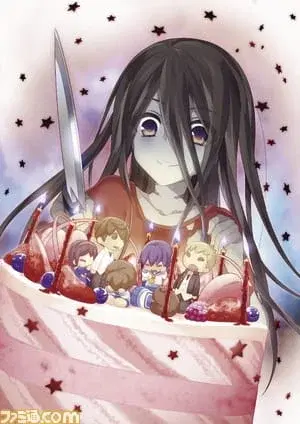
Elfen Lied: In the Passing Rain, or, How Can a Girl Have Reached Such Feelings?
エルフェンリート 通り雨にて 或いは、少女はいかにしてその心情に至ったか?(REGENSCHAUER) (Elfen Lied: Tooriame nite Arui wa, Shoujo wa Ikani Shite Sono Shinjou ni Itatta ka? - Regenschauer)
- Drama
- Horror
- Suspense
- Gore
- Psychological
- Super Power
- Episodes
- 1
- Duration
- 25 min
- Aired
- Apr 21, 2005
- Status
- Finished Airing
Synopsis
Taken in at the Kaede Inn, Nana tries to make herself useful, only to find her efforts often causing more problems than help. Her real unease centers on Nyu—whom she once knew as Lucy, the brutally violent Diclonius. Still marked by the trauma of Lucy’s past cruelty, Nana fears that the same savagery could resurface and endanger the people she’s begun to care about.
Caught between the fragile peace of living together and the temptation to eliminate what she sees as a looming threat, Nana wrestles with a choice that could destroy the bonds forming at the inn. As her resolve wavers, Nyu drifts into a painful recollection involving someone who was both a cherished friend and a formidable rival.
Otaku Consensus
In the Passing Rain works best as a placement-sensitive interlude: Mamoru Kanbe’s direction and storyboard use a single-episode runtime to soften Elfen Lied’s shock-horror rhythm without draining its psychological threat. Critics and fans tend to value the Nana-focused domestic comedy, the added character texture, and the way the OVA bridges the anime between episodes ten and eleven; the recurring complaint is that the bathhouse-style fanservice sits awkwardly beside the trauma material.
Why You Should Watch
Watch this if you wanted Elfen Lied to spend more time on the emotional fallout of living after violence, not simply on the next escalation of gore. The OVA scratches the same uneasy itch as Higurashi’s cute-to-cruel tonal whiplash and Parasyte’s identity anxiety, but in a compact side chapter built around household rhythms, resentment, and dread. Its value is timing: placed between episodes ten and eleven, it adds breathing room before the finale stretch and gives Nana a sharper comic and psychological register than the main series always had time for. Mamoru Kanbe’s storyboard keeps the episode brisk, while MOKA’s music and the familiar “Lilium” lineage keep it unmistakably tied to the anime’s mournful atmosphere. Skip it only if you want pure plot resolution; watch it for character residue.
Key Characters
- NNana(VA: Yuki Matsuoka)
Nana is the OVA’s emotional engine, turning household competence into a desperate bid for belonging while letting Yuki Matsuoka play both wounded sincerity and petty comic frustration.
- LLucy(VA: Sanae Kobayashi)
Lucy remains compelling because the episode can make her silence, gentleness, or absence of menace feel as tense as an action scene.
- KKouta(VA: Chihiro Suzuki)
Kouta functions as the domestic anchor whose ordinary kindness makes the series’ super-powered violence feel more socially and emotionally invasive.
- KKurama(VA: Osamu Hosoi)
Kurama’s presence keeps the institutional horror of Elfen Lied close to the surface, giving even a quieter OVA a reminder of the forces outside the inn.
What Makes It Stand Out
- 1
The OVA is structurally unusual for Elfen Lied: it was released after the TV ending but is set between episodes ten and eleven, making it less an epilogue than a missing pressure valve in the series’ pacing.
- 2
Mamoru Kanbe handled both episode direction and storyboard, which helps the special keep the TV series’ tonal grammar while shifting into more domestic comedy than the main run usually allowed.
- 3
Arms’ production keeps the focus on character acting and confined-space tension rather than spectacle, using the Kaede Inn environment as a stage for discomfort, jealousy, and uneasy routine.
- 4
MOKA’s involvement in music and opening-theme lyrics ties the OVA back to the series’ signature elegiac sound, with Kumiko Noma and Chieko Ochi credited for theme-song performances.
- 5
The episode’s reputation is tied to its Nana-and-Nyu homelife material: fans often single it out as a lighter, more emotionally balanced detour, while critics flag the same stretch for fanservice that clashes with the cast’s trauma.
Fun Facts & Trivia
- Fun fact 1
- Its full Japanese title, Elfen Lied: Tooriame nite Arui wa, Shoujo wa Ikani Shite Sono Shinjou ni Itatta ka?, is famously long; the German subtitle “Regenschauer” translates to “rain shower” or “rainstorm.”
- Fun fact 2
- Although it aired on April 21, 2005 after the TV series had already concluded, the episode’s story placement is between episodes ten and eleven.
- Fun fact 3
- The OVA was not included on some earlier DVD releases up to 2012, but it later became part of the Japanese and North American Blu-ray releases with an English dub.
- Fun fact 4
- Takao Yoshioka wrote the screenplay, while Seiji Kishimoto served as animation director, keeping key creative roles connected to the anime’s established production style.
- Fun fact 5
- The English-language version credits Jin-Ho Jeong as ADR director, a detail especially relevant because the OVA’s later Blu-ray availability gave English-dub viewers access to a chapter that had once been easier to miss.
Studios
- Arms