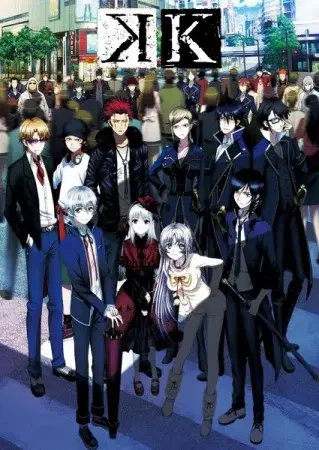
Scar on the Praeter
PROJECT SCARD プレイタの傷 (Project Scard: Praeter no Kizu)
- Action
- Super Power
- Episodes
- 13
- Duration
- 23 min per ep
- Aired
- Jan 9, 2021 to Apr 3, 2021
- Status
- Finished Airing
Synopsis
The Akatsuki Special Ward has become a war zone, squeezed by foreign organizations and ruled by greed and brutality while ordinary residents are left to suffer. From the turmoil rise the Scard—vigilantes empowered by divine tattoos that grant supernatural abilities. Eiji Arashiba, known as the Hero of Akatsuki, stands at the front lines, defending the district from oppressive outsiders.
During a clash with the mafia syndicate Dusk, Eiji fights alongside Yamato Kai, a boy he has only recently met. When a sniper’s shot is aimed at Eiji, Yamato throws himself in the way; the bullet still hits his tattoo, leaving him gravely wounded. To keep Yamato alive, Eiji transfers the tattoo to him, placing the ward’s protection in Yamato’s hands at great personal cost.
With the Special Ward continuing to fracture under escalating conflict, Yamato must learn to wield his new Scard power—either to safeguard the people he cares about, or risk falling short of the legacy Eiji leaves behind.
Otaku Consensus
Scar on the Praeter lands as a cult-curiosity rather than a hidden gem: GoHands' glossy direction, Shingo Suzuki's character designs, Conisch's score, and the Akatsuki Special Ward's crime-war setup are the elements viewers most often single out as salvageable. The common verdict is harsher on execution, with exposition-heavy writing, thin character engagement, and uneven pacing dragging its visual identity below its potential, reflected in its low MAL score of 5.93 and AniList score of 52/100.
Why You Should Watch
Scar on the Praeter is for viewers who want GoHands at its most unapologetically glossy: pretty male fighters, urban gunplay, divine-tattoo power clashes, CG-heavy camera movement, and a dystopian-crime texture delivered in 13 quick episodes. It scratches the same visual itch as K more than the narrative itch of a tightly plotted action thriller: the appeal is seeing color-coded factions, designer outfits, and stylized violence collide over Conisch's music. If you want a compact, all-style superpower show without tournament structures, school-life padding, or long franchise homework, it has a very specific late-night-anime flavor. If you need character depth or clean worldbuilding delivery, its reputation for exposition dumps and undercooked drama is the warning label.
Key Characters
- EEiji Arashiba
Eiji is the series' emblematic heroic figure, remembered less as a conventional lead than as the standard against which the show's vigilante mythology measures everyone else.
- YYamato Kai
Yamato gives the anime its legacy-pressure angle, functioning as the inexperienced inheritor whose appeal depends on watching power, responsibility, and loyalty collide.
What Makes It Stand Out
- 1
GoHands handled the series, and its house style is immediately visible in the slick digital compositing, CG-heavy motion, and polished character presentation that viewers either find stylish or distracting.
- 2
Shingo Suzuki served as both director and original character designer, giving the anime an unusually unified visual authorship from character silhouettes to overall screen direction.
- 3
The show is structurally compact at 13 episodes, airing from January 9 to April 3, 2021, which makes it a short-form action title rather than a long-running franchise commitment.
- 4
AniList tags the series with a primarily male cast at 83% and ensemble cast at 75%, signaling that its appeal is built around faction-style group dynamics more than a single-protagonist adventure.
- 5
Its reception is notably polarized around aesthetics versus writing: positive comments point to character design, music, action presentation, and bits of philosophy, while negative reactions focus on unengaging storytelling and heavy exposition.
Fun Facts & Trivia
- Fun fact 1
- The production credits list Shingo Suzuki twice in major roles: director and original character designer, making him central to both the anime's look and its screen language.
- Fun fact 2
- Hiroshi Ookubo is credited as both mechanical designer and main animator, while Takayuki Uchida is also listed as a main animator, highlighting how much of the show's identity is tied to visual craft rather than writing reputation.
- Fun fact 3
- Conisch composed the music, and the soundtrack is one of the few elements that even more favorable viewer comments consistently mention alongside the character designs and action aesthetics.
- Fun fact 4
- The anime's technical staff includes Ken Naitou as art director, Shinnosuke Takesada as director of photography, and Hisashi Muramatsu as sound director, which helps explain why discussion of the show often centers on its look and audiovisual finish.
- Fun fact 5
- Despite ranking outside MAL's higher-rated tier at #10864, it still reached a measurable niche audience with 8,934 MAL votes and 109 AniList favourites, giving it the profile of a divisive style-first action title rather than an unseen failure.
Studios
- GoHands