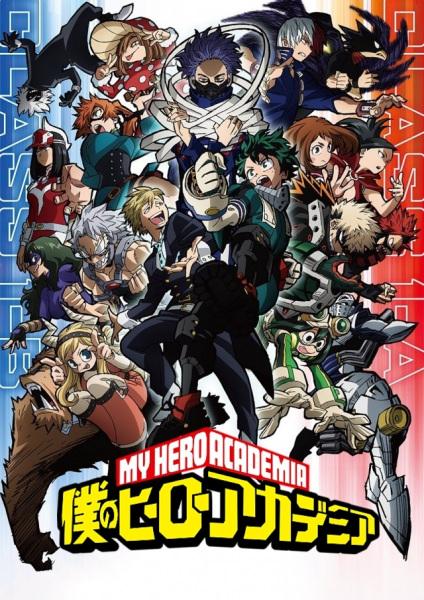
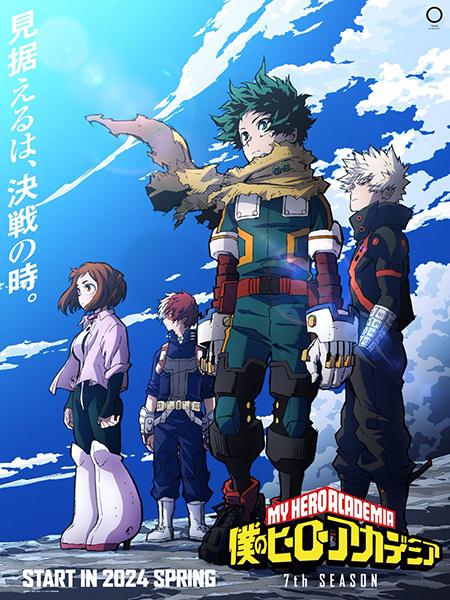
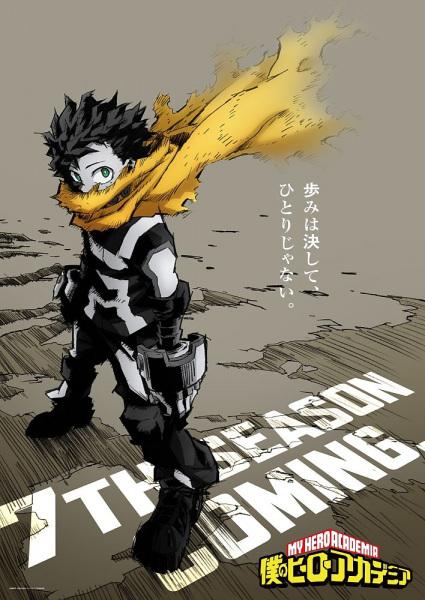
My Hero Academia Season 6
僕のヒーローアカデミア (Boku no Hero Academia 6th Season)
- Action
- School
- Super Power
- Episodes
- 25
- Duration
- 23 min per ep
- Aired
- Oct 1, 2022 to Mar 25, 2023
- Status
- Finished Airing
Synopsis
Under Tomura Shigaraki’s banner, the former Liberation Army has reorganized into the Paranormal Liberation Front, an immense criminal force that threatens the Hero Association with both its numbers and its power. The danger is amplified by the formidable quirks of Jin “Twice” Bubaigawara and the overwhelming presence of Gigantomachia.
With covert hero Keigo “Hawks” Takami providing intelligence that Shigaraki cannot be located, the Hero Association opts for a decisive preemptive move: a surprise raid on the enemy’s headquarters using all available resources. The operation pulls U.A. students back into real combat, where a chaotic clash erupts—villains scrambling to rally and resist, and heroes pressing forward with the resolve to wipe the Front out completely.
Otaku Consensus
Season 6 is the point where My Hero Academia’s long-form shounen architecture pays off: Bones, Masahiro Mukai, and series composer Yousuke Kuroda turn years of character setup into the franchise’s most sustained run of high-stakes action and emotional fallout. Critics and fans consistently single it out as one of the series’ strongest seasons, with praise centered on the Paranormal Liberation War material, the darker tonal shift, and the way ensemble characters finally feel consequential. The main reservation is that the TV animation is not uniformly as lavish as the scale demands, with some viewers finding the visual polish uneven between the biggest set pieces.
Why You Should Watch
Watch Season 6 if you want superhero anime that stops treating “society of heroes” as background flavor and starts interrogating the cost of that system under pressure. It scratches the same itch as the best escalation arcs in Naruto Shippuden or Hunter x Hunter: large-scale conflict, shifting loyalties, and characters forced to act on beliefs they have been carrying for seasons. This is especially rewarding for viewers who prefer ensemble payoffs over tournament-style resets; Hawks, Shigaraki, Twice, and the student heroes all gain sharper dramatic weight. If earlier My Hero Academia seasons felt too school-bound for you, this season is the pivot into urban disaster, conspiracy, public mistrust, and genuine consequences without abandoning the series’ superpower spectacle.
Key Characters
- TTomura Shigaraki
Shigaraki becomes compelling here because the season treats him less as a chaotic villain mascot and more as the terrifying center of a movement with ideology, resources, and momentum.
- JJin Bubaigawara
Twice is the character fans often point to when praising Season 6’s emotional impact, because his absurd power set is tied directly to vulnerability, loyalty, and self-worth.
- KKeigo Takami
Hawks stands out as the season’s most morally tense professional hero, operating in the gray zone between public symbol, covert operative, and compromised human being.
- GGigantomachia
Gigantomachia functions as a walking stress test for the series’ hero society, turning battlefield strategy into a question of whether overwhelming force can be managed at all.
What Makes It Stand Out
- 1
Season 6 runs for 25 episodes from October 2022 to March 2023, giving Bones a full two-cour structure to stage both the initial war escalation and its social aftermath rather than ending on a simple battle climax.
- 2
The adaptation is widely identified by reviewers as the franchise’s darkest and most emotionally punishing season, with the Paranormal Liberation War material cited as the point where character arcs and themes collide instead of developing in parallel.
- 3
Bones keeps the core production identity intact: Kenji Nagasaki remains as chief director, Masahiro Mukai directs, and Yousuke Kuroda handles series composition, preserving continuity with the earlier anime while pushing the tone into harsher territory.
- 4
The season leans harder into ensemble storytelling than the school framing suggested by the franchise label; AniList’s tags reflect this with Ensemble Cast at 72%, Conspiracy at 65%, and School far lower at 36%.
- 5
Its reception metrics show unusually strong staying power for a sixth season: a MAL score of 8.21 from over 433,000 votes, an AniList score of 82/100, and more than 6,400 AniList favourites.
Fun Facts & Trivia
- Fun fact 1
- Despite being branded under the same School and Super Power themes as earlier entries, Season 6’s AniList tag profile emphasizes Superhero at 95%, Urban at 79%, Urban Fantasy at 79%, and Anti-Hero at 71%, reflecting how far the season moves from classroom routine.
- Fun fact 2
- Character design is credited to both Yoshihiko Umakoshi and Hitomi Odashima, with Akiko Ootsuka on sub-character design, a notable setup for a season that has to juggle a huge professional-hero, student, and villain ensemble.
- Fun fact 3
- The season’s art direction is shared by Shigemi Ikeda and Yukiko Maruyama, a production detail that matters because the story shifts across urban destruction, institutional spaces, and battlefield-scale environments.
- Fun fact 4
- Yousuke Kuroda’s series composition is supported by Hitoshi Nagai under Literary Arts Assistance, pointing to the adaptation’s need to organize dense manga material into a 25-episode dramatic curve.
- Fun fact 5
- Web review summaries around the season repeatedly cluster near very high praise, including a reported 9.0/10 IMDb rating and critic language calling it the highest-stakes and most emotionally impactful season of My Hero Academia.
Studios
- Bones