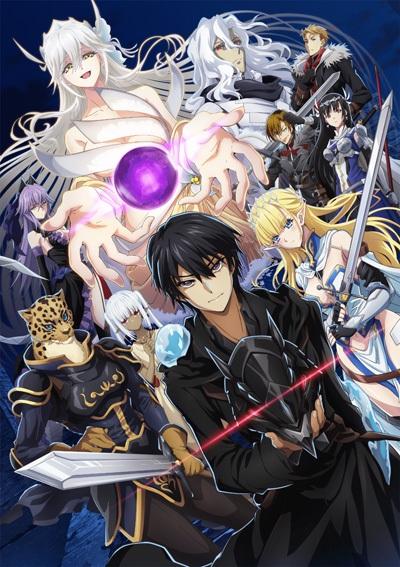
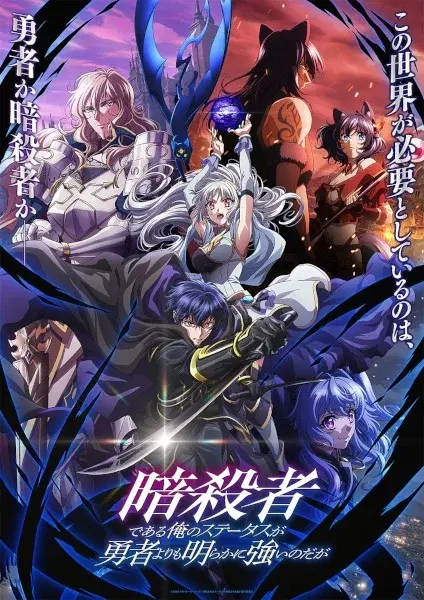
Failure Frame: I Became the Strongest and Annihilated Everything With Low-Level Spells
ハズレ枠の【状態異常スキル】で最強になった俺がすべてを蹂躙するまで (Hazurewaku no "Joutai Ijou Skill" de Saikyou ni Natta Ore ga Subete wo Juurin suru made)
- Action
- Adventure
- Fantasy
- Isekai
- Survival
- Episodes
- 12
- Duration
- 24 min per ep
- Aired
- Jul 5, 2024 to Sep 27, 2024
- Status
- Finished Airing
Synopsis
Summoned to another world along with his classmates, the reclusive Touka Mimori awakens to a power centered on status ailments—paralysis, poison, and similar effects. Because such skills are believed to be unreliable, he’s branded an E-rank hero, and the goddess Vicius makes her stance clear: the lowest-ranked will be discarded so they won’t hold back the more “gifted.”
Cast into a notoriously perilous region, Touka is pushed to the brink when a minotaur-like monster corners him. With no other options, he gambles on the ability everyone dismissed—only to discover it succeeds with startling consistency. Turning foes helpless with low-level spells, Touka sets his sights on the one who threw him away, determined to find Vicius and take revenge.
Otaku Consensus
Failure Frame lands as a blunt, compulsively watchable revenge isekai: its strongest material is the fast survival-to-vengeance pacing and the tactical pleasure of turning status ailments into a dominant combat language. Critics and viewers consistently credit the dark fantasy tone and strategic storytelling for keeping the 12-episode season engaging, while the major liability is just as consistent: Seven Arcs' heavy, low-polish CGI repeatedly pulls attention away from the brutality it is trying to sell.
Why You Should Watch
Watch Failure Frame if you want the revenge-isekai dopamine of The Rising of the Shield Hero or Arifureta without waiting for the hero to be socially redeemed before he gets dangerous. Its hook is not bigger explosions; it is watching debuffs, timing, and target control turn into a power system, so fights play closer to a ruthless RPG status-lock than a standard sword-and-spell duel. The 12-episode run keeps its attention on resentment, survival, and anti-hero calculation, which fits viewers who prefer hard-edged fantasy escalation over cozy party-building. The caveat is real: the CGI is conspicuous enough to have become the main complaint. If you can tolerate uneven visuals for a nasty revenge engine, this is the sort of isekai that understands spite as momentum.
Key Characters
- TTouka Mimori
Touka is the draw for viewers who like anti-heroes whose strength comes from systems knowledge, emotional restraint, and a willingness to exploit rules everyone else misread.
- VVicius
Vicius stands out less as a distant deity than as the series' embodiment of ranking-system cruelty, making the revenge premise feel institutional rather than merely personal.
What Makes It Stand Out
- 1
The combat identity is built around status ailments rather than raw elemental firepower, which gives battles a debuff-control rhythm closer to RPG crowd control than conventional isekai swordplay.
- 2
AniList's tag distribution makes the show's priorities unusually explicit: Revenge is listed at 95%, Isekai at 90%, Anti-Hero at 82%, Survival at 76%, and Bullying at 75%, reflecting a series engineered around grievance and retaliation rather than adventure tourism.
- 3
The production is by Seven Arcs and ran for a compact 12 episodes from July 5, 2024 to September 27, 2024, giving the first season a single-cour structure with little room for slice-of-life decompression.
- 4
CGI is not a minor background note in the reception; AniList tags it at 86%, and web reactions repeatedly single out the low-quality CG as the defining production flaw despite finding the show entertaining.
- 5
The design pipeline was visibly specialized on paper: Kana Hashidate handled character design, Gouichi Iwahata and Noritaka Suzuki handled prop design, and Kouichi Usami with Yasuhiro Moriki handled creature design.
Fun Facts & Trivia
- Fun fact 1
- The anime adapts Kaoru Shinozaki's original story, with KWKM credited for the original character designs, a useful detail for viewers comparing the anime's look against the source material's visual identity.
- Fun fact 2
- Michio Fukuda directed the TV anime, while Yasuhiro Nakanishi handled series composition, placing the adaptation's revenge-forward pacing under a dedicated script-structure credit rather than leaving it as a purely episode-by-episode approach.
- Fun fact 3
- The show sits in a split-reception zone across major databases: it has a 6.46 MAL score from 122,346 votes and a 64/100 AniList score, yet still attracted 2,000 AniList favourites.
- Fun fact 4
- Its MAL Popularity rank of #1208 is far stronger than its MAL Rank of #8207, a sign that the title reached a sizable isekai audience even while its average rating stayed modest.
- Fun fact 5
- Online discussion became so fixated on the visuals that one viewer joke effectively rephrased the title as becoming strongest and destroying everything with low-level CGI, which captures the gap between its entertainment value and its production criticism.
Studios
- Seven Arcs