Kaiju No. 8 Season 2
怪獣8号 第2期 (Kaijuu 8-gou 2nd Season)
- Action
- Fantasy
- Sci-Fi
- Adult Cast
- Military
- Urban Fantasy
- Episodes
- 11
- Duration
- 23 min per ep
- Aired
- Jul 19, 2025 to Sep 27, 2025
- Status
- Finished Airing
Synopsis
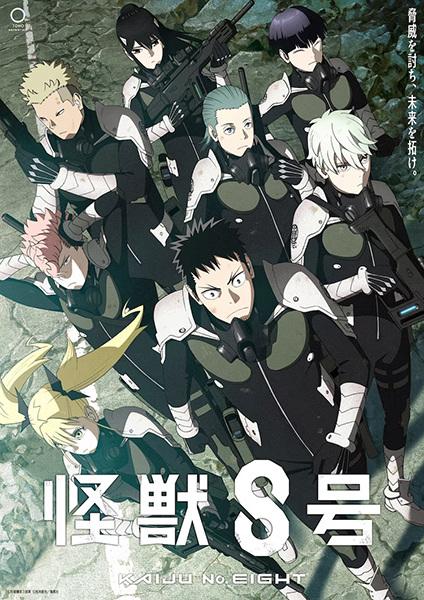
After the operation that ends with Kafka Hibino—revealed as Kaijuu No. 8—taken into custody, the Defense Force struggles to decide what to do with a kaijuu who has chosen humanity’s side. Following deliberation, Kafka is reassigned to the elite First Division, where his unusual strength could bolster the unit best equipped to face any threat. Even so, suspicion lingers, and he’s expected to prove he belongs on the front lines.
The First Division is soon mobilized when swarms of ant-like kaijuu surge into the city. With Kikoru Shinomiya and captain Gen Narumi driving the response, the operation initially holds—until Kafka finds himself unable to transform. As the battle turns, Kaijuu No. 9 enters the fray with a single objective: eliminate Kafka and take his power. Cornered by a worsening crisis, Kafka must endure his toughest test yet while still chasing the promise that brought him here—fighting alongside his childhood friend, Third Division captain Mina Ashiro.
Otaku Consensus
Kaiju No. 8 Season 2 lands as a strong continuation rather than a reinvention: critics and viewers broadly praised Shigeyuki Miya’s tight action direction, Production I.G’s consistent combat animation, and the faster First Division material that pushes Gen Narumi and Kikoru Shinomiya into sharper focus. Its 7.78 MAL score and 78 AniList score reflect a fanbase that remains invested, while the most repeated criticism is that the season trades some of Season 1’s comedy and character introspection for a more straightforward escalation of battles.
Why You Should Watch
Watch Kaiju No. 8 Season 2 if you want a shounen battle series built around working adults, military chains of command, urban disaster response, and monstrous body horror instead of school tournaments or training-camp downtime. It scratches a similar itch to Attack on Titan’s organized anti-monster warfare and My Hero Academia’s squad-based power showcases, but with a more tokusatsu-flavored henshin identity and heavy use of firearms, rescue logistics, and city-scale kaiju incidents. This season is especially tailored for viewers who liked Season 1’s premise but wanted the Defense Force hierarchy to matter more: the First Division focus gives the action a sharper tactical frame, while Production I.G keeps the fights readable and kinetic across an unusually compact 11-episode run.
Key Characters
- KKafka Hibino
Kafka remains compelling because the series treats his power as both an asset and a liability, making his acceptance inside a military institution feel earned rather than automatic.
- KKikoru Shinomiya
Kikoru stands out as the season’s disciplined prodigy figure, with fan discussion often centered on how her elite upbringing translates into composure under pressure.
- GGen Narumi
Gen Narumi brings a different kind of captain energy to the anime, contrasting casual eccentricity with the credibility of someone trusted to lead the Defense Force’s elite First Division.
- MMina Ashiro
Mina’s presence gives the series one of its clearest emotional measuring sticks: she represents the professional standard Kafka is still trying to reach.
What Makes It Stand Out
- 1
Production I.G handles the season, giving the action a clean, impact-focused look that reviewers singled out as one of the continuation’s most reliable strengths.
- 2
The season runs only 11 episodes, and critics noted that it gets down to business quickly by splitting familiar characters across different squads rather than lingering on reintroductions.
- 3
The First Division material changes the series’ texture from rookie-unit camaraderie to elite-force scrutiny, with Gen Narumi’s command style becoming one of the season’s major new draws.
- 4
AniList’s tag profile is unusually specific for a modern shounen: Urban and Kaiju both sit at 96%, with Military at 82%, Guns at 77%, Gore at 75%, Body Horror at 66%, and Tokusatsu at 56%.
- 5
The tonal balance is noticeably different from Season 1; multiple reviews identified Season 2 as faster and more action-driven, but less comedic and less introspective.
Fun Facts & Trivia
- Fun fact 1
- Yuuichirou Kido is credited with both series composition and script, meaning the season’s overall structure and episode-level writing share a single key writer credit.
- Fun fact 2
- Tetsuya Nishio carries two major visual responsibilities on the production: character design and chief animation director.
- Fun fact 3
- Shinji Kimura is credited for art design, while Megumi Baba is listed as assistant director of photography, pointing to separate staff attention on world texture and final image compositing.
- Fun fact 4
- Luck Silva is credited for second key animation on episodes 4 and 7, a useful detail for animation fans tracking individual cuts and episode contributors.
- Fun fact 5
- The season’s reception is notably consistent across major anime databases: MAL lists it at 7.78 from 178,359 votes, while AniList places it at 78/100 with 2,711 favourites.
Studios
- Production I.G