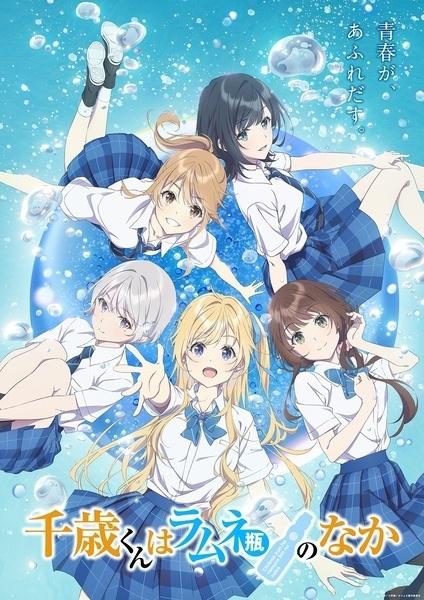
Chitose Is in the Ramune Bottle
千歳くんはラムネ瓶のなか (Chitose-kun wa Ramune Bin no Naka)
- Comedy
- Romance
- Harem
- School
- Episodes
- 13
- Duration
- 25 min per ep
- Aired
- Oct 7, 2025 to Mar 31, 2026
- Status
- Finished Airing
Synopsis
Saku Chitose seems to have everything going for him in high school: natural charm, unshakable confidence, and an easy warmth that draws people in. Yet that spotlight comes with a price. Not everyone is happy to see him shine, and the more admired he becomes, the more suspicion and resentment trail behind. For Saku, the idea of living “ugly” is unbearable—so keeping up a flawless image feels like a matter of survival.
As his second year begins, his homeroom teacher asks him to help coax a classmate back to school. What Saku expects to be a quick errand turns complicated when he meets Kenta Yamazaki, a shut-in who openly despises him and what his popularity represents. The request forces Saku to confront the gap between those who thrive in the social center and those pushed to the margins, all while he navigates the thin line between genuine kindness and the performance everyone expects.
Otaku Consensus
Chitose Is in the Ramune Bottle earns its 7.44 MAL middle-ground reputation by being more interesting as a social-philosophy harem drama than as a cleanly satisfying romance, with feel.’s polished school-life staging and Naruhisa Arakawa’s dialogue-heavy structure giving it a distinct identity. Its most praised stretch is the restrained, cathartic confrontation tied to Nanase, a sequence critics singled out as nearly worth the series by itself. The recurring complaint is just as clear: the adaptation often mistakes verbal complexity for character growth, leaving some viewers with a show that sounds more developed than it feels.
Why You Should Watch
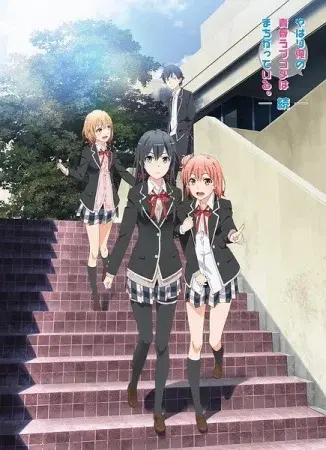
Watch Chitose Is in the Ramune Bottle if you want a harem-school anime that treats popularity, image management, and adolescent self-mythology as battlegrounds rather than background noise. It scratches a nearby itch to My Teen Romantic Comedy SNAFU in its appetite for social diagnosis, but with a warmer, more charismatic center and a more romance-coded cast structure. Viewers who like high-school series where characters speak in philosophies, not just punchlines, will get the most out of its “blue youth” imagery, its reputation-conscious dialogue, and its willingness to make likability feel like a practiced skill. Skip it if you need brisk emotional payoffs or understated writing; this is for fans who enjoy watching a confident protagonist get intellectually and socially interrogated from multiple angles.
Key Characters
- SSaku Chitose
Saku is the rare harem lead whose charm is treated less as wish fulfillment than as a social technology, which makes viewers debate whether his kindness is authenticity, performance, or both.
- KKenta Yamazaki
Kenta functions as the show’s sharpest counterweight to Saku, giving voice to the resentment and suspicion that the series attaches to effortless popularity.
- NNanase
Nanase is tied to the anime’s most widely singled-out dramatic material, especially a restrained confrontation that critics described as cathartic rather than sensationalized.
What Makes It Stand Out
- 1
Studio feel. handles the 13-episode adaptation, a notable match for a series built on polished classroom intimacy and socially loaded character blocking rather than action spectacle.
- 2
The anime’s AniList tag profile is unusually revealing: Female Harem sits at 94%, but Philosophy at 81% and Coming of Age at 80% signal why the show plays more like an argument about youth than a straightforward romantic comedy.
- 3
The Nanase-related confrontation became the critical high point in post-airing reviews, praised specifically for being restrained while still delivering emotional release.
- 4
The production leans heavily on design continuity: Raemz provided the original character designs, Sumie Kinoshita adapted them for animation, and three separate credited prop designers supported the school-life texture.
- 5
Its 13 episodes aired across an unusually long window, from October 7, 2025 to March 31, 2026, giving the finished series a release footprint longer than a typical single-cour broadcast.
Fun Facts & Trivia
- Fun fact 1
- The anime is based on Hiromu’s original story, with Raemz credited for the original character designs before Sumie Kinoshita translated them into the anime’s character design sheet.
- Fun fact 2
- Yuuji Tokuno directed the series, while Naruhisa Arakawa handled series composition, placing the adaptation’s reputation-heavy dialogue and philosophical framing under a veteran scripting role.
- Fun fact 3
- Prop design was split among Kuniaki Masuda, Shinichi Tatsuta, and Hiyori Denforword Akishino, an unusually visible credit trio for a school romance where everyday objects help define social space.
- Fun fact 4
- Reception landed in a respectable but divisive zone: MAL lists it at 7.44 from 31,493 votes, while AniList records a 73/100 score and 881 favourites.
- Fun fact 5
- The review conversation around the franchise extended beyond the anime; commentary on later manga material also echoed one of the adaptation’s biggest criticisms, that the dialogue can come across as pretentious.
Studios
- feel.
![[Oshi No Ko]](/_next/image?url=https%3A%2F%2Fd111jwrw4u3bt.cloudfront.net%2Fanime-posters%2Fposter-52034.webp&w=1920&q=75)