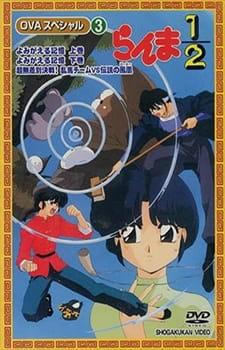
Ranma ½ OVA
らんま1/2 OVA
- Action
- Comedy
- Ecchi
- Romance
- Magical Sex Shift
- Martial Arts
- Episodes
- 6
- Duration
- 30 min per ep
- Aired
- Oct 21, 1993 to Aug 19, 1994
- Status
- Finished Airing
Synopsis
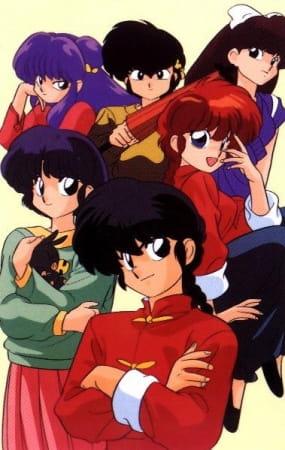
Ranma Saotome keeps hunting for a cure that will let him live as an ordinary teenage boy again, but day-to-day life rarely cooperates. Between martial-arts scuffles and the chaos stirred up by the many girls around him, his search is constantly sidetracked by misunderstandings and romantic complications.
One of Ranma’s toughest hurdles is fending off marriage proposals arranged by people convinced they’ve found his “perfect” bride. Juggling unwanted attention from both women and men, he has to rely on quick thinking and fighting skills just to stay afloat—while also wrestling with what he really feels for Akane, and whether he’ll ever admit it or keep hiding behind excuses about her being too much of a tomboy.
Otaku Consensus
Ranma ½ OVA distills Rumiko Takahashi’s formula into a tighter, higher-polish cel-era package: Junji Nishimura’s direction keeps the slapstick velocity high, while Atsuko Nakajima’s designs and the OVA format give the fights and reaction comedy more snap than the longer TV run often managed. Its reputation rests on iconic character chemistry, influential gender-bending comedy, and strong short-form adaptation instincts, though the recurring criticism remains that Ranma ½ prioritizes episodic chaos over lasting character development or narrative closure.
Why You Should Watch
Watch Ranma ½ OVA if you want martial-arts farce with romantic tension, gender-bending comedy, and escalating misunderstandings without committing to a long TV series. These six episodes work like concentrated Takahashi: quick entrances, loud rivalries, sudden brawls, and punchlines that treat social embarrassment as seriously as combat technique. It scratches the same itch as Urusei Yatsura’s anarchic relationship comedy and the more absurd corners of classic shounen action, but with the added kick of Ranma ½’s famous identity-play and arranged-marriage chaos. Viewers who enjoy episodic comedy over endgame plotting will get the most from it; the appeal is watching an ensemble of stubborn personalities ricochet off one another with OVA-era polish, not waiting for everyone to mature.
Key Characters
- RRanma Saotome(VA: Megumi Hayashibara)
Ranma remains one of anime’s defining gender-bending leads, with fans and critics often pointing to the character as a key reason the franchise became a touchstone for discussions of gender performance in mainstream anime comedy.
- AAkane Tendou(VA: Noriko Hidaka)
Akane’s appeal comes from the way her tsundere temper, pride, and vulnerability turn every romantic beat into a contest of wills rather than a simple confession scene.
What Makes It Stand Out
- 1
The OVA is a compact six-episode release from 1993 to 1994, giving the franchise a short-form structure closer to selected comic set pieces than a conventional season-long arc.
- 2
Kitty Film Mitaka Studio and Studio Deen are credited as the studios, placing the OVA within the late-cel-era production lineage that fans often separate from modern digital revivals.
- 3
Director Junji Nishimura’s handling of the OVA emphasizes timing-heavy physical comedy, a quality singled out in reviews of the OAV material for preserving the property’s over-the-top slapstick and absurd situations.
- 4
Atsuko Nakajima’s character design work is central to the OVA’s appeal, keeping the cast instantly readable during rapid mood swings, martial-arts poses, and exaggerated reaction shots.
- 5
The AniList tag spread captures the franchise’s unusual blend: Gender Bending at 80%, Martial Arts at 79%, Arranged Marriage at 79%, Female Harem at 70%, and Slapstick at 60%.
Fun Facts & Trivia
- Fun fact 1
- The OVA adapts a work by Rumiko Takahashi, whose Ranma ½ has been cited by reviewers as one of anime and manga’s most influential titles across generations.
- Fun fact 2
- Critics and academics have discussed Ranma ½ for its treatment of gender fluidity, an unusual level of cultural analysis for a slapstick martial-arts romantic comedy.
- Fun fact 3
- The music is credited to Akihisa Matsuura, with Rei Sakuma listed for insert song performance, tying the OVA’s comedy beats to a dedicated sound and song staff rather than treating it as a purely visual gag series.
- Fun fact 4
- Its reception sits in a steady fan-favorite zone rather than a mainstream popularity peak: MAL lists it at 7.74 from 18,211 votes, while AniList records a 74/100 score and 97 favourites.
- Fun fact 5
- The broader Ranma ½ anime has often been criticized as an incomplete or unevenly paced counterpart to the manga, which helps explain why the OVA is best approached as curated episodic material rather than a definitive adaptation endpoint.
Studios
- Kitty Film Mitaka Studio
- Studio Deen