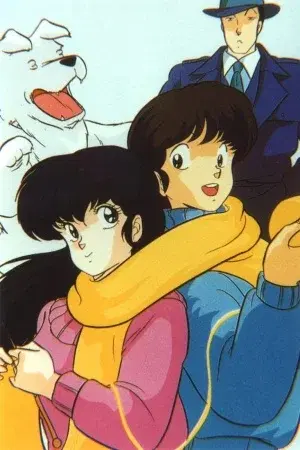
Ranma ½
らんま1/2
- Action
- Comedy
- Ecchi
- Romance
- Magical Sex Shift
- Martial Arts
- School
- Episodes
- 161
- Duration
- 24 min per ep
- Aired
- Apr 15, 1989 to Sep 25, 1992
- Status
- Finished Airing
Synopsis
Ranma Saotome is a gifted practitioner of the Saotome “Anything-Goes” martial arts school, but a training trip to China leaves him with an unusual curse: a splash of cold water turns him into a girl, and only hot water changes him back. The condition follows Ranma and his father home, ensuring everyday life is never quite predictable.
Complications multiply when Ranma learns his father has arranged his marriage to one of Soun Tendo’s three daughters to help preserve the Tendo dojo. Even after hearing about Ranma’s predicament, Soun insists on honoring the agreement and selects his youngest daughter, Akane—an accomplished martial artist known for her intense dislike of men. With their engagement looming, Ranma and Akane stumble through chaotic rivalries, unexpected romantic entanglements, and constant clashes that keep their lives in perpetual uproar.
Otaku Consensus
The 1989 Ranma ½ remains a durable classic because Studio Deen’s directors turn romantic martial-arts farce into compact episodic chaos, with slapstick timing and Ranma/Akane friction carrying even filler-like detours; the first-season stretch is the clearest showcase of that rhythm. The enduring criticism is adaptation drift and stasis: reviews repeatedly flag that the 161-episode run loosens from the manga, resets character growth, and can feel overextended beside the tighter manga or the more source-faithful 2024 remake.
Why You Should Watch
Watch Ranma ½ if you want old-school romantic chaos where every argument can become a fight, a misunderstanding, or a new rival’s entrance, without the heavy continuity burden of a modern long-runner. It scratches the same itch as Rumiko Takahashi’s other relationship comedies: loud personalities, elastic slapstick, and affection expressed through combat rather than speeches. The appeal is the format as much as the cast: a mostly episodic 161-episode playground where harem archetypes, tsundere bickering, martial-arts parody, and ecchi body comedy keep rotating in new combinations. Viewers who need decisive romantic progress may bounce off it, but anyone who likes character-driven repetition with precise comic timing will understand why the 1989 version still gets defended against newer adaptations.
Key Characters
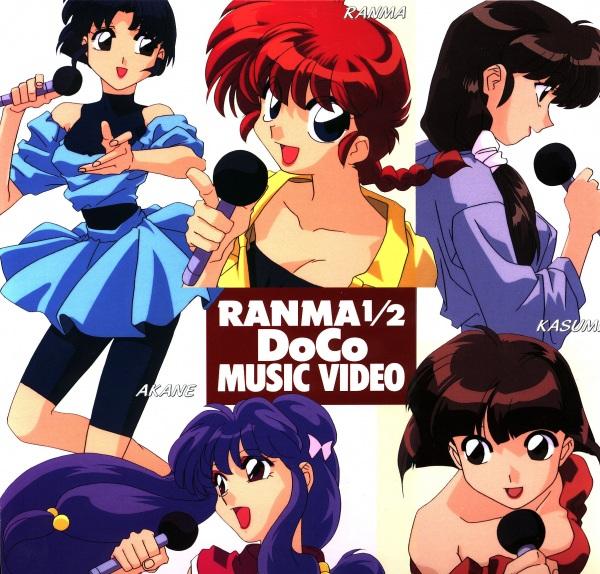
- RRanma Saotome(VA: Megumi Hayashibara)
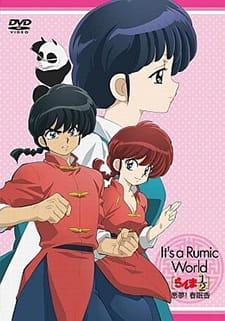
Ranma is remembered as both a swaggering martial-arts prodigy and a walking comedy device, with Megumi Hayashibara’s performance giving the character’s transformed side a sharp, iconic voice identity.
- AAkane Tendou(VA: Noriko Hidaka)
Akane anchors the series’ tsundere energy: fans read her less as a simple love interest than as the emotional counterweight who keeps the show’s harem chaos from becoming one-sided wish fulfillment.
What Makes It Stand Out
- 1
Studio Deen’s TV adaptation ran for 161 episodes from April 1989 to September 1992, giving it the scale of a late-Showa/early-Heisei living-room staple rather than a compact seasonal production.
- 2
The series is structurally episodic: user reviews repeatedly note that callbacks and new character introductions matter more than linear plot advancement, which makes the show easy to sample but divisive for viewers expecting sustained development.
- 3
Its creative spine is unusually clearly credited: Tomomi Mochizuki served as chief director, Tsutomu Shibayama as director, Toshiki Inoue handled series composition, and Atsuko Nakajima supplied the character designs.
- 4
AniList’s tag spread captures why the show is still discussed as a trope incubator: Gender Bending at 98%, Martial Arts at 89%, Slapstick at 82%, Arranged Marriage at 79%, and Tsundere at 78%.
- 5
The main adaptation debate is not whether the anime is funny, but whether it is the best entry point: several reviews praise the classic’s charm while recommending the manga or 2024 remake for tighter source fidelity.
Fun Facts & Trivia
- Fun fact 1
- The show’s modern reputation is now partly shaped by comparison with the 2024 Ranma ½, which web reviews praised for freshened production values and closer manga adherence; some viewers reported that the remake pushed them back to the 1989 original.
- Fun fact 2
- Fan discussion often recommends the Japanese audio over the older dub, citing the age of the dub recording and voice-acting style as part of the 1990s localization experience.
- Fun fact 3
- The available cast data spotlights two major Japanese performances at the center of the anime’s identity: Megumi Hayashibara as Ranma Saotome and Noriko Hidaka as Akane Tendou.
- Fun fact 4
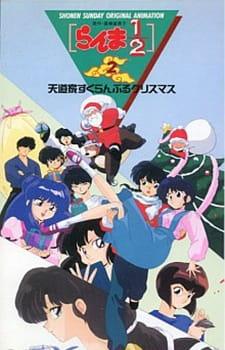
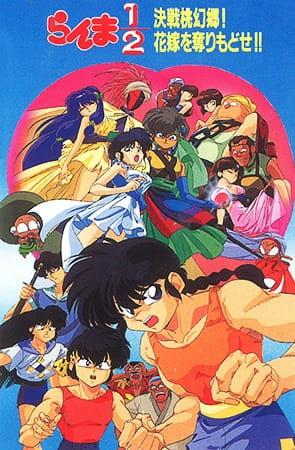
- The anime’s long TV run is only one part of its animated footprint; user reviews specifically reference additional OVAs and movies as part of the broader Ranma ½ anime legacy.
- Fun fact 5
- On database metrics, the series remains more than a nostalgia title: it holds a 7.78 MAL score from 132,617 votes, an AniList score of 75/100, and 1,662 AniList favourites.
Studios
- Studio Deen