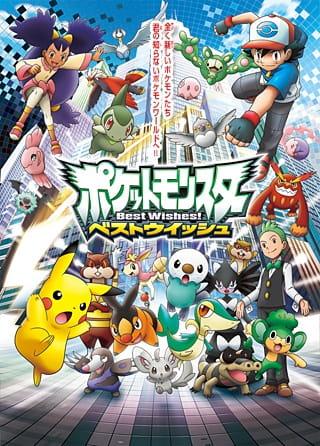
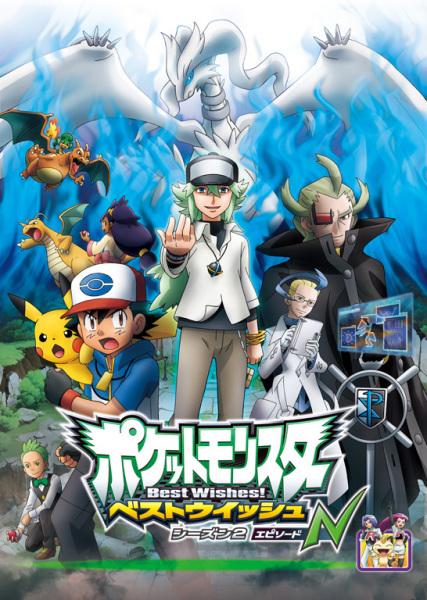
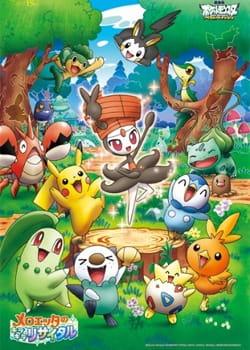
Pokémon: Black & White: Rival Destinies
ポケットモンスター ベストウイッシュ シーズン2 (Pokemon Best Wishes! Season 2)
- Action
- Adventure
- Comedy
- Fantasy
- High Stakes Game
- Music
- Mythology
- Pets
- Episodes
- 24
- Duration
- 22 min per ep
- Aired
- Jun 21, 2012 to Jan 10, 2013
- Status
- Finished Airing
Synopsis
Satoshi, Iris, and Dent keep journeying across the Isshu region, building toward the Isshu League. After earning his eighth Gym Badge with a victory over Homika in Tachiwaki City, the group receives an invitation from Shirona to visit her villa in eastern Isshu—where Satoshi also reunites with his old friend Hikari.
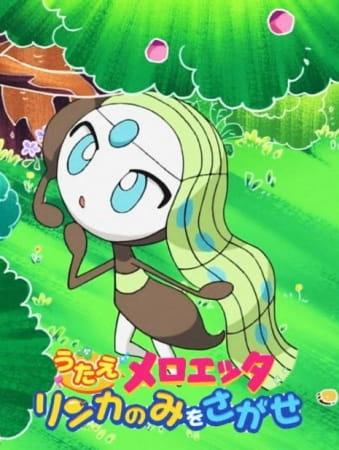
With the Pokémon World Tournament Junior Cup on the horizon, their travels take on a sharper focus. At the same time, Team Rocket sets its final scheme in motion for Isshu, driven by a mysterious objective tied to the legendary Pokémon Meloetta.
Otaku Consensus
Rival Destinies lands as a functional but clearly second-tier Pokémon season: its strongest material is the compact Junior Cup stretch, the more mission-driven Team Rocket/Meloetta thread, and the reliable OLM readability that keeps every creature battle easy to follow. Fan scores around the mid-6 range on MAL and AniList reflect the tradeoff: it is rewarding for Unova-era completists and younger viewers, but veterans often find its kids-first episodic structure and softened characterization less satisfying than the franchise’s stronger tournament seasons.
Why You Should Watch
If your favorite Pokémon episodes are the ones where battle rules, type matchups, and companion chemistry matter more than lore dumps, Rival Destinies is the cleanest Black & White-era sampler. Its 24-episode Japanese Season 2 run moves quicker than the franchise’s older year-long blocks, using the Pokémon World Tournament Junior Cup as a compact competitive spine and the Meloetta material to give Team Rocket a rare mission-first presence. It scratches the same low-friction creature-battle itch as early Digimon Adventure’s team problem-solving, but with Pokémon’s gentler slapstick and gym-to-tournament cadence. Viewers who want dense continuity or the emotional peaks of Diamond and Pearl may feel the reset, but anyone after bright Unova battles, a Sinnoh callback through Hikari, and Shinji Miyazaki’s familiar Pokémon music has a focused reason to queue it.
Key Characters
- SSatoshi(VA: Rica Matsumoto)
Satoshi’s Unova-era portrayal is one of his most kid-facing and impulsive versions, which makes the battles immediately readable for younger viewers while remaining divisive among longtime fans.
- IIris(VA: Aoi Yuki)
Iris works best as a teasing counterweight to Satoshi, bringing a sharper companion-rival energy than the more purely supportive traveling partners in some earlier arcs.
- DDent(VA: Mamoru Miyano)
Dent’s Pokémon Sommelier persona turns evaluation and strategy into running comedy, with Mamoru Miyano giving the role a knowingly theatrical edge.
- HHikari(VA: Megumi Toyoguchi)
Hikari’s return gives the season a cross-generational texture, bringing Sinnoh’s performance-battle sensibility into the more streamlined Unova format.
What Makes It Stand Out
- 1
This is the Japanese Best Wishes! Season 2 block rather than a full 50-episode international-style season: 24 episodes aired from June 21, 2012 to January 10, 2013. That shorter shape makes the Junior Cup and the Team Rocket/Meloetta material feel less sprawling than many long-running Pokémon stretches.
- 2
OLM’s production approach prioritizes legible action over visual showboating: attacks, trainer reactions, and creature positioning are staged so young viewers can follow battle logic at a glance. That matches the show’s AniList identity as a kids series built around proxy battles, animals, slapstick, and creature taming.
- 3
Shinji Miyazaki’s music keeps the season firmly connected to the long-running TV anime’s sound world. Rather than treating Unova as a total sonic reboot, the score uses familiar Pokémon musical instincts to make tournament episodes feel continuous with earlier eras.
- 4
The Hikari material is a notable continuity bridge for a season otherwise associated with the franchise’s Black & White reset. Her presence connects Sinnoh-era fan memory to Unova’s simpler travel-and-battle rhythm.
- 5
The theme-song credits are unusually varied across markets: Rica Matsumoto performs the Japanese opening, Momoiro Clover Z performs the ending, and the Norwegian version credits Lars Berteig Andersen for opening performance with lyrics by Asbjørn Tveit.
Fun Facts & Trivia
- Fun fact 1
- The core franchise lineage is visible in the credits: Satoshi Tajiri is listed as original creator and Ken Sugimori as original character designer, tying the TV season back to the game series’ foundational authorship.
- Fun fact 2
- Youichi Kotabe is credited as animation supervisor, a role that reflects Pokémon’s long-running priority on consistent character and creature presentation across hundreds of television episodes.
- Fun fact 3
- The localization data includes named ADR leadership beyond the usual Japanese staff listing: Márcia Regina directed the Brazilian Portuguese dub, while Einar Petersen is credited as Norwegian ADR director.
- Fun fact 4
- AniList’s tag weights frame the season very explicitly: Kids at 95%, Primarily Child Cast at 79%, Animals at 79%, Proxy Battle at 79%, and both Slapstick and Creature Taming at 60%. Those labels explain why its action reads as accessible competition rather than late-night fantasy combat.
- Fun fact 5
- Its database reception is modest but stable for a franchise middle chapter: MAL lists a 6.5/10 score from 45,309 votes, while AniList records 62/100 with 155 favourites.
Studios
- OLM