Gintama: Enchousen
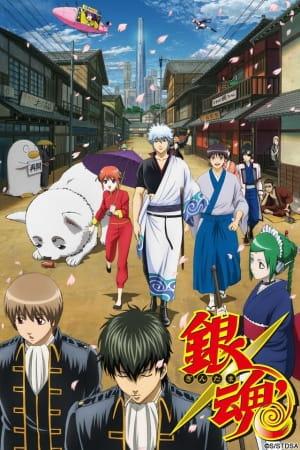
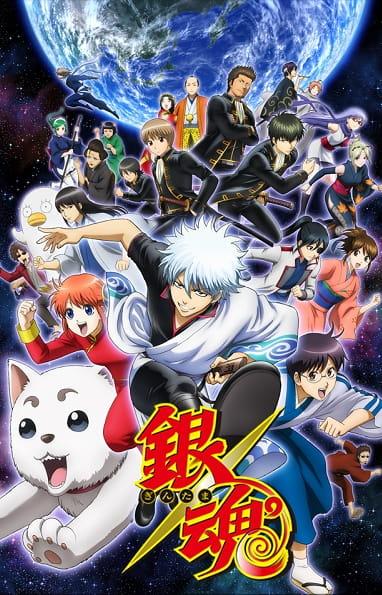
銀魂' 延長戦 (Gintama': Enchousen)
- Action
- Comedy
- Sci-Fi
- Gag Humor
- Historical
- Parody
- Samurai
- Episodes
- 13
- Duration
- 24 min per ep
- Aired
- Oct 4, 2012 to Mar 28, 2013
- Status
- Finished Airing
Synopsis
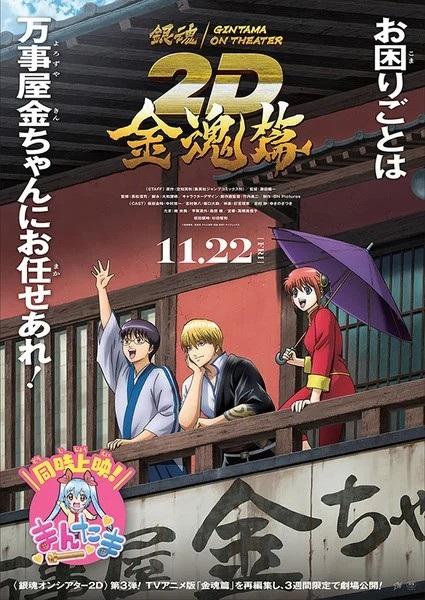
While Gintoki Sakata is away, the Yorozuya suddenly have a new figure at the helm: Kintoki, a golden-haired lookalike who slips into Gintoki’s place with unsettling ease. Returning to find himself erased from everyone’s memory, Gintoki is forced to rely on the very people who no longer recognize him as he struggles to reclaim his spot—raising the absurd question of who truly gets to be the “main character.”
The Yorozuya also head back to Yoshiwara, the former underground red-light district, to help an elderly courtesan searching for the lover she lost long ago. Though Yoshiwara is no longer bound beneath the surface, the pain carried by its residents remains, and the trio are drawn into stories of the past that still linger in the present—where enduring love is something to be witnessed and protected.
Otaku Consensus
Gintama: Enchousen is treated by fans and reviewers as one of the franchise’s sharpest short runs, with Youichi Fujita’s direction and Sunrise’s adaptation leaning into both the Kintoki arc’s meta attack on shounen protagonism and the Yoshiwara material’s emotional afterburn. Its 13-episode length gives the season unusually concentrated pacing for Gintama, moving from gag escalation to swordplay and sentiment without losing the ensemble rhythm that made the series beloved. The recurring caveat is the same one that follows Gintama at large: its referential comedy, episodic habits, and accumulated cast history make it less friendly to viewers who want a self-contained action anime.
Why You Should Watch
Watch Enchousen if you want shounen payoff without the training-arc machinery: this is Gintama using parody, slapstick, sword fights, and melancholy as parts of the same engine. It scratches the same itch as One Piece’s found-family emotional surges, but filters them through a fourth-wall-breaking comedy brain closer to Sket Dance or Excel Saga. The season is especially rewarding for viewers who like anime that can turn a food-gag level of tactical overthinking into a battle-manga send-up, then pivot into an arc where history, politics, and personal loyalty actually hurt. At only 13 episodes, it is also one of the most efficient Gintama entries: no long ramp-up, just concentrated cast chemistry, meta jokes, and dramatic arcs that assume you already care.
Key Characters
- KKagura(VA: Rie Kugimiya)
Kagura remains one of Gintama’s best comic weapons because her childish bluntness and absurd physicality can undercut a scene or turn it into action without changing the character’s core.
- GGintoki Sakata(VA: Tomokazu Sugita)
Gintoki’s appeal comes from the clash between deadbeat anti-hero timing and genuine samurai gravitas, a combination Tomokazu Sugita plays with unusually elastic comic control.
- SShinpachi Shimura(VA: Daisuke Sakaguchi)
Shinpachi is the franchise’s indispensable straight man, often functioning as the audience’s exhausted editor when the show’s parody instincts threaten to break the frame.
What Makes It Stand Out
- 1
Sunrise’s production keeps the franchise’s signature contrast intact: low-key comedic staging and reaction timing are allowed to sit next to sudden bursts of swordplay and heightened melodrama rather than being smoothed into one tone.
- 2
The Kintoki storyline is a direct meta exercise in main-character entitlement, using Gintama’s long-running cast memory as part of the joke instead of treating continuity as background trivia.
- 3
The Yoshiwara-focused material gives Enchousen one of its clearest tonal pivots, moving from gag ensemble dynamics into historical, political, and romantic melancholy without abandoning the Yorozuya’s comic voice.
- 4
The season’s AniList tag profile is unusually revealing for a comedy entry: Parody and Found Family both sit at 93%, while Politics reaches 85% and Philosophy 79%, reflecting how often Gintama smuggles serious thematic material inside genre nonsense.
- 5
At 13 episodes, Enchousen is structurally tighter than many Gintama runs, which helps explain why fans often single it out for having a high ratio of memorable comedy, emotional payoff, and action escalation.
Fun Facts & Trivia
- Fun fact 1
- Gintama: Enchousen aired from October 4, 2012 to March 28, 2013 and consists of 13 episodes, making it a compact bridge-era season rather than a long continuous cour.
- Fun fact 2
- The season is credited to Sunrise, with Youichi Fujita directing and Shinji Takeuchi handling character design, two key names associated with the anime’s ability to preserve Sorachi Hideaki’s elastic comedy timing.
- Fun fact 3
- Its theme-song credits include SPYAIR and AMOYAMO, with SPYAIR listed for OP3 and ED4 and AMOYAMO listed for OP1 and ED2 in the provided production data.
- Fun fact 4
- On MyAnimeList, Enchousen holds a 9.02 score from 180,282 votes and a rank of #14, a striking placement for a 13-episode sequel season in a heavily continuity-driven comedy franchise.
- Fun fact 5
- AniList lists the season at 89/100 with 2,133 favourites, while its highest-confidence tags emphasize Shounen, Found Family, and Parody at 93% each.
Studios
- Sunrise
No community data yet. Be the first to add Gintama: Enchousen to your list!