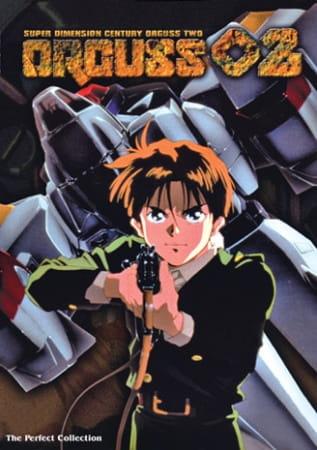
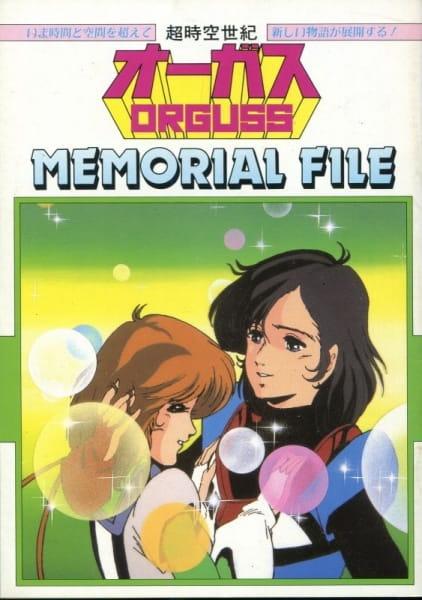
The Super Dimension Century Orguss
超時空世紀オーガス (Choujikuu Seiki Orguss)
- Adventure
- Romance
- Sci-Fi
- Mecha
- Episodes
- 35
- Duration
- 25 min per ep
- Aired
- Jul 3, 1983 to Apr 8, 1984
- Status
- Finished Airing
Synopsis
In the year 2062, the conflict between two global superpowers reaches a critical point, pushing the boundaries of warfare to new extremes. Kei Katsuragi, a skilled pilot, is entrusted with a perilous mission involving the detonation of a powerful weapon known as the Space/Time Oscillation Bomb. However, the outcome of this operation spirals far beyond his expectations, resulting in a chaotic convergence of multiple dimensions, timelines, and realities.
As Kei navigates the aftermath of this cataclysmic event, he must confront not only the challenges of restoring order to a fractured world but also the intricacies of relationships that unfold amid the chaos. The journey is filled with adventure, as he encounters diverse characters and experiences the complexities of love and duty, all while seeking a way to reverse the effects of his fateful decision.
Otaku Consensus
The Super Dimension Century Orguss is remembered as the ambitious, under-seen middle child of the Super Dimension lineage: Noboru Ishiguro’s direction, Haruhiko Mikimoto’s character art, Kazutaka Miyatake’s strange mechanical silhouettes, and Kentarou Haneda’s score give it a stronger identity than its modest MAL score suggests. Its reputation improves as the 35-episode run deepens, but the recurring complaint is real: the early pacing can feel uneven, and several critics single out the ending as less satisfying than the journey.
Why You Should Watch
Watch Orguss if you want 1980s real-robot science fiction that folds romance, dimensional weirdness, aliens, and road-adventure momentum into one eccentric package without requiring modern franchise homework. It scratches a similar itch to Macross in its mix of relationship drama and military hardware, but it is more structurally unhinged: the appeal is watching a real-robot show become an isekai-like puzzle box before that label became common anime vocabulary. The draw is also tactile craft: Mikimoto’s soft character designs, Miyatake’s oddball transformable machines, TMS-era color work, and Haneda’s music give it a period texture that digital retro pastiche rarely captures. If you can tolerate a slow early stretch and an ending with divided reception, the middle run offers the cult-mecha pleasure people still defend.
Key Characters
- KKei Katsuragi(VA: Show Hayami)
Kei stands out as a very 1980s mecha lead: capable in the cockpit, romantically impulsive, and interesting because the series keeps testing his charm against consequences rather than treating him as a clean hero.
- MMimsy Laaz(VA: Run Sasaki)
Mimsy gives the series much of its emotional pull, functioning as more than a romantic counterweight by grounding the stranger social rules and loyalties that make Orguss distinct from a conventional military mecha show.
What Makes It Stand Out
- 1
Orguss was produced by Tokyo Movie Shinsha as a 35-episode TV series airing from July 1983 to April 1984, giving it the roomier, serialized rhythm of early-80s broadcast sci-fi rather than the compressed shape of an OVA.
- 2
The staff combines several major 1980s anime signatures: Noboru Ishiguro directs, Kenichi Matsuzaki handles series composition, Haruhiko Mikimoto designs the characters, Kazutaka Miyatake designs the machines, and Kentarou Haneda composes the music.
- 3
AniList’s top tags classify it equally strongly as Aliens, Real Robot, and Isekai at 79%, a rare combination that explains why modern viewers often find it stranger than its standard mecha labeling suggests.
- 4
Critical writeups repeatedly single out the mechanical design as bizarre and inventive, with Miyatake’s work giving the show a different silhouette language from more straightforward military robot anime of the period.
- 5
Its reception has a cult-gap profile: MAL lists it at 6.47 from just over 2,000 votes, while dedicated reviews describe it as underrated and unusually ambitious among the Super Dimension-related titles.
Fun Facts & Trivia
- Fun fact 1
- Orguss is identified in review coverage as the second entry in the Super Dimension trilogy and a successor to Macross, which helps explain why it is often discussed beside far more famous 1980s mecha-romance hybrids.
- Fun fact 2
- Haruhiko Mikimoto, credited here for character design, is one of the key reasons the show visually reads as part of the same early-80s conversation as Macross-era anime rather than as a generic robot series.
- Fun fact 3
- Kentarou Haneda’s music is one of the most consistently praised production elements in reviews, with critics calling the soundtrack awesome or fantastic even when they criticize the pacing.
- Fun fact 4
- Katsuhito Akiyama appears in the credits as an episode director, while Toshiaki Hontani is specifically credited for key animation on episodes 2 and 7, a useful breadcrumb for viewers tracking 1980s TV-anime craft.
- Fun fact 5
- Despite its low mainstream visibility, the show has 31 AniList favourites and a 62/100 AniList score, placing it in the category of niche mecha titles sustained more by specialist affection than broad popularity.
Studios
- Tokyo Movie Shinsha