One Piece: Django's Dance Carnival
ワンピース ジャンゴのダンスカーニバル (One Piece: Jango no Dance Carnival)
- Comedy
- Fantasy
- Gag Humor
- Music
- Performing Arts
- Super Power
- Episodes
- 1
- Duration
- 6 min
- Aired
- Mar 3, 2001
- Status
- Finished Airing
Synopsis
Mirror Ball Island hosts the biggest dance festival in the East Blue, drawing crowds eager to celebrate. Among them is the outlaw hypnotist Jango, who is soon discovered and backed into a corner by a Marine captain.
To slip away, Jango unleashes his hypnotic powers on the entire island, ordering everyone to keep dancing until they collapse. Monkey D. Luffy and the Straw Hat Crew are swept up in the chaos as well, left with no choice but to dance through the night.
Otaku Consensus
One Piece: Django's Dance Carnival lands as a well-liked One Piece side attraction rather than essential viewing: its MAL 7.11 and AniList 67/100 reflect affection for the gag-first concept, Toei Animation’s energetic staging, and Daisuke Nishio’s fast, single-episode pacing. The standout is its commitment to dance as the whole formal engine, supported by heavy rotoscoping and Shirou Hamaguchi’s music; the recurring limitation is that the short’s novelty leaves little room for character work beyond the joke.
Why You Should Watch
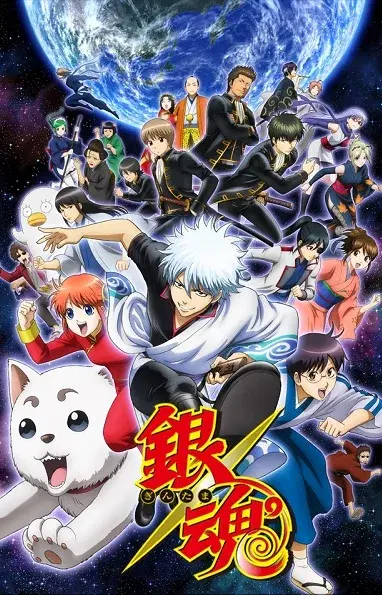
Watch this if you want One Piece stripped down to its most elastic comedy instincts: no sprawling arc, no lore homework, just a concentrated East Blue-era burst of pirate slapstick, crowd choreography, and visual rhythm. It scratches a similar itch to the gag-heavy side of Gintama or the looser Toei theatrical shorts attached to long-running shounen franchises, but with One Piece’s specific affection for absurd bodies, public chaos, and ensemble reactions. The AniList tag mix tells you the appeal clearly: Dancing at 97%, Pirates at 79%, Rotoscoping at 79%, and Ships at 79%. For viewers curious about how early-2000s Toei experimented with One Piece outside normal TV structure, this is a compact, weirdly specific artifact rather than a disposable recap.
Key Characters
- JJango
Jango is the rare One Piece side character whose entire comic identity is built around performance, making him an ideal anchor for a short where rhythm and hypnosis matter more than fights.
- MMonkey D. Luffy
Luffy works here less as a battle protagonist than as a chaos conductor, showing how easily early One Piece could turn its hero’s physicality into pure cartoon timing.
What Makes It Stand Out
- 1
Toei Animation treats the one-episode special like a movement showcase, with AniList’s 79% Rotoscoping tag pointing to dance animation as a core production feature rather than a background flourish.
- 2
Director Daisuke Nishio, known within Toei’s shounen pipeline, keeps the short closer to a music-driven gag set piece than a conventional mini-adventure, which is why the pacing feels unusually compressed for One Piece.
- 3
Shirou Hamaguchi’s music is structurally central: the special’s comedy depends on rhythm, crowd momentum, and sudden shifts in performance energy rather than dialogue-heavy punchlines.
- 4
The format is unusually self-contained for the franchise: one episode, finished airing on March 3, 2001, with no long-form arc obligations and no listed formal theme category beyond its Comedy and Fantasy genre labels.
- 5
The AniList tag spread captures its odd identity better than standard genre labels: Dancing dominates at 97%, while Pirates and Ships remain high enough to keep it recognizably One Piece.
Fun Facts & Trivia
- Fun fact 1
- Eiichirou Oda is credited as the original creator, but the special’s identity is strongly shaped by Toei’s animation-side staff, including director Daisuke Nishio and art director Seiki Tamura.
- Fun fact 2
- The production lists two character designers, Noboru Koizumi and Kazuya Hisada, reflecting the franchise’s need to preserve Oda’s silhouettes while adapting them to a more dance-centric animation problem.
- Fun fact 3
- Naoki Miyahara is credited as CG Director, a notable staff role for a 2001 One Piece short built around spectacle, crowd staging, and motion-heavy presentation.
- Fun fact 4
- Editing is credited to both Masahiro Gotou and Motoi Takahashi, which fits the short’s dependence on timing, cuts, and rhythmic escalation more than plot architecture.
- Fun fact 5
- Despite being a single finished special, it has a sizable footprint in fan databases: 25,309 MAL votes, MAL popularity rank #3776, AniList score 67/100, and 75 AniList favourites.
Studios
- Toei Animation