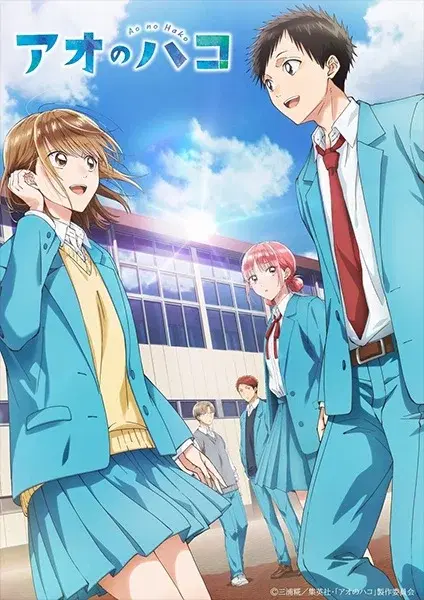
Our love has always been 10 centimeters apart.
いつだって僕らの恋は10センチだった。 (Itsudatte Bokura no Koi wa 10 cm Datta.)
- Drama
- Romance
- School
- Visual Arts
- Episodes
- 6
- Duration
- 23 min per ep
- Aired
- Nov 25, 2017 to Dec 30, 2017
- Status
- Finished Airing
Synopsis
Miou Aida and Haruki Serizawa don’t look like they’d match at first glance: Miou is a quiet, reserved member of the art club who avoids attention, while Haruki is the loud, self-assured standout of the movie club, already earning awards for his directing. Yet ever since a chance meeting at their high school entrance ceremony, the two have stayed close—close enough to confuse the friends around them, even as their relationship stubbornly refuses to become anything more.
With graduation approaching, Miou and Haruki spend their final year alongside their friends in the art and film clubs, juggling unspoken feelings and the pressure of choosing what comes next. As Haruki pushes toward a future in professional filmmaking and Miou searches for a path of her own, the distance between them remains small—but crossing it proves to be the hardest step.
Otaku Consensus
Otaku Den Consensus: Our Love Has Always Been 10 Centimeters Apart lands as a compact, conventional HoneyWorks romance elevated by its six-episode focus, Lay-duce’s clean TV presentation, and Haruki’s self-doubt arc, which even positive reviews single out as the emotional hook. Its strongest appeal is the way visual-art and filmmaking ambitions give the relationship a creative texture, but the recurring criticism is that the writing, performances, and visual direction can feel too plain to make its familiar romance beats feel newly discovered.
Why You Should Watch
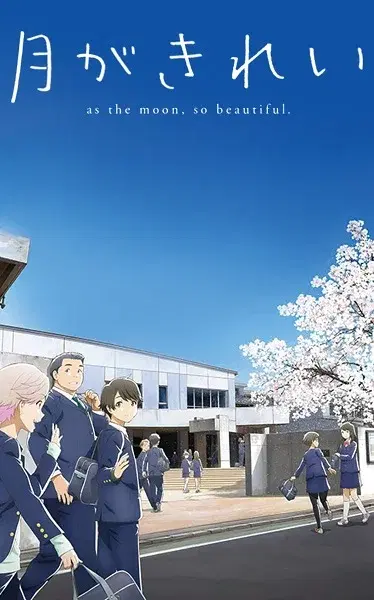
Watch this if you want a short, emotionally direct school romance without a 12-episode wait for the central relationship to move. At six episodes, it works best as a concentrated HoneyWorks mood piece: teenage hesitation, club-room creativity, and career anxiety compressed into a single graduation-season arc. It scratches a gentler version of the itch served by Tsuki ga Kirei, but with more emphasis on art, cameras, and the awkward performance of confidence; it also fits viewers who like the music-driven sentimentality associated with HoneyWorks projects. The main draw is Haruki: instead of existing only as the flashy male lead, he gets a visible fall into insecurity that gives the romance more weight than its simple reputation suggests.
Key Characters
- MMiou Aida
Miou is the quiet half of the pairing, and her appeal comes from how the series ties emotional reticence to the act of drawing rather than treating shyness as a decorative trait.
- HHaruki Serizawa
Haruki is often remembered as the show’s strongest character because his confidence as a young filmmaker is tested by self-doubt rather than simply rewarded.
What Makes It Stand Out
- 1
The series is a rare six-episode TV romance, airing from November 25 to December 30, 2017, which makes its pacing closer to a serialized film than a full cour school drama.
- 2
HoneyWorks is credited both as original creator and for the music, so the anime carries the same direct emotional branding as the group’s romance-centered multimedia work rather than feeling like a detached studio assignment.
- 3
Lay-duce handled the animation production, with Hitoshi Nanba as chief director and Takurou Tsukada as director, giving the show a defined staff hierarchy despite its short format.
- 4
The creative-club angle is unusually specific for a school romance: AniList’s high Drawing tag and Filmmaking tag reflect that the leads’ inner lives are framed through visual art and cinema instead of only classroom confession scenes.
- 5
Haruki’s depression and self-doubt arc is the most commonly praised element in favorable reviews, with Bloom Reviews specifically highlighting it as the reason the romance gains character depth.
Fun Facts & Trivia
- Fun fact 1
- The show’s reception sits in the respectable-but-not-elite range across databases: MAL lists it at 7.44 from over 101,000 votes, AniList at 72/100, and IMDb at 7.0 from about 1,000 ratings.
- Fun fact 2
- Maki Fujii and Kentarou Tokiwa are both credited for character design, while Kouji Okamoto handled art direction and Takeo Ogiwara served as director of photography, a notable staff split for a series centered on drawing and filmmaking.
- Fun fact 3
- Yoshimi Narita handled series composition, meaning the entire six-episode romantic arc was structured under a single credited scenario supervisor rather than a long rotating-format cour.
- Fun fact 4
- The anime’s AniList tag profile is unusually decisive for a romance entry: Heterosexual at 97%, School at 96%, Drawing at 84%, and Filmmaking at 60%, which signals exactly where viewers classified its identity beyond genre labels.
- Fun fact 5
- Critical reactions are polarized in tone despite similar basic conclusions: negative reviews call it bland and poorly written, while positive coverage points to Haruki’s vulnerability as the part that makes the short series worth remembering.
Studios
- Lay-duce