Kimi ni Todoke: From Me to You
君に届け (Kimi ni Todoke)
- Drama
- Romance
- School
- Episodes
- 25
- Duration
- 22 min per ep
- Aired
- Oct 7, 2009 to Mar 31, 2010
- Status
- Finished Airing
Synopsis
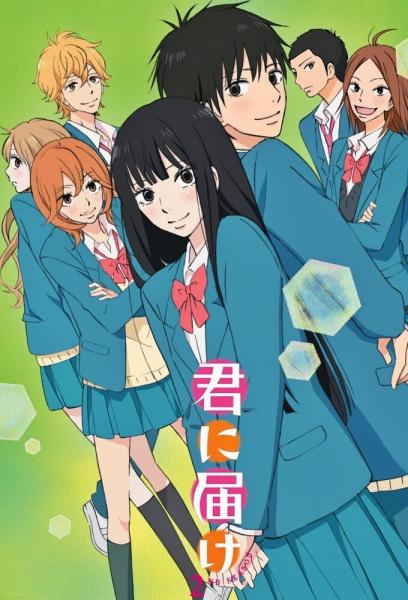
Feared and misunderstood because she resembles Sadako from *The Ring*, Sawako Kuronuma is stuck with the nickname “Sadako” despite her gentle, shy personality. Wanting nothing more than ordinary friendships, she finds herself drawn to Shouta Kazehaya—the bright, approachable boy everyone in class seems to like—and quietly admires how naturally he connects with others.
When Kazehaya sets up a class test of courage and urges her to join, Sawako takes it as a chance to step out of the shadows and start building real bonds, beginning with Ayane Yano and Chizuru Yoshida. As she navigates new experiences and feelings, Sawako realizes how much meeting Kazehaya is helping her change—without realizing she’s leaving an impact on him as well.
Otaku Consensus
Kimi ni Todoke endures because Hiro Kaburagi’s direction and Tomoko Konparu’s series composition treat small social breakthroughs with the gravity of major drama, with the early rumor-and-friendship material standing out as the season’s emotional core. Production I.G’s restrained shoujo presentation, expressive cutaway comedy, and patient pacing make the adaptation feel unusually attentive to inner hesitation. The common criticism is real: viewers resistant to slow-burn misunderstandings may find it too drawn out, and its shy-girl/popular-boy framework is less original than its reputation suggests.
Why You Should Watch
Watch Kimi ni Todoke if you want shoujo romance where the most satisfying victories are conversational, not confessional: a glance returned, a rumor challenged, a classmate finally seen clearly. It scratches the same gentle, restorative itch as Fruits Basket, but with less supernatural metaphor and more classroom social texture; it also shares Ore Monogatari!!’s belief that sincerity can be dramatic without becoming cynical. The show is especially rewarding for viewers who like romance built through friendship networks, female bonds, and emotional misreadings that come from inexperience rather than contrived cruelty. Production I.G gives it a soft, clean 2009 TV look, and the frequent chibi exaggerations keep the shyness from becoming airless. If you want tenderness without harem mechanics or ironic detachment, this is a defining modern shoujo adaptation.
Key Characters
- SSawako Kuronuma(VA: Mamiko Noto)
Sawako is compelling because the series frames her quietness not as a gimmick to be cured, but as a whole communication style that gradually finds listeners.
- SShouta Kazehaya(VA: Daisuke Namikawa)
Kazehaya remains a fan-favorite shoujo lead because his popularity is presented as social attentiveness rather than swagger, making his kindness feel active instead of ornamental.
- AAyane Yano(VA: Miyuki Sawashiro)
Ayane brings a sharper, more socially fluent perspective to the cast, often making the friendship dynamics feel more grounded than the central romance alone would.
- CChizuru Yoshida(VA: Yuko Sanpei)
Chizuru’s tomboyish bluntness gives the ensemble a warmer, rougher texture, balancing Sawako’s carefulness with open emotional momentum.
What Makes It Stand Out
- 1
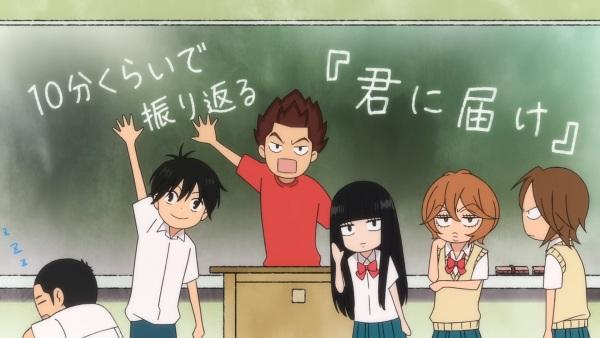
Production I.G adapts the series with a deliberately soft visual register: rounded expressions, clean classroom layouts, and frequent chibi deformation are used to externalize embarrassment without breaking the romantic tone.
- 2
The first season runs 25 episodes, giving it a full two-cour structure from October 2009 to March 2010; that length lets the show spend entire stretches on friendship repair and classroom perception rather than racing to romantic milestones.
- 3
The early bullying and rumor material is one of the adaptation’s defining arcs because it shifts the emotional center from whether the leads like each other to whether Sawako can be socially recognized by other girls on her own terms.
- 4
Tomoko Konparu’s series composition emphasizes cumulative micro-progress: repeated misunderstandings are not just obstacles, but a structural way to show how little experience the characters have with direct emotional language.
- 5
The show’s AniList tag profile is unusually revealing for a romance page: Shoujo, Coming of Age, Female Protagonist, Bullying, Tomboy, Gyaru, and Teacher tags point to an ensemble school drama rather than a romance built only around the central pair.
Fun Facts & Trivia
- Fun fact 1
- The anime is based on Karuho Shiina’s manga, and the 2009 TV adaptation arrived through Production I.G, a studio more commonly associated by many fans with polished action, sports, and prestige TV productions than with soft-spoken shoujo romance.
- Fun fact 2
- Hiro Kaburagi directed the season, with Norihiro Naganuma credited as assistant director and Tomoko Konparu handling series composition, giving the adaptation a clearly organized emotional rhythm across its 25 episodes.
- Fun fact 3
- The character-design workload was unusually distributed: Yuka Shibata handled character design, while Shouko Nakamura, Reina Igawa, Hitomi Hasegawa, and Hitomi Satou are all credited with sub character design.
- Fun fact 4
- Despite mixed critical notes about conventional setup and slow pacing, the series has remained highly visible with a MAL popularity placement around the top 200 and over half a million MAL score votes in the provided data.
- Fun fact 5
- The franchise’s later third season drew renewed critical attention, a sign that the 2009 adaptation built enough long-term attachment for viewers to return to these characters well beyond the original airing window.
Studios
- Production I.G