Kengan Ashura Part 2
ケンガンアシュラ Part 2
- Action
- Martial Arts
- Episodes
- 12
- Duration
- 24 min per ep
- Aired
- Oct 31, 2019
- Status
- Finished Airing
Synopsis
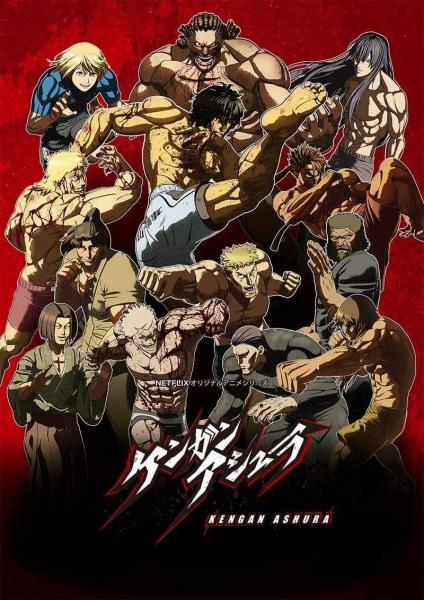
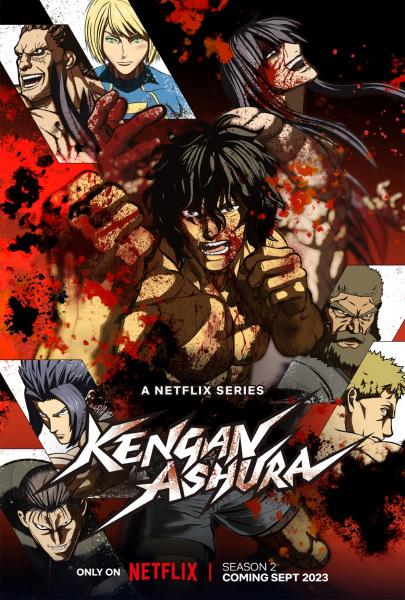
*Kengan Ashura Part 2* continues the story in the latter half of *Kengan Ashura*, returning to the brutal underground world where corporate disputes are settled through no-holds-barred gladiator matches.
As the Kengan battles press on, fighters and their backers push deeper into high-stakes confrontations, with each bout raising the intensity and testing the limits of strength, technique, and resolve.
Otaku Consensus
Kengan Ashura Part 2 is strongest when Larx Entertainment treats combat as continuous physical performance: reviewers consistently single out the choreography for making exchanges feel like bodies colliding rather than still images trading impact lines. The 12-episode run earns its 7.66 MAL and 76/100 AniList reception through ruthless pacing, adult-cast intensity, and a tournament stretch that lets character development happen inside the fights. Its chief limitation is the same obsession that powers it: there is little room for quiet interaction or emotional decompression between bouts.
Why You Should Watch
Watch Kengan Ashura Part 2 if you want fight anime built around technique, momentum, and physical identity rather than long speeches about friendship. It scratches a similar itch to Baki in its fascination with specialized bodies and extreme martial logic, while feeling more bracket-focused and businesslike than Record of Ragnarok’s mythic showdowns. The appeal is specific: a primarily adult, mostly male cast, pro-wrestling psychology, vice-grip gimmicks, and CG staging that keeps grapples, throws, and counters legible in motion. If you want action without school-life padding, comedy detours, or long training-arc pauses, these 12 episodes are engineered like a highlight reel for viewers who judge a series by whether every punch has a tactical reason to exist.
Key Characters
- OOhma
Ohma stands out for the calm, almost clinical confidence he brings into mismatched fights, making him less a loud shounen hero than a pressure-tested martial instrument.
- KKazuo Yamashita
Kazuo Yamashita gives the series its anxious civilian lens: a low-level employee forced into a world where corporate hierarchy suddenly depends on violence he cannot control.
- LLihito
Lihito is memorable because his arrogance is tied to a concrete fighting gimmick, a superhuman vice-like grip that makes even simple contact feel dangerous.
- JJun Sekibayashi
Jun Sekibayashi embodies the show’s respect for pro wrestling, treating performance, pain tolerance, and crowd psychology as legitimate combat weapons.
What Makes It Stand Out
- 1
Larx Entertainment’s CG-heavy approach is central to the show’s identity, reflected in AniList’s 77% CGI tag and in reviews praising fights that stay in motion instead of relying on static impact frames.
- 2
The martial-arts focus is unusually explicit in the audience tagging: AniList marks Martial Arts at 100% and Wrestling at 90%, which matches how the series foregrounds styles, counters, holds, and performance-based combat personas.
- 3
Part 2 is a compact 12-episode continuation released on October 31, 2019, so its pacing is closer to a sustained tournament sprint than a conventional seasonal build-up.
- 4
The cast profile is part of the texture: AniList tags it as Primarily Male Cast at 79% and Primarily Adult Cast at 74%, giving the fights a workplace-and-prizefighter atmosphere rather than a school-age battle-anime rhythm.
- 5
Jun Sekibayashi’s pro-wrestling framing is not just flavor text; Netflix’s own episode copy emphasizes his belief that wrestlers are actors who put on a show, which explains why his matches are staged around spectacle as much as damage.
Fun Facts & Trivia
- Fun fact 1
- The anime is based on the work of original story creator Yabako Sandrovich, with original character designs credited to Daromeon, preserving the manga’s emphasis on exaggerated physiques and combat-specialist silhouettes.
- Fun fact 2
- The opening side of the production has a named creative throughline: Masato Matsune is credited for both storyboard and episode direction on the OP, while Happy Heads NANIYORI performs the opening theme.
- Fun fact 3
- The ending theme is performed by Taeyoung Boy, giving Part 2 separate credited musical identities for its opening and closing sequences.
- Fun fact 4
- Pedro Crispim is credited as the Portuguese ADR director, a reminder that the Netflix-distributed series was prepared with international dubbing workflows in mind.
- Fun fact 5
- Shinichi Tabe is credited as production assistant on episodes 1, 2, 4, 5, 9, and 12, meaning his production involvement spans both the opening stretch and the finale of this 12-episode part.
Studios
- Larx Entertainment