The Stranger by the Shore
海辺のエトランゼ (Umibe no Étranger)
- Boys Love
- Adult Cast
- Psychological
- Episodes
- 1
- Duration
- 58 min
- Aired
- Sep 11, 2020
- Status
- Finished Airing
Synopsis
Shun Hashimoto, an openly gay aspiring novelist in Okinawa, lives with the hurt of being rejected by his parents after coming out. Mio Chibana, a quiet high school student who has lost his family, often drifts to the shoreline, keeping to himself. When their paths cross on the beach, Shun finds himself drawn to Mio, and the two begin to spend more time together—until Mio suddenly reveals he must leave for the mainland.
Three years later, Mio returns to Okinawa at 20, determined to finally tell Shun how he feels. But time apart has changed Shun’s life, and Mio’s confession forces him to confront what he’s willing to accept—and whether he can make room for the commitment Mio is asking for.
Otaku Consensus
The Stranger by the Shore lands as a delicate, visually distinctive BL romance whose strongest assets are Akiyo Oohashi's restrained direction, Studio Hibari's preservation of Kanna Kii's soft character sensibility, and an adaptation unusually shaped by Kii's own supervision. Its 7.8 MAL and 78 AniList reception matches the critical split: viewers praise the coastal mood and adult queer intimacy, while the one-episode compression makes pacing and emotional depth the recurring complaint.
Why You Should Watch
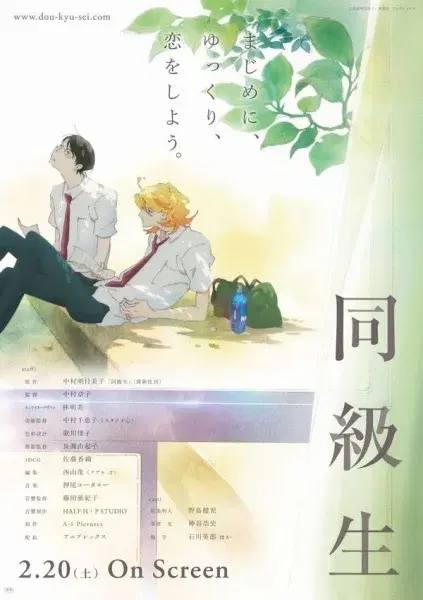
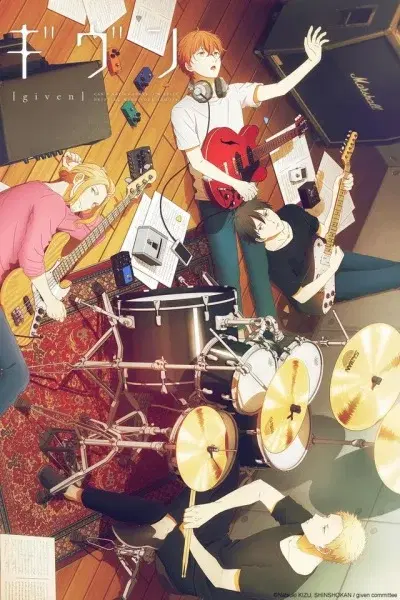
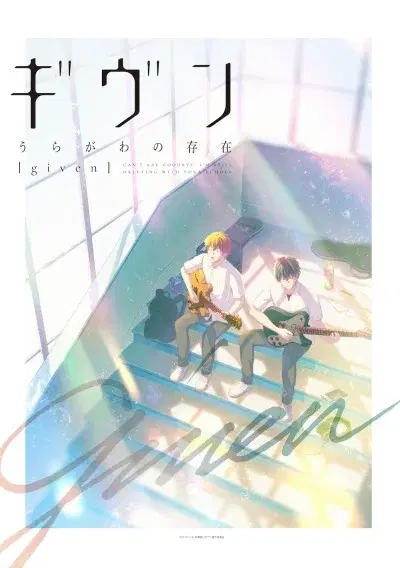
Watch The Stranger by the Shore if you want BL that treats desire as a lived-in adult negotiation rather than a parade of tropes or shock turns. It scratches the same intimate itch as Doukyuusei, and the same emotionally cautious queer space that fans often seek in Given, but in a shorter, sun-bleached package built around cohabitation, work, writing, and silence as much as confession. Studio Hibari and director Akiyo Oohashi keep the scale small: rooms, sea air, pauses, and body language do much of the heavy lifting. The ideal viewer is someone who likes romantic anime that leaves rough edges visible: awkward timing, unequal readiness, and affection that has to be chosen, not just announced.
Key Characters
- SShun Hashimoto
Shun stands out as a BL lead whose appeal comes from hesitation and self-protection rather than romantic decisiveness, giving the film much of its adult emotional friction.
- MMio Chibana
Mio is remembered less as a typical quiet love interest and more as the character who forces the story to treat longing as something direct, physical, and difficult to ignore.
What Makes It Stand Out
- 1
Original creator Kanna Kii is not just credited as the source author; she also served as supervisor and character designer, giving the adaptation a unusually direct line back to the manga's visual identity.
- 2
The film's single-episode structure includes a prominent time-skip element, a choice reflected in AniList's 62% Time Skip tag and central to both its emotional appeal and its most common pacing criticism.
- 3
Its database profile points to a more adult-leaning BL than the school-romance label might suggest: AniList tags include Primarily Adult Cast at 66%, Cohabitation at 68%, Work at 41%, and Writing at 49%.
- 4
Studio Hibari's production emphasizes the coastal setting as part of the viewing texture, with AniList's Coastal tag at 56% and Iyashikei at 48% capturing why many viewers remember the film for atmosphere as much as romance.
- 5
The sound department is specifically anchored by Akiko Fujita as sound director and Eiko Morikawa on sound effects, a notable credit pairing for a film that relies heavily on pauses, domestic quiet, and environmental mood.
Fun Facts & Trivia
- Fun fact 1
- The anime aired on September 11, 2020 and is listed as a completed one-episode production from Studio Hibari, making it closer to a compact film experience than a standard TV BL series.
- Fun fact 2
- Kanna Kii holds three key credits on the project: original creator, supervisor, and character designer, which is one reason the adaptation is often discussed in terms of its fidelity to the source's look.
- Fun fact 3
- Its reception is strong but not runaway: MAL lists it at 7.8 from 117,253 votes, with a rank of #1179 and popularity of #1280, while AniList records a 78/100 score and 3,534 favourites.
- Fun fact 4
- The tag contrast is revealing: MAL gives it the broad genre label Boys Love with no listed theme, while AniList breaks its identity into LGBTQ+ Themes at 93%, Age Gap at 65%, Bisexual at 58%, and Bullying at 52%.
- Fun fact 5
- Critical summaries repeatedly circle the same tradeoff: the film's art style and atmosphere are its selling points, while its compressed pacing and limited story depth are the main objections from less satisfied viewers.
Studios
- Studio Hibari