Made in Abyss: The Golden City of the Scorching Sun
メイドインアビス 烈日の黄金郷 (Made in Abyss: Retsujitsu no Ougonkyou)
- Adventure
- Drama
- Fantasy
- Mystery
- Sci-Fi
- Gore
- Episodes
- 12
- Duration
- 25 min per ep
- Aired
- Jul 6, 2022 to Sep 28, 2022
- Status
- Finished Airing
Synopsis
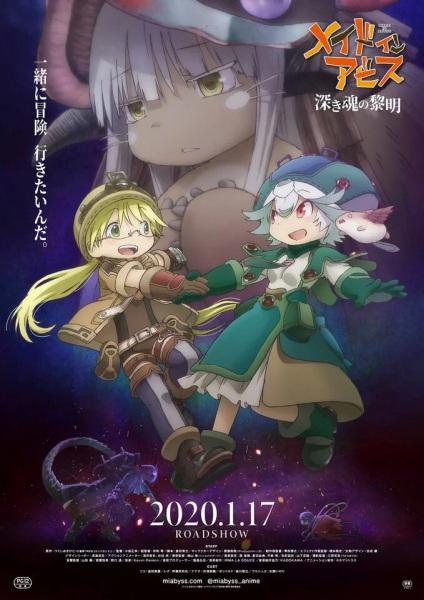
After enduring the ordeal at Idofront, Riko emerges with a White Whistle at her side—an essential key to pushing deeper into the Abyss. With Reg and Nanachi, she descends to the sixth layer, the Capital of the Unreturned, where the remnants of the long-rumored Golden City are said to lie among ancient ruins.
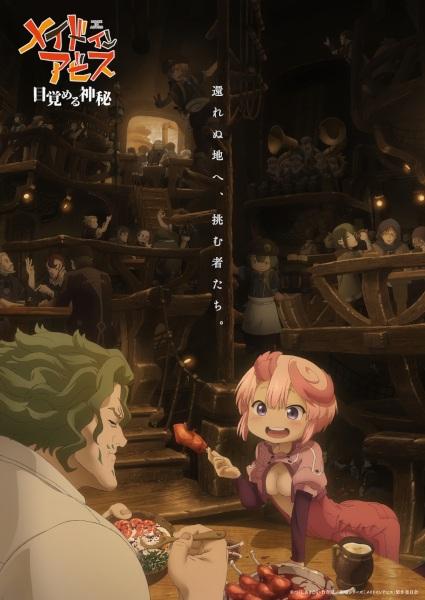
The deeper realm offers little mercy: unfamiliar predators, hostile terrain, and an ever-present feeling that something is watching. Their search draws them to a settlement occupied by unsettling beings called “hollows,” and the trio presses forward despite the disquieting welcome, determined to piece together the village’s secrets and the traces left behind by earlier delvers lost to the Abyss.
Otaku Consensus
The Golden City of the Scorching Sun is widely treated as one of 2022's strongest dark-fantasy productions because Masayuki Kojima's direction, Kinema Citrus's tactile art design, and Kevin Penkin's choral-electronic score turn the sixth-layer village arc into a full social organism rather than a simple dungeon stop. Its reputation is also unusually polarized: admirers cite adaptation confidence, atmosphere, and worldbuilding density, while the most persistent criticism is that the main trio can feel sidelined by the arc's backstory, slower pacing, and escalating body-horror cruelty.
Why You Should Watch
Watch this if you want fantasy that studies a civilization like an archaeological wound: laws, language, economics, rituals, and trauma all embedded in the setting rather than explained through lectures. It scratches the same itch as Shinsekai Yori's unsettling social anthropology and the harsher survival passages of Hunter x Hunter, but with a more intimate, storybook-nightmare texture. This season is strongest for viewers who like adventure anime without clean heroic momentum; progress here is emotional, moral, and environmental as much as geographic. If you are drawn to child protagonists placed against systems far older and more indifferent than they are, and you can handle explicit gore and discomforting creature design, this is the series operating at its most alien and philosophically dense.
Key Characters
- NNanachi(VA: Shiori Izawa)
Nanachi remains the cast's emotional pressure valve, mixing clinical survival knowledge with a guarded tenderness that fans often read as the series' most humane counterweight to the Abyss.
- RReg(VA: Mariya Ise)
Reg is compelling because his mechanical body makes him look like the party's safest member while his uncertainty and empathy constantly complicate that role.
- RRiko(VA: Miyu Tomita)
Riko's fascination with the Abyss is interesting less as recklessness than as a worldview: she treats curiosity as a moral engine even when the setting keeps proving that knowledge has a cost.
What Makes It Stand Out
- 1
Kinema Citrus keeps the franchise's signature contrast intact: rounded, storybook character silhouettes move through backgrounds and creature designs that become increasingly biological, corroded, and hostile. That visual contradiction is central to why the season's gore lands as more than shock punctuation.
- 2
The season's structure pivots from travel-adventure into an extended anthropological arc, asking the audience to understand a closed society through customs, exchange, status, and taboo. This is the source of both its acclaim and its pacing complaints, since the arc deliberately withholds forward expedition momentum.
- 3
Language barrier is not just a tag here; the season frequently makes comprehension feel earned through tone, gesture, visual hierarchy, and repeated social rules. That choice gives the sixth-layer community a lived-in texture without flattening it into exposition.
- 4
Kevin Penkin's score is a major part of the season's identity, blending fragile vocal writing, ritualistic percussion, and electronic ambience to make the setting feel sacred and contaminated at once. Even negative user reactions commonly separate the music and sound design as strengths.
- 5
The final stretch is built to play like a culmination of social rules established across the season rather than a conventional boss-route climax. Viewers who respond to setup-and-payoff through culture, value systems, and moral consequence tend to rate this arc far higher than those looking for continuous exploration.
Fun Facts & Trivia
- Fun fact 1
- The anime aired for 12 episodes from July 6 to September 28, 2022, with Kinema Citrus handling production and Masayuki Kojima directing from series composition by Hideyuki Kurata.
- Fun fact 2
- The design credits are unusually broad for a TV season: Kazuchika Kise and Yuka Kuroda are both credited for character design, Takumi Sakura handled prop design, and Kazuo Miyamura is specifically credited for the title logo design.
- Fun fact 3
- Art direction is credited to both Osamu Masuyama and Hikaru Sekiguchi, reflecting how central environment work is to this season's appeal; the sixth layer depends on ruins, dwellings, organic textures, and scale shifts more than on ordinary location variety.
- Fun fact 4
- AniList's tag profile captures why the season feels different from a standard adventure sequel: Survival sits at 96%, Primarily Child Cast at 94%, Curses at 92%, Gore and Lost Civilization both at 88%, and Philosophy at 76%.
- Fun fact 5
- Beyond MyAnimeList's 8.59 score, the season also holds an AniList score of 85/100 with 5,724 favourites, showing that its strong reception extends across major anime-tracking communities despite the visible backlash over pacing and content.
Studios
- Kinema Citrus