The Café Terrace and Its Goddesses
女神のカフェテラス (Megami no Café Terrace)
- Comedy
- Ecchi
- Romance
- Adult Cast
- Harem
- Workplace
- Episodes
- 12
- Duration
- 23 min per ep
- Aired
- Apr 8, 2023 to Jun 24, 2023
- Status
- Finished Airing
Synopsis
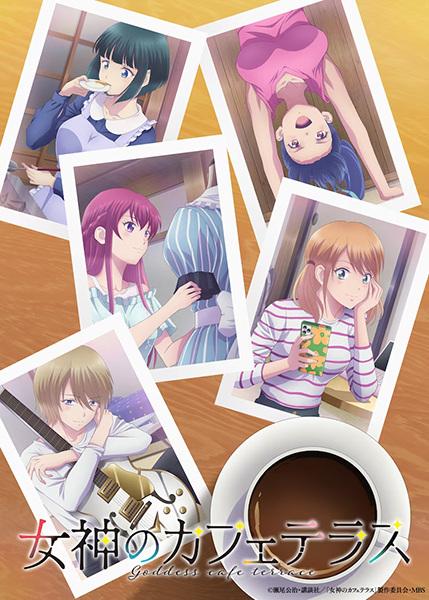
After his grandmother Sachiko dies, Hayato Kasukabe leaves Tokyo to settle her affairs and inherits Familia Café Terrace. Planning to tear the place down and turn the lot into a parking area, he’s caught off guard to find five young women living there—Ouka Makuzawa, Akane Hououji, Riho Tsukishima, Shiragiku Ono, and Ami Tsuruga—whom Sachiko had taken in before she passed.
Deeply attached to Sachiko and the café they’ve come to call home, the girls refuse to let it disappear. Their pushback forces Hayato to reconsider, stirring memories of his time with his grandmother and his own affection for the café. With a reluctant change of heart, he decides to continue Sachiko’s legacy, relying on the five “goddesses” to help keep Familia Café Terrace alive.
Otaku Consensus
The Café Terrace and Its Goddesses lands as a solidly received Kouji Seo adaptation, reflected in its 7.32 MAL average and 71/100 AniList score, because Satoshi Kuwabara’s direction keeps the 12-episode run brisk and Keiichirou Oochi’s series composition treats the café as a functioning workplace rather than just a harem stage. Its best asset is the ensemble rhythm: comedy, ecchi interruption, and small business routine are paced tightly enough to make the “five goddesses” feel like competing personalities inside one shared system. The main criticism is equally clear: viewers resistant to familiar shounen harem escalation, fanservice, and nudity will find the workplace texture less fresh than the show’s strongest fans do.
Why You Should Watch
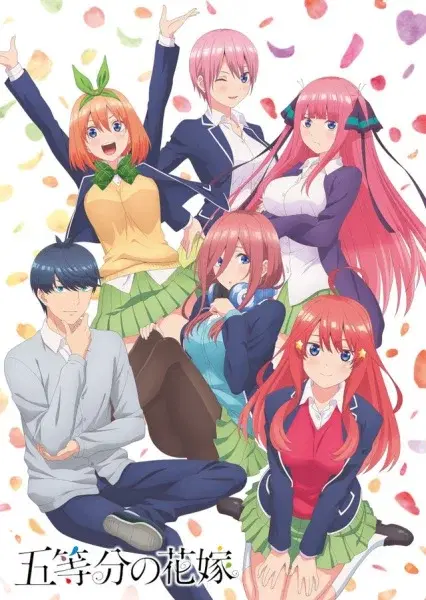
Watch this if you want a harem rom-com with payroll, chores, customer service, and house rules baked into the romantic chaos. It scratches the same itch as The Quintessential Quintuplets by turning a female ensemble into week-to-week allegiance warfare, but swaps tutoring and exams for café shifts, cohabitation friction, and the question of who actually helps keep the business alive. It also has the workplace bounce of Working!!, only with a much more brazen ecchi streak and a coastal summer mood. The appeal is not a mystery-box romance; it is watching five sharply differentiated heroines collide with a blunt male lead inside a shared routine that forces every joke, flirtation, and argument to happen at close range.
Key Characters
- HHayato Kasukabe
Hayato is interesting because he brings a businesslike, unsentimental bluntness to a genre that often relies on passive male leads, making him a useful source of friction instead of just a romantic prize.
- OOuka Makuzawa
Ouka stands out as the kind of heroine whose sharp tongue and pride make every café interaction feel like both a workplace dispute and a romantic skirmish.
- AAkane Hououji
Akane gives the ensemble a cooler, more composed counterweight, and her band-associated tag presence separates her from the purely domestic or maid-café archetypes.
- AAmi Tsuruga
Ami is the cast’s high-impact comedy engine, the character most likely to turn a routine café beat into physical chaos or absurd timing.
What Makes It Stand Out
- 1
Tezuka Productions handled the adaptation, and the show’s visual priority is character readability: five heroines with distinct silhouettes, colors, and expressions are kept easy to track during fast ensemble scenes.
- 2
The AniList tag profile is unusually explicit about the show’s identity: Work at 92%, Primarily Female Cast at 92%, Female Harem at 88%, Maids at 86%, and Primarily Adult Cast at 72%. That combination positions it closer to a workplace harem than a standard school-romance setup.
- 3
The 12-episode Spring 2023 run has a compact cour structure, airing from April 8 to June 24, 2023, which gives the season a quick sitcom cadence rather than a slow-burn dramatic build.
- 4
The staff lineup pairs Satoshi Kuwabara as director with Keiichirou Oochi on series composition and Masatsune Noguchi on character design, a division of labor that makes the adaptation heavily dependent on timing, ensemble management, and immediately legible heroine appeal.
- 5
Miki Sakurai’s music credit is notable because the series needs to shift rapidly between café bustle, romantic tension, slapstick, and ecchi punchlines without changing locations as often as adventure or school-event anime.
Fun Facts & Trivia
- Fun fact 1
- The anime is based on a manga by Kouji Seo, a creator strongly associated with shounen romance and ensemble romantic drama, making this series part of a recognizable authorial lane rather than a one-off harem property.
- Fun fact 2
- Its reception is consistent across major fan-tracking platforms: MAL lists it at 7.32/10 from 73,944 votes, while AniList records a 71/100 score and 1,276 favourites.
- Fun fact 3
- MAL ranks the series at #3015 while its popularity sits much higher at #1641, a gap that fits a broadly sampled rom-com with stronger visibility than critical ranking.
- Fun fact 4
- The production credits include separate leads for art direction, color design, photography, editing, sound direction, and music: Masami Saitou, Yumi Aburaya, Nozomi Shitara, Wataru Uchida, Satoshi Motoyama, and Miki Sakurai.
- Fun fact 5
- AniList’s lower-percentage tags add texture to the premise: Coastal at 46%, Food at 43%, Orphan at 35%, Cohabitation at 30%, and Band at 24%, showing that the series is cataloged by more than just its harem and ecchi components.
Studios
- Tezuka Productions