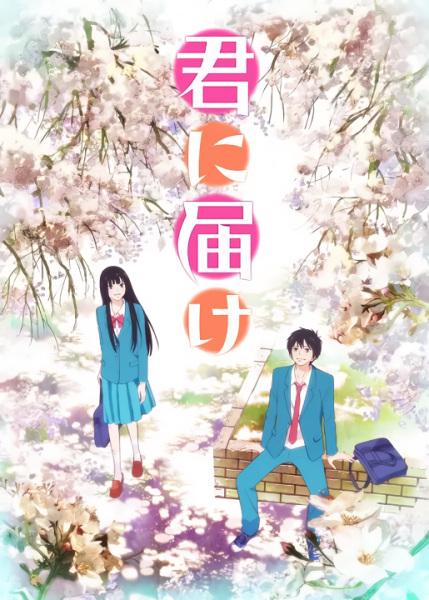
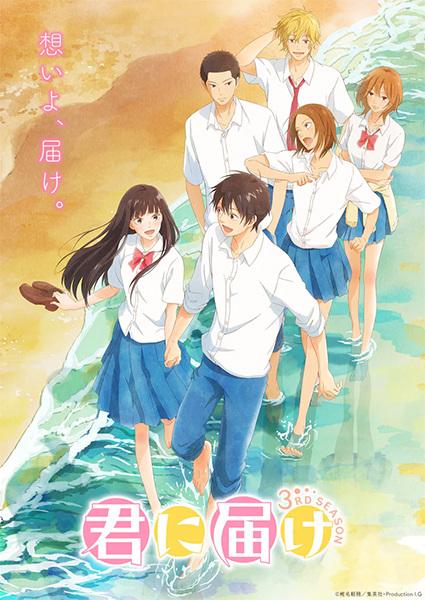
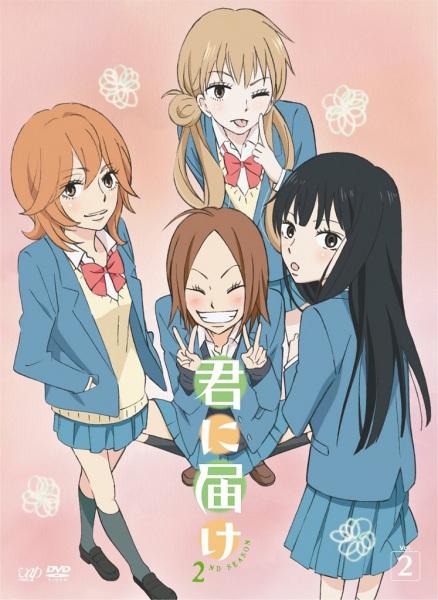
Kimi ni Todoke: From Me to You Season 2
君に届け 2ND SEASON (Kimi ni Todoke 2nd Season)
- Drama
- Romance
- School
- Episodes
- 12
- Duration
- 23 min per ep
- Aired
- Jan 12, 2011 to Mar 30, 2011
- Status
- Finished Airing
Synopsis
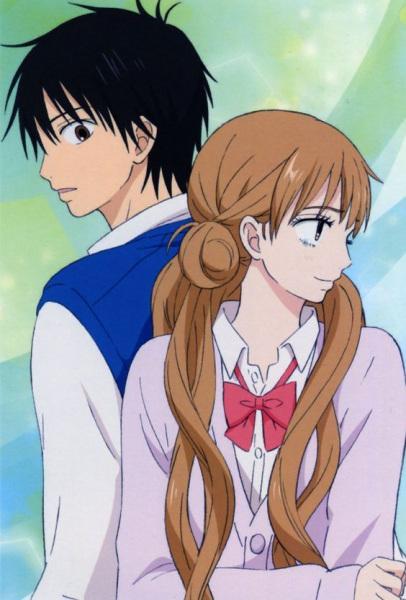
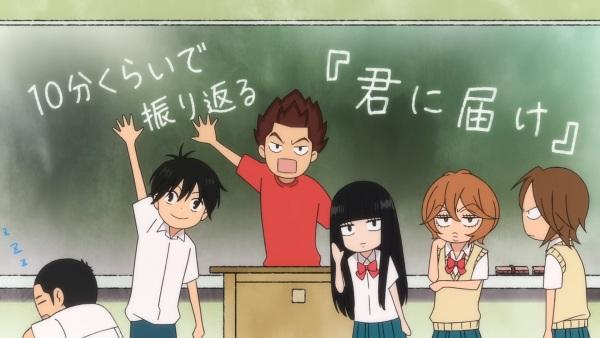
After an eventful New Year’s break and with Valentine’s Day on the horizon, Sawako Kuronuma finds herself steadily opening up to her classmates. But once she recognizes her feelings for the well-liked Shouta Kazehaya, her usual sincerity turns into hesitation—especially when it comes to giving him the customary chocolates. Sensing the change, Kazehaya, who cares for Sawako as well, can’t help but feel a growing gap between them.
As February gives way to April, Sawako starts her second year of high school in the same class as close friends Ayane Yano and Chizuru Yoshida, alongside Kazehaya, his friend Ryuu Sanada, and a new transfer student, Kento Miura. When Kento takes an interest in Sawako, the unspoken emotions between her and Kazehaya are challenged in unexpected ways.
Otaku Consensus
Season 2 is a sharper but more divisive continuation: Hiro Kaburagi and Tomoko Konparu lean into shoujo discomfort, turning pauses, advice, and misunderstandings into the season’s main dramatic engine. The Valentine’s-to-second-year stretch gives the romance real suspense and a stronger triangle dynamic, but the dominant criticism is justified: after Season 1’s emotional progress, the renewed hesitation can feel like a frustrating backslide stretched across an already short 12-episode cour.
Why You Should Watch
Watch Season 2 if you want shoujo romance that treats a sentence left unsaid as consequential, without rushing into melodrama or spectacle. Compared with the broader friendship warmth of Season 1, these 12 episodes are narrower and thornier: embarrassment, social advice, and badly timed kindness become the real antagonists. It scratches the same slow-burn itch as the gentler school-romance stretches of Fruits Basket and Ao Haru Ride, but Production I.G keeps it smaller, more classroom-bound, and more invested in silence than speeches. Viewers who need constant forward motion may bounce off it; viewers who like romance as a study of teenage communication, where friends can help and also make everything worse, will find its patience the point.
Key Characters
- SSawako Kuronuma
Season 2 makes Sawako compelling by testing whether her famous sincerity can survive self-consciousness, romantic pressure, and well-meaning interference.
- SShouta Kazehaya
Kazehaya’s appeal here comes from seeing the popular, emotionally direct boy become visibly rattled by distance he cannot solve with charm alone.
- AAyane Yano
Ayane remains one of the show’s most useful social readers, the friend whose advice can feel both protective and dangerously overconfident.
- KKento Miura
Kento is memorable less as a simple rival than as a catalyst who turns private hesitation into a public, socially negotiated problem.
What Makes It Stand Out
- 1
Production I.G handles the season with a restrained school-romance approach, emphasizing character spacing, reaction timing, and awkward silence rather than visual excess.
- 2
The core creative team is explicitly continuity-minded: Hiro Kaburagi directs, Norihiro Naganuma serves as assistant director, and Tomoko Konparu oversees series composition from Karuho Shiina’s manga.
- 3
Its 12-episode winter 2011 run narrows the focus heavily toward romance drama, which is why many reviews describe the season as more suspenseful yet slower than the first.
- 4
AniList’s high Love Triangle and Unrequited Love tags are not incidental labels; Kento Miura’s arrival makes the season’s central tension less about attraction and more about interpretation, timing, and social advice.
- 5
Contemporary viewer response repeatedly singles out the late-season stretch, especially around episode 9, as engaging and question-raising while still feeding the complaint that the story withholds resolution for a long time.
Fun Facts & Trivia
- Fun fact 1
- Karuho Shiina is credited as the original creator, while the anime adaptation was produced by Production I.G, a studio more widely associated with polished, detail-conscious TV production than with disposable romance filler.
- Fun fact 2
- The character-design credits are unusually layered: Yuka Shibata is the main character designer, with Shouko Nakamura, Reina Igawa, Hitomi Hasegawa, and Hitomi Satou credited for sub character design; Hasegawa is also listed for accessory design.
- Fun fact 3
- The season aired from January 12 to March 30, 2011, meaning its winter broadcast calendar closely matched the story’s February-to-spring school-year emotional rhythm.
- Fun fact 4
- Its reception numbers show durable popularity rather than cult obscurity: MAL lists it at 7.98 from 322,112 votes, with a #781 rank and #456 popularity, while AniList records a 79/100 score and 2,312 favourites.
- Fun fact 5
- AniList tags it as 98% Shoujo and 82% School, but also gives it 56% Male Protagonist, reflecting how Season 2 spends notable emotional attention on Kazehaya’s side of the romantic stalemate.
Studios
- Production I.G