The Take
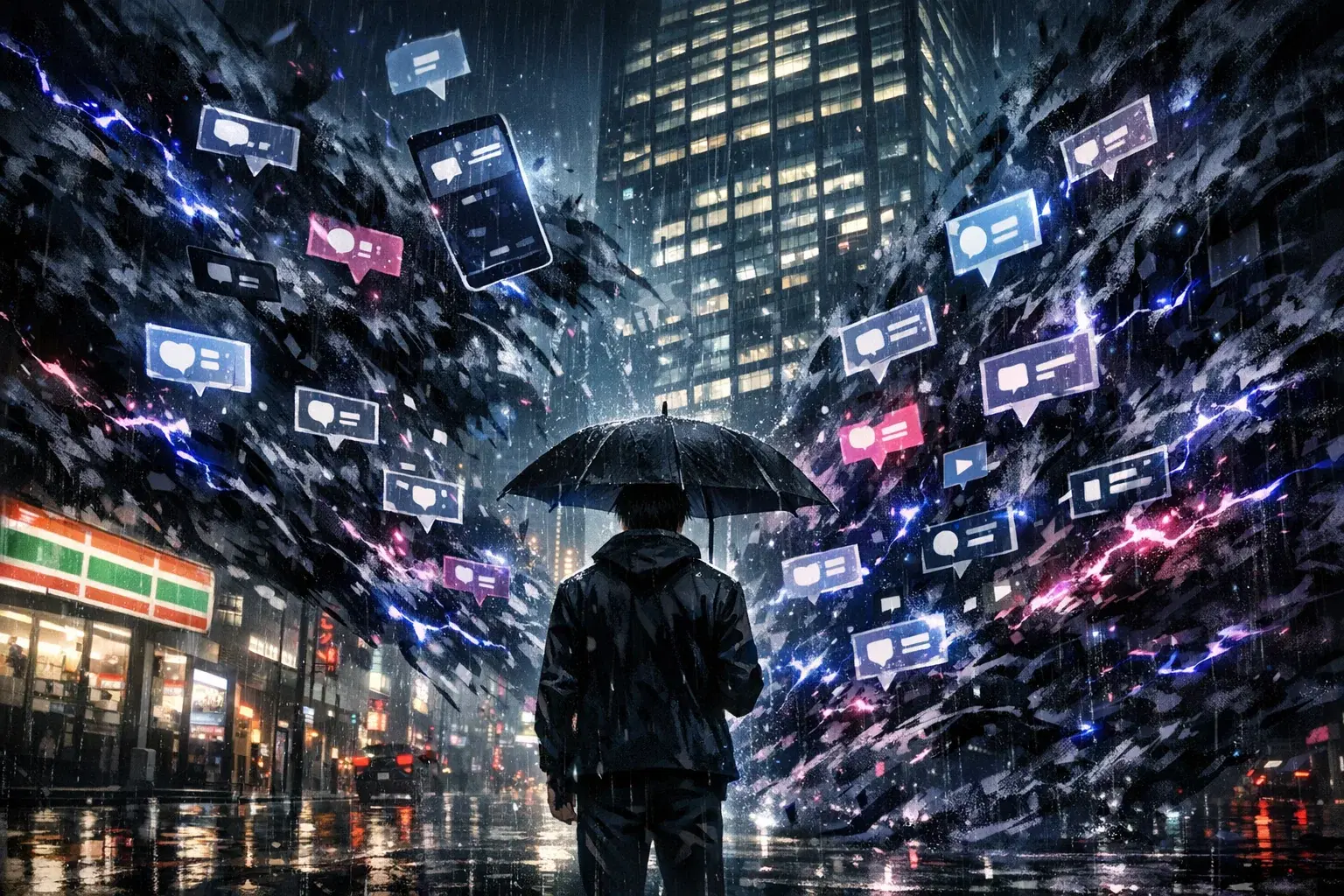
The hate piling onto Jujutsu Kaisen’s English dub voice actor Alex Le right now is not a sign of “fans being passionate”—it’s a sign that parts of anime fandom have confused consumption with ownership. Critiquing a performance is fair game. Dogpiling a working actor across social platforms, tagging them, quote-tweeting them to farm likes, and treating a casting choice like a moral offense is not critique. It’s harassment wearing the mask of media literacy.
And the timing matters. In 2026, English dubs aren’t a niche add-on; they’re a core part of how global audiences experience anime. The industry is investing in faster dub pipelines and same-day releases, which means actors are more visible, feedback loops are tighter, and outrage cycles spin up faster than ever. If we can’t separate “I don’t like this performance” from “this person deserves to be punished,” we’re not protecting anime—we’re making the community worse, and we’re making the work environment around anime worse.
Otaku Insider’s stance is simple: you can dislike a dub, prefer subs, or think a different direction would’ve worked better. But the moment the conversation becomes personal, punitive, or performative—especially toward actors who don’t control scripts, localization constraints, or casting decisions—you’ve left criticism behind.
The Evidence
First, let’s establish the broader context: the dub ecosystem in 2026 is accelerating. Crunchyroll and other distributors are increasingly public about dub rollouts—announcing release dates, casts, and crews in a way that turns dub production into a front-facing marketing beat rather than a behind-the-scenes process. Just this month, Crunchyroll published dub announcements with specific premiere dates for new titles, emphasizing how quickly English tracks are landing after Japanese broadcast. For example, Agents of the Four Seasons: Dance of Spring’s English dub was promoted with a clear “first episode debuts” date (April 11), and The Beginning After the End Season 2’s dub similarly arrived on a tight schedule (April 15).
That matters because speed changes fan behavior. When dubs arrive quickly, they’re judged in near-real time alongside the Japanese track. There’s less “catch-up buffer,” less time for consensus to form, and more opportunity for hot takes to metastasize into dogpiles. And because casts are announced loudly, individual actors become the most visible “handle” for audience frustration—even when the frustration is actually about direction, adaptation choices, mic mixing, or the simple fact that a long-running mental image of a character’s voice has calcified in fans’ heads.
Second, the industry trend toward same-day dubs raises the stakes further. Anime News Network reported that Kill Blue received a same-day English dub produced by Bang Zoom!. Same-day dubs are a win for accessibility and global parity, but they also shrink the margin for error and amplify scrutiny. When something doesn’t land for a segment of viewers, the target is rarely “the pipeline” or “the production constraints.” It’s a person—usually the actor—because a person is easy to blame.
Third, convention culture and online culture are now tightly linked. Anime News Network’s reporting on major convention guests (like Anime NYC’s 2026 slate) underscores how much the industry relies on fan-facing personalities and live appearances. Voice actors are no longer just voices; they’re expected to be public-facing ambassadors. That visibility is good for careers and for fans—until it becomes a funnel for harassment. The same platforms that let fans celebrate an actor’s work also let mobs coordinate pressure campaigns, flooding replies and DMs with insults disguised as “feedback.”
Fourth, we’ve watched a parallel dynamic play out in adjacent controversies: misinformation and automated amplification. ANN recently highlighted a case where xAI’s Grok AI produced a high-profile mistranslation/confusion involving Witch on the Holy Night and Madoka Magica. It’s not the same topic as dub hate—but it’s the same ecosystem problem: speed + virality + low-friction posting creates confident wrongness at scale. In dub discourse, that often looks like people repeating claims about what an actor “did,” “said,” or “ruined,” with little interest in verifying context.
Finally, the most important piece of evidence is structural: actors are not the final authors of what you hear. They interpret a script under a director’s guidance, within time constraints, often matching lip flaps and scene timing. If you dislike a line read, that may be a direction choice. If you dislike a localization decision, that’s not the actor. If you dislike a casting fit, that’s a casting and production decision. You can argue those choices—passionately!—without turning Alex Le (or any actor) into a punching bag.
This is why the current Alex Le hate wave should be treated as a warning flare. It’s not just about one person; it’s about whether anime fandom in 2026 can handle a globalized, fast-turnaround dubbing industry without defaulting to scapegoating.
To zoom out, this isn’t unique to Jujutsu Kaisen. We’ve seen how intense emotional investment can turn entertainment into identity across fandoms—whether you’re debating tragic catharsis in Anohana: The Flower We Saw That Day, arguing over what “definitive” even means in recap/alternate edits like Death Note: Relight, or fighting franchise wars that have nothing to do with craft.
Even titles that are fundamentally cozy or contemplative can become battlegrounds when fans treat preference as righteousness. If you want a reminder that “tone” is a choice and interpretation varies, revisit something like Mushi-shi: The Shadow that Devours the Sun. The point isn’t that everyone must agree—it’s that disagreement doesn’t require dehumanization.
The Counterargument
There is a real argument on the other side: fans should be allowed to criticize performances, and the anime industry shouldn’t be shielded from feedback just because the work is hard. Some viewers also feel that dub casting in major shonen properties carries extra responsibility—these are iconic roles, and a misfire (in their view) can meaningfully reduce enjoyment. Others will argue that public-facing actors benefit from visibility and therefore must accept the downsides of public commentary.
All of that contains a kernel of truth. Criticism is part of art. And yes, if you’re a professional performer, people will talk about your work.
But here’s where the counterargument collapses: most of what’s being labeled “criticism” in these hate waves is not actually critique. Critique is specific, proportional, and aimed at the work. Harassment is repetitive, personal, and aimed at the person. “This line feels flat; I think the direction should’ve leaned more restrained” is critique. “You ruined the character,” “you don’t deserve to work,” “go away,” or mass-tagging an actor so they can’t escape the pile-on is harassment.
Also, the “they chose to be public” argument is a moral shortcut. Visibility is part of the job; abuse isn’t. We don’t accept that logic in other creative fields—authors, athletes, or journalists—and we shouldn’t normalize it in anime just because online culture has numbed people to cruelty.
And if the real goal is better dubs, harassment is counterproductive. It pushes talent away, encourages safer and blander casting, and incentivizes studios to reduce transparency. If you like dubs at all—even occasionally—you should want an environment where actors can do their jobs without becoming a trending target.
The Conclusion
The hate Alex Le is getting in the Jujutsu Kaisen dub discourse is bigger than one performance: it’s a stress test for anime fandom in 2026. As English dubs become faster, more prominent, and more central to global anime releases, the community has to grow up with the medium. That means defending the difference between critique and harassment, and refusing to treat real people as disposable vessels for disappointment.
Otaku Insider’s take: if your “feedback” requires tagging an actor, insulting them, questioning their worth, or rallying others to pile on, you’re not protecting the story—you’re poisoning the space where stories are made.
If you want to talk craft, talk craft. Compare performances across genres. Talk about how emotional clarity lands in tearjerkers like Anohana: The Flower We Saw That Day, or how atmosphere and restraint work in Mushi-shi: The Shadow that Devours the Sun. Debate adaptation choices the way people debate tonal shifts in franchise entries like Kaguya-sama: Love is War -The First Kiss That Never Ends- or the expectations fans bring into long-running isekai like That Time I Got Reincarnated as a Slime and That Time I Got Reincarnated as a Slime Season 2. But keep it aimed at the work, not the worker.
Where do you draw the line between fair criticism and harassment in dub discourse—and what do you think fandom should do when the pile-on starts?
Sources
- [1] Agents of the Four Seasons: Dance of Spring English Dub Reveals Release Date, Cast and Crew (CRUNCHYROLL)
- [2] Daemons of the Shadow Realm Episode 2 Recap, "Right and Left" (CRUNCHYROLL)
- [3] The Beginning After the End Season 2 English Dub Reveals Release Date, Cast and Crew (CRUNCHYROLL)
- [4] Fire Force Season 3 Review: Two Key Moments That Stand Out Amid the Perfect Conclusion to a Life-Changing Anime (ANIME_CORNER)
- [5] Actors Mackenyu, Tetsuo Kurata, Author Eiko Kadono Attend Anime NYC 2026 as Guests (ANN)
- [6] Manga Up! Global Adds My Classmate James, Princess of Desert Rain in English (ANN)
- [7] Kill Blue Anime Gets Same-Day English Dub (ANN)
- [8] Agents of the Four Seasons: Dance of Spring Anime's English Dub Premieres on April 11 (ANN)
- [9] K Manga Adds 'Even the Student Council Has Its Holes!', That Time I Got Reincarnated in PES, 1 More Title (ANN)
- [10] Power Rangers Screenwriter Arne Olsen Dies at 64 (ANN)
- [11] 2nd Gundam Hathaway Film Streams English Dub Trailer (ANN)
- [12] Exit 8 Live-Action Film Streams Final English-Subtitled Trailer (ANN)
- [13] That Time xAI's Grok AI Mistranslated Witch on the Holy Night as Madoka Magica (ANN)
- [14] Crunchyroll Confirms Arrival of the Japanese Voice of the Shadow Monarch, Taito Ban, and Solo Leveling Producer to Mumbai (ANN)
- [15] That Time I Got Reincarnated as a Slime: Scarlet Bond - Tickets on Sale Now (ANN)
Written by Ranen with AI support — Ranen picks every story, shapes the angle, and reviews each article before it's published. Learn more in our editorial policy.