Introduction
Sci‑fi anime is where the medium’s imagination goes to show off. Give creators a future city, a starship, a rogue AI, or a time loop, and you’ll get stories that aren’t just about cool tech—they’re about identity, power, memory, and what it means to be human when “human” is negotiable.
For this list of the Top 10 sci‑fi anime to watch in 2026, I prioritized series that (1) use science fiction as more than window dressing, (2) deliver a distinct aesthetic or worldbuilding hook, and (3) still feel relevant—whether they’re classics that shaped the genre or modern hits that prove it’s evolving. You’ll see cyberpunk staples, philosophical head‑trips, grounded near‑future thrillers, and space operas that go big on spectacle and bigger on ideas. If you’re building a watchlist on Otaku Den, these are the sci‑fi cornerstones worth tracking.
The List
1) Steins;Gate
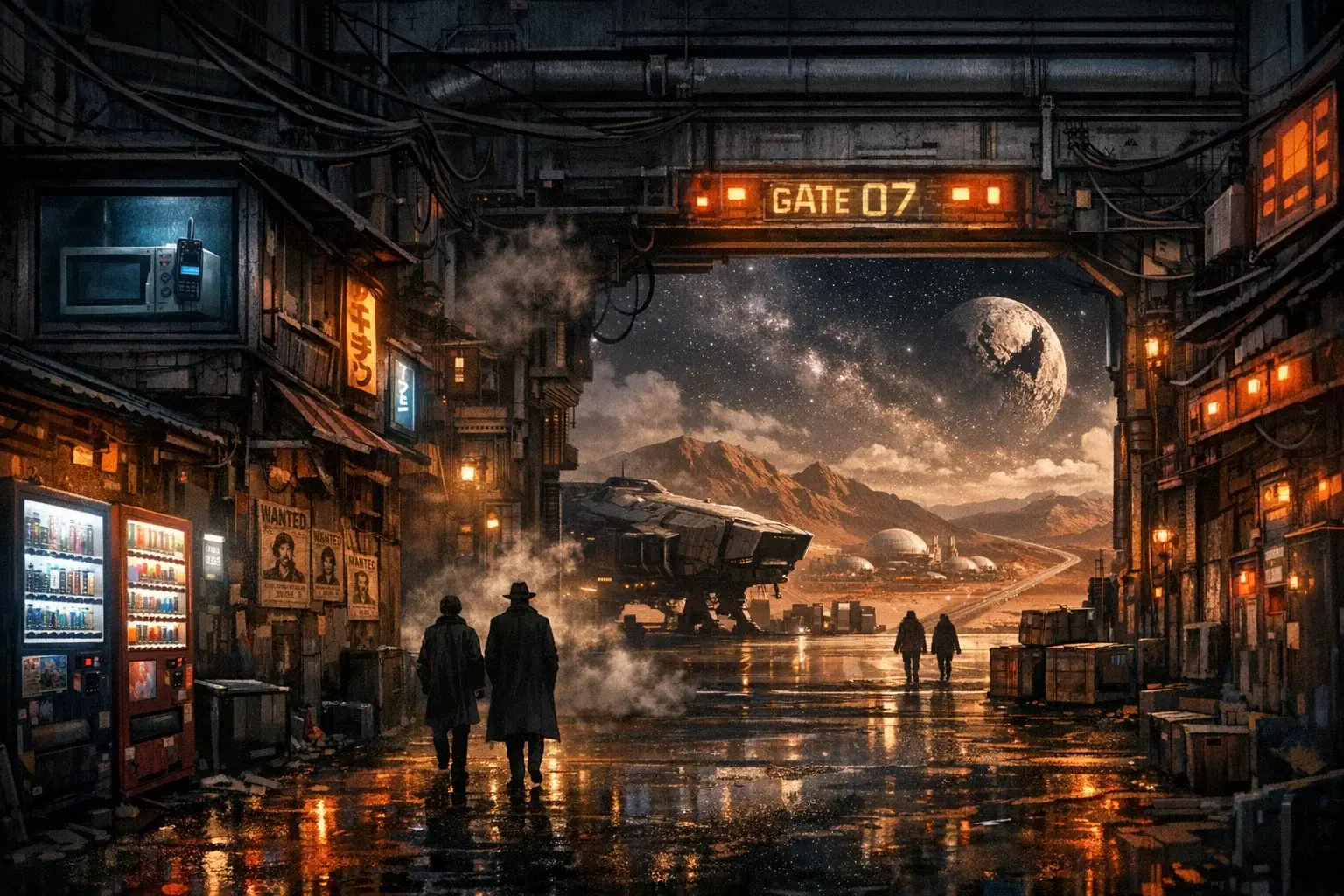
Time travel stories live or die by rules, and Steins;Gate earns its legend by making those rules emotionally brutal. What starts as scrappy “microwave science” spirals into a thriller about consequence, sacrifice, and the terrifying math of inevitability. The show’s pacing rewards patience—those early character beats become the pressure points later. If you want sci‑fi that weaponizes causality and still lands its character drama, this is the gold standard.
2) Ghost in the Shell: Stand Alone Complex
Cyberpunk is crowded, but Stand Alone Complex remains the benchmark for “smart and stylish” sci‑fi TV anime. Major Kusanagi and Section 9 investigate crimes that feel like tomorrow’s headlines: surveillance states, information warfare, and digital identity. The series balances episodic cases with longer conspiracies, and it never forgets the philosophical core—what’s left of the self when bodies and memories are modular? It’s slick, dense, and endlessly discussable.
3) Psycho-Pass
If you like your sci‑fi with a courtroom’s worth of ethical dilemmas, Psycho‑Pass is essential. In a world where an algorithm quantifies your mental state and determines your place in society, “justice” becomes a UX feature. The show’s best trick is refusing easy answers: safety vs. freedom, punishment vs. prevention, human judgment vs. machine certainty. It’s also a propulsive thriller with one of anime’s most iconic cat‑and‑mouse rivalries.
4) Cowboy Bebop
Space western, noir, jazz‑soaked melancholy—Cowboy Bebop is sci‑fi that understands vibe is a storytelling engine. The future here isn’t a clean utopia; it’s messy, lived‑in, and haunted by the past. Each episode drops you into a different corner of the solar system, and the show uses that freedom to explore loneliness, found family, and the cost of running away. Even in 2026, it feels timeless because its characters do.
5) Neon Genesis Evangelion
Yes, it’s mecha. Yes, it’s also one of the most influential pieces of sci‑fi media, period. Evangelion takes the “fight the monsters” premise and turns it inward, using apocalyptic technology and alien mysteries to interrogate trauma, intimacy, and self‑worth. The science fiction is symbolic, but it’s not random—everything is engineered to pressure the characters’ psyches. It’s a show that demands interpretation, and that’s why it still dominates the conversation.
6) Serial Experiments Lain
Before social media became a daily reality, Lain was already asking what happens when the network becomes more “real” than the physical world. It’s unsettling, minimal, and deliberately disorienting—sci‑fi as existential horror. The series explores identity fragmentation, digital mythmaking, and how communities (online or otherwise) rewrite truth. If you want a cyber‑mystery that feels like it predicted the future and then got scared of what it saw, queue this up.
7) Planetes
Not all sci‑fi needs neon skylines and godlike AI. Planetes is near‑future hard sci‑fi about debris collectors cleaning orbital junk—an unglamorous job in a believable space economy. That grounded premise becomes a platform for big themes: labor, ambition, nationalism, and what “progress” costs the people doing the work. It’s one of anime’s most mature takes on space travel, and it hits harder because it feels plausible.
8) Mobile Suit Gundam 00
If you want sci‑fi that treats geopolitics like an action setpiece, Gundam 00 is a strong entry point into the Gundam ecosystem. Its near‑future setting—energy politics, private military power, media manipulation—feels uncomfortably current. The mecha battles are spectacular, but the real hook is ideological collision: can force ever create peace, or does it just rebrand violence? It’s accessible, sharp, and built for binge momentum.
9) Legend of the Galactic Heroes
Space opera doesn’t get grander than Legend of the Galactic Heroes. This is sci‑fi as political history: fleets clash, empires rise, democracies decay, and charisma becomes a weapon. The series’ scale is intimidating, but the payoff is unmatched—few anime portray governance, propaganda, and war with this much patience and nuance. If you want a watch that feels like reading an epic novel in animated form, this is the crown jewel.
10) Ergo Proxy
Ergo Proxy is post‑apocalyptic sci‑fi with a philosophical bite: identity, consciousness, and the stories societies tell to survive. It’s moody, cerebral, and sometimes intentionally opaque—but that’s part of its appeal. The world feels like a puzzle box of ruined ecosystems and manufactured citizens, and the show rewards viewers who like decoding symbolism as much as plot. Otaku Insider’s take: if you love atmosphere and ideas, this one hits like a fog‑drenched fever dream.
Honorable Mentions
A top 10 is always a little cruel—especially in sci‑fi, where the bench is stacked.
- Trigun nearly made the cut because it’s a masterclass in hiding big sci‑fi questions inside a seemingly goofy adventure. The longer you watch, the more the series reveals its teeth: pacifism under pressure, the ethics of power, and a world shaped by lost technology.
- Akira is a foundational cyberpunk film and still one of anime’s most jaw‑dropping achievements in animation and urban dread. It didn’t land in the main list only because this feature leans series‑first, but as a sci‑fi pillar, it’s mandatory viewing.
- Space Battleship Yamato 2199 is a modern space opera with classic bones—big emotions, big stakes, and a sense of heroic momentum that’s hard not to root for.
- The Melancholy of Haruhi Suzumiya is sci‑fi disguised as high school chaos, and it’s influential for a reason: it plays with time loops, reality warping, and genre itself while staying character‑driven.
How We Chose These
Otaku Insider’s selection combines editorial judgment with genre coverage. We aimed for variety across sci‑fi subgenres (cyberpunk, time travel, space opera, near‑future thriller, philosophical/post‑apocalyptic) and prioritized anime that either defined the genre or remain highly watchable and conversation‑worthy in 2026. We also weighed impact (influence on later anime and broader pop culture), thematic depth (sci‑fi ideas that shape character and plot), and accessibility (whether a newcomer can jump in without homework). Finally, we balanced “starter essentials” with a few denser picks for hardcore fans who want their sci‑fi challenging.
Written by Ranen with AI support — Ranen picks every story, shapes the angle, and reviews each article before it's published. Learn more in our editorial policy.