Angel Cop
エンゼルコップ
- Action
- Sci-Fi
- Adult Cast
- Gore
- Episodes
- 6
- Duration
- 29 min per ep
- Aired
- Sep 1, 1989 to May 20, 1994
- Status
- Finished Airing
Synopsis
In a near-future Japan where terrorism is routine and law enforcement has grown nearly as ruthless as the criminals it pursues, Angel stands out within the Special Security Force for her uncompromising approach to justice. Alongside her partner, Raiden, she’s drawn into a disturbing string of murders—victims with criminal pasts, dispatched with extreme brutality.
The trail leads to the Hunters, a trio of psychics who have taken it upon themselves to punish the city’s worst. As Angel and Raiden clash with them, cracks form within the group: two begin to question whether their crusade has crossed a line, while the third embraces violence without hesitation. Empowered by cybernetic enhancements from an unknown benefactor, the rogue Hunter turns their sights on the Special Security Force, forcing Angel—now aided by the other psychics and a newly cyborgized Raiden after a serious incident—to uncover who created the Hunters and stop the escalating slaughter.
Otaku Consensus
Angel Cop earns its cult status through tense OVA-era action direction, escalation-heavy pacing, and a grimy cyberpunk atmosphere that positive viewers read as fearless rather than merely crude. Its hand-drawn violence, adult-cast police machismo, and risky conspiracy sprawl still land for fans of late-80s direct-to-video extremity, but the most consistent criticism is equally specific: the politics are offensive, the gore is excessive, and the plot often feels overheated rather than complex. The result is not a lost masterpiece so much as a historically fascinating provocation with enough craft and momentum to explain why it refuses to disappear.
Why You Should Watch
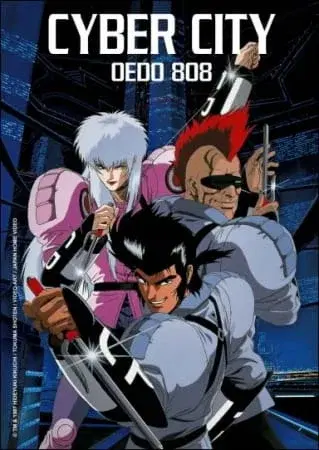
Watch Angel Cop if you want the meanest end of the OVA boom: police-state action, cyberpunk hardware, psychic body horror, and dialogue that sounds like it was written with a clenched jaw. It scratches the same dirty-metal itch as Cyber City Oedo 808 and AD Police Files, but with less noir cool and more exploitation-film anger. The draw is not elegance; it is the collision of meticulously inked late-80s violence, Cold War paranoia, and a conspiracy so overheated that fans still argue whether its messiness is a flaw or the point. Viewers allergic to gore, nudity, and repellent political ranting should stay away. If you collect dangerous adult-cast OVAs that feel impossible to make in mainstream TV anime now, this is a necessary specimen.
Key Characters
- YYou Mikawa(VA: Mika Doi)
Mika Doi gives You Mikawa the hard, clipped authority that helped make Angel a cult shorthand for the OVA era’s take-no-prisoners heroine rather than a soft moral anchor.
- IIsamu Sakada(VA: Masashi Ebara)
Masashi Ebara’s Isamu Sakada is remembered as the bruising partner presence who grounds the series in macho police-procedural texture before its cyberpunk excess fully takes over.
What Makes It Stand Out
- 1
D.A.S.T Corporation’s production leans into late-80s/early-90s hand-drawn grit: cyberpunk machinery, torn bodies, and urban grime register more strongly than smooth, prestige-level animation. THEM Anime Reviews specifically praised the tense, exciting atmosphere while calling the animation middling for the period.
- 2
The six-episode OVA format gives Angel Cop a very different rhythm from television anime: it moves like a hard-R video-shelf thriller, with compressed escalation and little interest in weekly-series breathing room.
- 3
Its violence is not incidental window dressing; reviews and content notes repeatedly flag gore, nudity, mind-violation imagery, and snuff-like brutality as central to the viewing experience. THEM’s 17+ rating for violence, gore, and nudity matches the reputation it has among old-school OVA fans.
- 4
The political material is one of the title’s defining controversies, not a background detail. User and web criticism repeatedly cite Japanese nationalism, anti-American and antisemitic implications, Cold War anxieties, and police-corruption themes as reasons the series remains both discussed and rejected.
- 5
Its structure is famously overstuffed: what begins in cop/terrorist exploitation mode mutates into psychic warfare, cybernetic enhancement, and conspiracy escalation. Positive reactions call that risky and badass, while negative reactions call the same density confusing and pointlessly complicated.
Fun Facts & Trivia
- Fun fact 1
- Although it is remembered as a late-80s OVA, Angel Cop’s release window ran from September 1, 1989 to May 20, 1994, meaning six episodes took nearly five years to complete.
- Fun fact 2
- The listed studio is D.A.S.T Corporation, a much less recognizable name to modern anime viewers than the era’s bigger cyberpunk-associated studios, which is one reason discussion tends to focus on the title’s content and controversy rather than studio legacy.
- Fun fact 3
- THEM Anime Reviews gave Angel Cop a 4.0 while also tagging it 17+ for violence, gore, and nudity, a useful snapshot of its split reputation: appreciable atmosphere paired with serious content caveats.
- Fun fact 4
- On MyAnimeList it holds a 6.08 score from 9,610 votes, with rank #10518 and popularity #4781, placing it firmly in niche-cult territory rather than broad classic status.
- Fun fact 5
- The user-review spread is unusually polarized, ranging from 9/10 Recommended to 1/10 Not Recommended, and the recurring flashpoints are the political rants, extreme violence, cheesy dialogue, and convoluted conspiracy turns rather than simple action quality.
Studios
- D.A.S.T Corporation