Midori
地下幻燈劇画 少女椿 (Chika Gentou Gekiga: Shoujo Tsubaki)
- Drama
- Horror
- Gore
- Historical
- Episodes
- 1
- Duration
- 47 min
- Aired
- May 2, 1992
- Status
- Finished Airing
Synopsis
Set in 1920s Tokyo, 12-year-old Midori survives in the slums by selling camellias while caring for her ailing mother. A well-dressed man approaches her with sympathetic words and an offer of help, and after her mother dies, Midori follows his address with nowhere else to go—only to realize she has been deceived into joining Aka Neko Za, a traveling freak show made up of crude, physically deformed performers.
Life on the fairground quickly becomes a waking nightmare. Forced to look after the troupe and clean up after them, Midori is routinely demeaned and subjected to brutal mistreatment. A brief sense of comfort arrives when Wonder Masamitsu, a skilled illusionist, joins the act and begins protecting her, but even as their bond deepens, a darker fate hangs over Midori and the rest of the troupe.
Otaku Consensus
Midori remains one of anime’s starkest reception splits: admirers read Hiroshi Harada’s adaptation of Suehiro Maruo as a rare animated ero-guro work with a bruised emotional core, while detractors see an exercise in escalating depravity whose crude, limited animation cannot justify its cruelty. What works best is its compressed one-film pacing, J.A. Seazer’s unsettling musical presence, and the Wonder Masamitsu section, which pushes the film from social horror into occult stage nightmare; the most persuasive criticism is that its atrocities can feel accumulated rather than developed.
Why You Should Watch
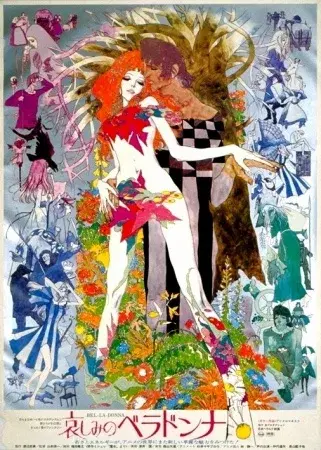
Watch Midori if you want anime horror stripped of genre safety valves: no monster-hunting, no sleek thriller mechanics, and no reassuring recovery arc. Its closest lane is the adult-animation art-shock tradition around Belladonna of Sadness rather than the puzzle-box suspense of Perfect Blue, with Suehiro Maruo’s ero-guro source filtered through Hiroshi Harada’s handmade, abrasive film grammar. The draw is not pleasure in cruelty but the discomfort of watching a social world where performance, poverty, sex, and spectacle become the same machine. J.A. Seazer’s music and the harsh carnival imagery give it the texture of a cursed sideshow. For viewers who collect ero-guro manga, banned animation, or cinema that tests the ethics of looking, its notorious 4.74/10 MAL score is less a warning label than part of the case file.
Key Characters
- MMidori(VA: Minako Naka)
Midori is discussed less as a conventional heroine than as the film’s moral pressure point, a child protagonist whose lack of genre-protective agency makes the viewing experience deliberately accusatory.
- WWonder Masamitsu(VA: Norihiko Morishita)
Wonder Masamitsu is the film’s most divisive presence, an adult dwarf illusionist whose protective charisma and disturbing intimacy with Midori make his scenes both narratively magnetic and ethically repellent.
What Makes It Stand Out
- 1
The film is an adaptation of Suehiro Maruo’s Shoujo Tsubaki, a source tied closely to ero-guro’s erotic-grotesque manga lineage rather than to mainstream horror anime storytelling.
- 2
Hiroshi Harada’s direction for Mippei Eigeki Kiryuukan gives the one-episode film an abrasive independent texture; negative reviews often cite the crude, limited animation, while defenders treat that roughness as part of its underground gekiga identity.
- 3
J.A. Seazer’s music is a major part of the film’s cult aura, placing Midori closer to theatrical nightmare and avant-garde spectacle than to conventional 1990s anime scoring.
- 4
The Wonder Masamitsu arc is singled out by critics because its billed western-style magic crosses into genuinely supernatural stagecraft, shifting the film’s horror from human sadism into uncanny illusion.
- 5
Its reputation is quantifiably polarized: MAL lists a 4.74/10 score and a rank near the bottom, while AniList still records 420 favourites, reflecting a small but committed cult audience.
Fun Facts & Trivia
- Fun fact 1
- The credited original creator is Suehiro Maruo, whose status as an ero-guro pioneer is a major reason the film remains discussed by collectors of grotesque manga and extreme animation.
- Fun fact 2
- The production credits name Katsufumi Hariu as art director, Nobuyuki Sugaya as director of photography, Harutoshi Ogata as editor, and J.A. Seazer as composer, a compact staff list that reinforces the film’s handmade independent identity.
- Fun fact 3
- Although it is often discussed as a film, database listings classify Midori as a single finished episode that aired on May 2, 1992.
- Fun fact 4
- Several English-language writeups frame it as a once-banned or highly controversial title, and web summaries often place it among the most disturbing or worst-rated anime rather than among ordinary horror releases.
- Fun fact 5
- The title is also catalogued as Chika Gentou Gekiga: Shoujo Tsubaki, a name that signals its connection to underground picture-drama and gekiga traditions more than to commercial TV anime branding.
Studios
- Mippei Eigeki Kiryuukan