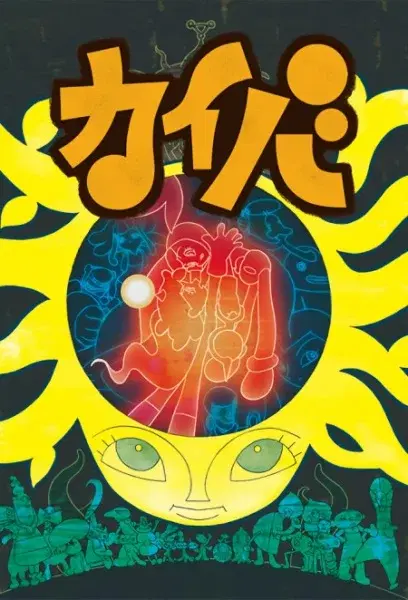
Mononoke
モノノ怪
- Horror
- Mystery
- Supernatural
- Suspense
- Adult Cast
- Historical
- Mythology
- Psychological
- Episodes
- 12
- Duration
- 22 min per ep
- Aired
- Jul 13, 2007 to Sep 28, 2007
- Status
- Finished Airing
Synopsis
A wandering “Medicine Seller,” feared for his occult skill, moves through feudal Japan hunting malicious spirits known as mononoke. Yet destroying them is never straightforward: before he can draw the Exorcism Sword, he must uncover a spirit’s Form, its Truth, and its Reason. Each confrontation becomes a tense investigation, demanding psychological insight and careful probing into what the mononoke is—and why it exists—long before he has the power to end it.
His travels bring him to a traditional inn where Shino, pregnant and exhausted, is given the last available room by a reluctant proprietor. Rest offers little safety; the room is haunted by a deadly presence, the Zashiki Warashi. Sensing the danger, the Medicine Seller begins piecing together the clues he needs to reveal the spirit’s nature and motive, racing to learn its Form, Truth, and Reason before it claims another victim.
Otaku Consensus
Critics and fans converge on Mononoke as a rare TV horror anime whose authority comes from Kenji Nakamura's formal direction, Toei Animation's aggressively stylized visual surface, and a 12-episode anthology rhythm that favors investigation over shock; the opening Zashiki Warashi case is the clearest proof of how quickly it can establish dread. The most common criticism is inseparable from its identity: the theatrical editing, dense symbolism, and slow forensic pacing can feel opaque or emotionally distant to viewers expecting conventional scares or character-driven continuity.
Why You Should Watch
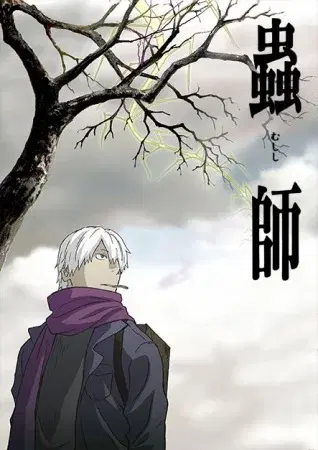
Watch Mononoke if you want folklore horror that behaves like a locked-room autopsy, not a battle series. It scratches the same itch as Mushishi's episodic encounters with the uncanny, but replaces calm naturalism with courtroom pressure, grotesque imagery, and color design that looks closer to a moving woodblock print than standard 2007 TV anime. Viewers who enjoy mystery structure will appreciate how each case withholds moral context until the supernatural rules make emotional sense; viewers who want splatter without psychology should look elsewhere. Its best audience is the adult fan who likes anime to be designed, staged, and edited with intent: short arcs, no filler sprawl, no tournament escalation, and a constant feeling that every screen pattern is a clue.
Key Characters
- MMedicine Seller
The Medicine Seller is memorable less as a heroic exorcist than as a controlled interrogator whose authority comes from reading people, spaces, and contradictions before acting.
- SShino
Shino gives the opening inn case its human pressure point, bringing pregnancy, exhaustion, and social vulnerability into a horror structure usually dominated by monsters.
- ZZashiki Warashi
The Zashiki Warashi embodies Mononoke's preference for motive-based haunting over simple creature attacks, turning a familiar youkai concept into a psychological case file.
What Makes It Stand Out
- 1
Toei Animation produced the series, but its look is far removed from the studio's mainstream action identity: flat patterned compositions, hard color separations, and theatrical blocking make the frame feel like a printed object come alive.
- 2
Kenji Nakamura directs Mononoke as a compact anthology rather than a quest narrative, with the 12 episodes divided around discrete supernatural investigations instead of long-running escalation.
- 3
The exorcism rule of Form, Truth, and Reason turns every case into a detective procedure; the horror is structured around evidence, testimony, and buried motive rather than a simple reveal of the monster.
- 4
The opening Zashiki Warashi arc immediately foregrounds several of the show's defining tags: inn setting, pregnancy, youkai folklore, body horror, and psychological suspense.
- 5
The production credits separate art design, color design, editing, and CG supervision into clearly named roles, including art designers Takashi Kurahashi and Yumi Hosaka, color designer Rumiko Nagai, editor Kenta Katase, and CG director Nobuhiro Morita.
Fun Facts & Trivia
- Fun fact 1
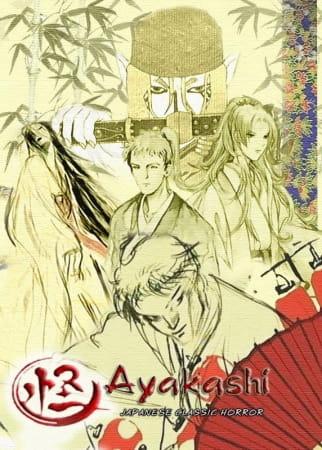
- Mononoke originated as a spin-off from the final arc of Ayakashi: Samurai Horror Tales, expanding the Medicine Seller into the center of his own anthology series.
- Fun fact 2
- The series aired as a single 12-episode run from July 13, 2007 to September 28, 2007, giving it the tight structure of a one-cour experiment rather than a long supernatural franchise entry.
- Fun fact 3
- Its reception has remained unusually strong for an experimental horror title: the research data lists a MyAnimeList score of 8.41 from 106,685 votes, a MAL rank of #223, and an AniList score of 82/100 with 4,404 favourites.
- Fun fact 4
- Star Crossed Anime's Lenlo framed it as closer to Tales From the Crypt or a Stephen King short-story collection than standard TV horror, while emphasizing that Mononoke works through permeated dread rather than classic scare mechanics.
- Fun fact 5
- The key staff list highlights how deliberately constructed the audiovisual identity is: Kenji Nakamura directed, Takashi Hashimoto handled character design, Yukio Nagasaki served as sound director, and Yukiya Imamura and Takeshi Himi were credited as CG producers.
Studios
- Toei Animation