KonoSuba: God's Blessing on This Wonderful World!
この素晴らしい世界に祝福を! (Kono Subarashii Sekai ni Shukufuku wo!)
- Adventure
- Comedy
- Fantasy
- Isekai
- Ecchi
- Parody
- Episodes
- 10
- Duration
- 23 min per ep
- Aired
- Jan 14, 2016 to Mar 17, 2016
- Status
- Finished Airing
Synopsis
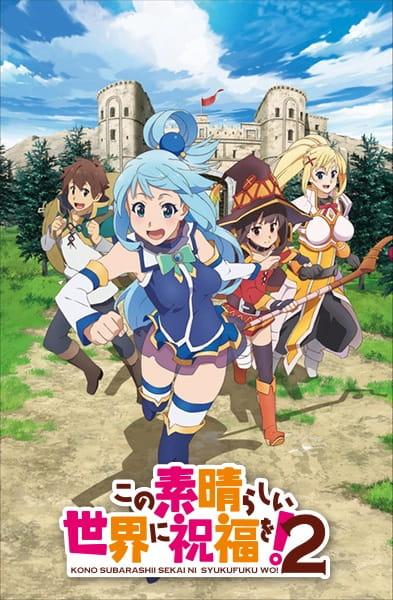
After an embarrassingly untimely death on the way home from buying a game, reclusive high schooler Kazuma Satou wakes to find himself face-to-face with Aqua, a gorgeous goddess with an attitude to match. Offered a choice between moving on to heaven or starting over in a fantasy world, Kazuma opts for reincarnation—then immediately gets roped into the standard “defeat the Demon King” assignment. He’s even allowed to take one helpful item along, and, out of spite and impulse, he chooses Aqua herself.
The decision proves less heroic than it sounds: Aqua is far from the cheat advantage Kazuma imagined. Worse, life in a fantasy realm doesn’t run on game logic, and their first challenge isn’t glory—it’s scraping together enough money to survive, with misfortune and mishaps piling up from the very start.
Otaku Consensus
KonoSuba earns its reputation as an isekai send-up by treating the genre’s power-fantasy template like a punchline, driven by razor-sharp party chemistry and relentless slapstick. Fans and critics consistently praise how the ensemble’s big personalities (and bigger flaws) create comedy that feels character-built rather than purely gag-based, with a world full of side characters who actively amplify the chaos. The most common knock is that its cruder, pervy humor can be divisive—hilarious to some, off-putting or repetitive to others—making it a “know your taste” comedy despite its strong overall reception (MAL 8.09 with massive popularity).
Why You Should Watch
If you’re tired of isekai that treat RPG tropes like sacred scripture, KonoSuba is the antidote: a fantasy adventure that weaponizes failure, petty motives, and bad party synergy into a constant escalation of disasters. The show’s real hook is its ensemble rhythm—Kazuma’s opportunistic pragmatism bouncing off Aqua’s divine incompetence, Megumin’s single-minded theatrics, and Darkness’ gloriously self-sabotaging bravado. Studio Deen and director Takaomi Kanasaki lean into expressive, comedic animation that sells every overreaction and humiliating turn. Watch it if you love parody, meta-aware genre comedy, and character-driven slapstick where “progress” often means merely paying rent and surviving the next catastrophe with your dignity in pieces.
Key Characters
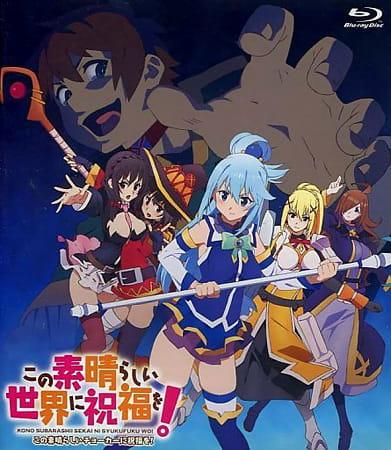
- SSatou, Kazuma(VA: Fukushima, Jun)
A sardonic, game-literate anti-hero whose survival-first mindset makes him the perfect straight man—and occasional instigator—for a party that refuses to function normally.
- AAqua(VA: Amamiya, Sora)
A goddess with equal parts confidence and chaos, she turns supposed divine “support” into a steady stream of problems that somehow keep the comedy humming.
- MMegumin(VA: Takahashi, Rie)
A chuunibyou mage whose dramatic flair and obsessive approach to magic makes every plan feel like a performance—usually with explosive consequences.
- DDustiness, Lalatina Ford(VA: Kayano, Ai)
A crusader whose noble image collides with an unusually self-destructive streak, adding a masochistic twist to the party’s already unstable dynamic.
What Makes It Stand Out
- 1
A committed isekai parody: it keeps the genre’s familiar “Demon King quest” framing but focuses the narrative on mundane survival, bad decisions, and the gap between RPG expectations and messy reality.
- 2
Ensemble-first comedy: the show’s best jokes come from personality collisions—an approach echoed by critics who highlight how even the supporting cast feels purpose-built to worsen (and enrich) the main cast’s situations.
- 3
High-density slapstick and reaction acting: comedic timing is carried by expressive character animation and exaggerated faces that emphasize humiliation, panic, and petty triumphs.
- 4
Meta-aware tone without losing story momentum: it’s packed with satire and parody, yet still moves through multi-episode arcs that give the chaos a sense of progression rather than pure sketch comedy.
- 5
A distinctly “anti-hero party” vibe: instead of idealized adventurers, it spotlights flawed, impulsive characters whose incompetence becomes the engine of both conflict and charm.
Fun Facts & Trivia
- Fun fact 1
- The anime is based on the original story by Natsume Akatsuki, with original character designs credited to Kurone Mishima, then adapted for animation with character design by Kouichi Kikuta.
- Fun fact 2
- Season 1 aired from Jan 14, 2016 to Mar 17, 2016 and runs 10 episodes, a compact length that helps its gags and arcs hit quickly without overstaying their welcome.
- Fun fact 3
- It’s one of the most widely watched modern isekai comedies: MAL Popularity sits at #38 with over 1.36 million votes contributing to its 8.09 score.
- Fun fact 4
- AniList tagging strongly reflects how audiences read the show: Isekai (97%), Satire (94%), and Parody (90%) sit at the top, underscoring that its identity is built on genre-aware comedy rather than straightforward power fantasy.
- Fun fact 5
- Director Takaomi Kanasaki and series composer Makoto Uezu are key to the adaptation’s comedic structure, shaping the light novel material into a rhythm of escalating mishaps and ensemble-driven punchlines.
Studios
- Studio Deen