Ensemble Stars!
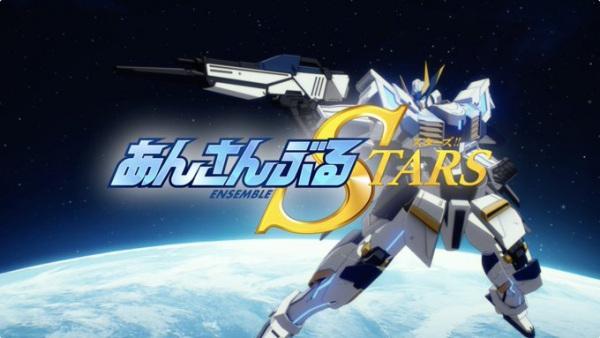
あんさんぶるスターズ!
- Slice of Life
- Idols (Male)
- Music
- School
- Episodes
- 24
- Duration
- 23 min per ep
- Aired
- Jul 7, 2019 to Dec 22, 2019
- Status
- Finished Airing
Synopsis
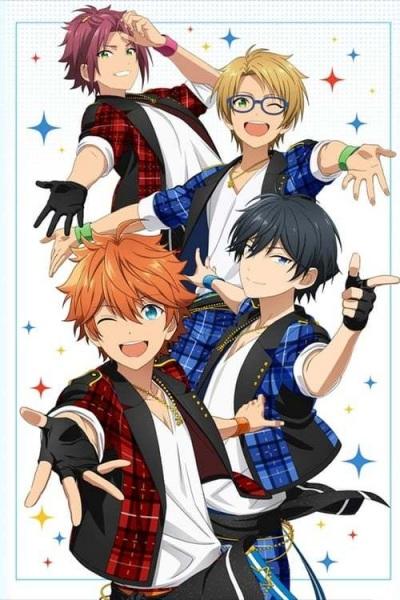
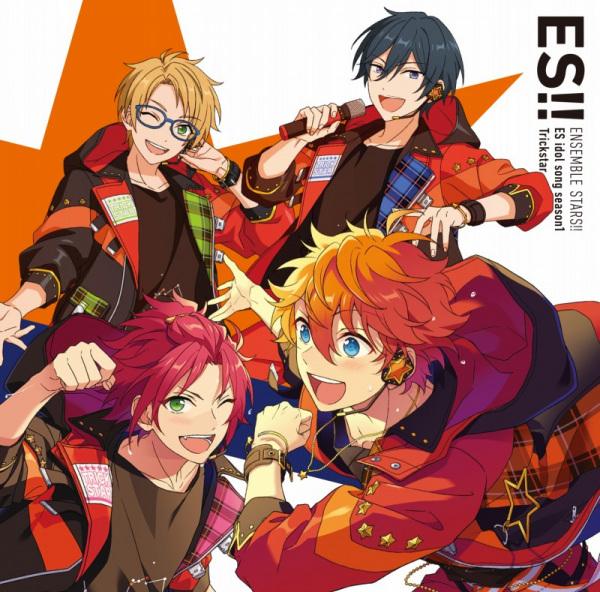
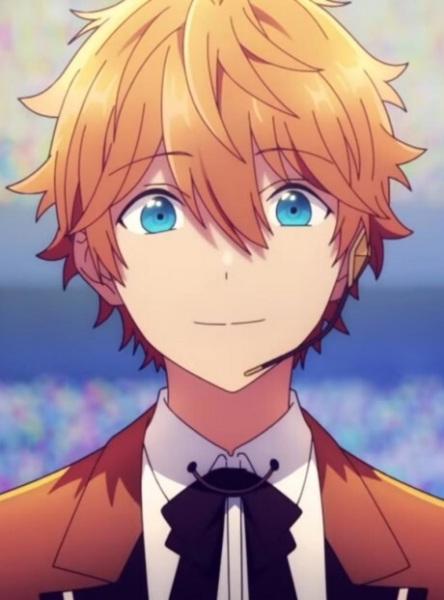
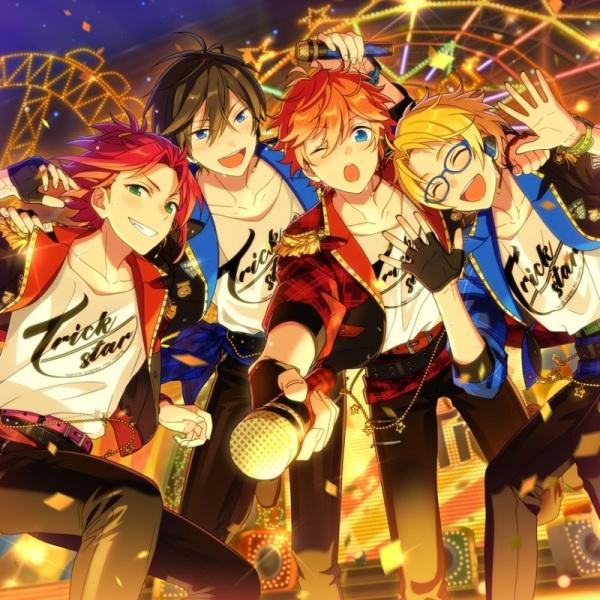
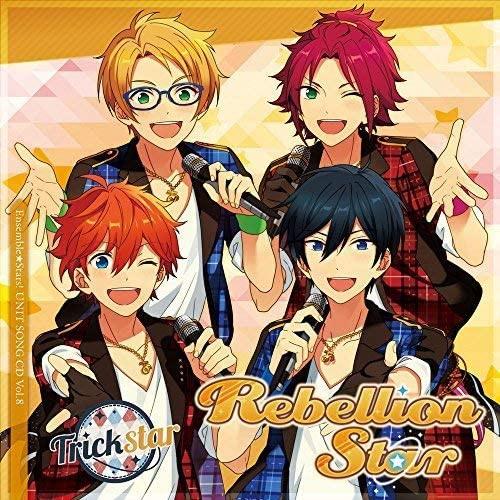
Yumenosaki Academy is renowned for nurturing generations of top male idols, but the school’s powerful student council keeps that legacy tightly controlled, enforcing long-standing traditions and preserving the existing order. Into this environment arrives Anzu, a transfer student and the first enrollee in the production course—also the academy’s only female student. She soon crosses paths with her classmates Subaru Akehoshi, Hokuto Hidaka, Mao Isara, and Makoto Yuuki, who perform together as the idol unit Trickstar.
At the heart of campus life are the Dream Idol Festivals, competitive stage matchups where units face off through song and dance, and the audience decides the victor. Success in these “DreFes” brings status and special advantages, but when the student council cracks down on an unsanctioned festival and punishes those involved, Trickstar refuses to stay quiet. With Anzu producing, the group sets out to challenge the academy’s rules and push for change from the stage.
Otaku Consensus
Ensemble Stars! lands as a franchise-first adaptation: David Production’s presentation, the music-showcase energy, and the increasingly involving second half make it valuable as a fast route into the original game’s main story. The common criticism is not the idol concept but the adaptation math: the early stretch can feel rushed, crowded, and emotionally underpowered for viewers who do not already know the units. Its best use is as a polished companion piece and primer, not as the most welcoming standalone male-idol anime.
Why You Should Watch
Watch Ensemble Stars! if you want a male-idol ensemble that treats school politics, unit loyalty, and performance rivalry with the heightened seriousness usually reserved for sports anime. It scratches a similar itch to UtaPri and Idolish7, but with more campus hierarchy, more unit-to-unit faction energy, and a stronger sense that the anime is compressing a much larger game-world mythology. Existing fans get a brisk animated version of material that can be tedious to catch up on through the mobile game; newcomers get a sampler platter of personalities, songs, and idol archetypes before deciding whether to dive deeper. If you want idol spectacle without a slow slice-of-life warm-up, and you do not mind a crowded cast, this is built for bingeable franchise orientation.
Key Characters
- SSubaru Akehoshi(VA: Tetsuya Kakihara)
Subaru is the kind of lead fans remember for turning relentless sparkle into a personality engine rather than just a visual motif.
- AAnzu(VA: Maaya Sakamoto)
Anzu stands out because the anime gives the producer role a voiced, active presence instead of leaving her as a faceless player surrogate.
- HHokuto Hidaka(VA: Tomoaki Maeno)
Hokuto’s appeal comes from his cool, disciplined stage-leader energy, which balances the more chaotic chemistry around him.
- MMao Isara(VA: Yuuki Kaji)
Mao is frequently valued as the stabilizer of the main group, the character whose reliability makes the louder personalities work together.
What Makes It Stand Out
- 1
David Production handled the 2019 TV adaptation, giving a mobile-game idol franchise a full two-cour, 24-episode broadcast rather than a short promotional anime.
- 2
The anime is structurally closer to a franchise map than a narrow protagonist drama: AniList’s 97% Ensemble Cast and 95% Primarily Male Cast tags accurately reflect how much the show prioritizes unit breadth.
- 3
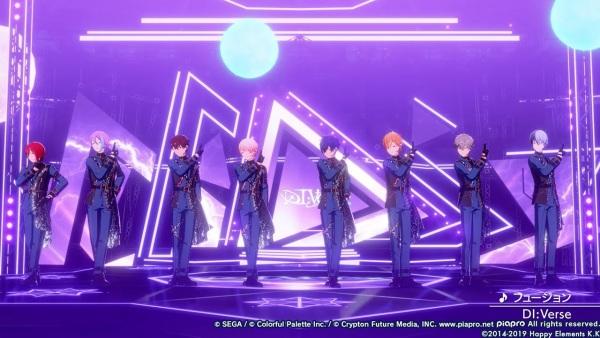
Stage material uses CGI as part of its performance language, a production choice also reflected in AniList’s CGI tag, which helps accommodate group choreography across a large idol cast.
- 4
Viewer response repeatedly separates the series into a weaker setup half and a more watchable back half; one non-player review specifically singled out episode 13 onward as the point where the show became more viable.
- 5
The adaptation is widely discussed by game players as an abridged route through the original main story, which explains both its usefulness as a catch-up tool and its reputation for feeling compressed to outsiders.
Fun Facts & Trivia
- Fun fact 1
- The anime aired from July 7 to December 22, 2019, finishing as a complete 24-episode television run rather than continuing as an open-ended idol project.
- Fun fact 2
- The production used a layered direction setup: Yasufumi Soejima served as Chief Director while Masakazu Hishida directed, with Akira credited for series composition.
- Fun fact 3
- Three credited character designers, Tomoyuki Shitaya, Eri Osada, and Haruko Iizuka, worked on the anime, a practical necessity for a series built around a very large cast of idol units.
- Fun fact 4
- A contemporary review noted that Funimation was preparing an English dub and raised a specific localization concern: the franchise’s terminology and cultural idol-school concepts may not transfer cleanly into English.
- Fun fact 5
- Its reception numbers underline its niche status: MAL lists it at 6.93 from 14,474 votes, while AniList records a similar 65/100 score but a dedicated 452 favourites.
Studios
- David Production