No Game, No Life: Zero
ノーゲーム・ノーライフ ゼロ (No Game No Life: Zero)
- Drama
- Fantasy
- Isekai
- Romance
- Mecha
- Survival
- Episodes
- 1
- Duration
- 1 hr 46 min
- Aired
- Jul 15, 2017
- Status
- Finished Airing
Synopsis
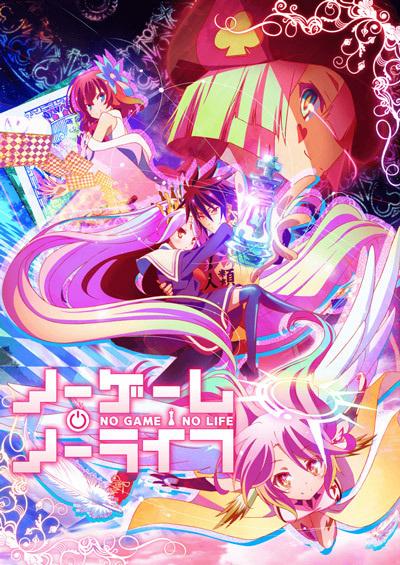
In the distant past of Disboard, the world is consumed by a brutal conflict among the Exceed—sixteen sentient races battling to determine the One True God among the Old Deus. With no magic and fragile bodies, humanity has been pushed to the edge of extinction, and a young fighter named Riku throws himself into the chaos, determined to carve out a future for his people.
A turning point comes when Riku discovers a lone Ex-Machina in the ruins of an abandoned elf city and gives her the name Schwi. Cast out from her Cluster for pursuing research into human emotions, Schwi believes those feelings are the very reason humans have endured, and she sets out to understand the heart firsthand. As war rages around them, their uneasy alliance grows into something deeper, and together they search for answers within each other while fighting to keep humanity alive and bring peace to Disboard.
Otaku Consensus
Otaku Consensus: No Game, No Life: Zero is the franchise’s divisive prestige swing: Madhouse, director Atsuko Ishizuka, and series composer Jukki Hanada trade the TV anime’s game-comedy momentum for a darker, self-contained adaptation of the Light Novel Volume 6 material. Its strongest reception centers on the Riku-Schwi emotional arc, the color-shifted wartime visuals, and the sense that it deepens Disboard’s mythology; the recurring complaint is that the film leans too hard on exposition, prior-series context, and melodramatic pacing for viewers expecting the sharper game-set-piece structure of the 2014 series.
Why You Should Watch
If you want the neon cleverness of No Game No Life stripped of its sitcom swagger and rebuilt as a doomed war romance, Zero is the franchise entry with teeth. It scratches the same itch as Fate/Zero in the way it turns franchise lore into ideological tragedy, while its human-machine intimacy has a cleaner, colder appeal than the usual isekai power fantasy. The draw is not a tournament of tricks; it is watching Madhouse translate Disboard’s game logic into espionage, survival ethics, and a visual language of ruined color. Viewers who bounced off the TV anime’s comedy may still find this more focused, provided they can accept a melodramatic, dialogue-heavy film. Viewers who only want Sora and Shiro outsmarting rivals will find the pivot severe.
Key Characters
- CCouronne Dola(VA: Youko Hikasa)
Couronne Dola anchors the human side of the film, with Youko Hikasa giving the cast a weary practicality that cuts against the mythic scale around her.
- RRiku Dola(VA: Yoshitsugu Matsuoka)
Riku Dola stands out because Yoshitsugu Matsuoka plays him less as a triumphant strategist than as someone whose intelligence is inseparable from exhaustion, guilt, and responsibility.
- SSchwi Dola(VA: Ai Kayano)
Schwi Dola became the film’s emotional pressure point for many viewers: a kuudere robot role where small shifts in Ai Kayano’s delivery matter as much as the larger tragedy.
What Makes It Stand Out
- 1
The film’s core structural gamble is turning a franchise known for competitive games into a feature-length tragedy; AniList’s strongest tags include War at 92%, Gods at 83%, Post-Apocalyptic at 82%, and Tragedy at 81%.
- 2
Madhouse preserves the hyper-saturated No Game No Life identity while pushing the palette into a darker wartime mode, a visual shift repeatedly praised even by viewers split on the story.
- 3
Director Atsuko Ishizuka and series composer Jukki Hanada shape the movie around cumulative emotional payoff rather than the episodic game-set-piece rhythm that defined the TV anime.
- 4
The Ex-Machina material gives Zero an unusually explicit mecha-survival identity for an isekai film, reflected in the Mecha theme, Survival theme, Robots tag at 63%, and Espionage tag at 80%.
- 5
Its adaptation reputation is tied to Light Novel Volume 6: supporters praise the content delivery as clear after watching the TV anime, while detractors cite dependence on prior context and a slower dramatic build.
Fun Facts & Trivia
- Fun fact 1
- No Game, No Life: Zero opened on July 15, 2017, arriving after the 2014 TV series rather than simply continuing the same lead-duo adventure that many viewers expected.
- Fun fact 2
- On MyAnimeList, the film holds an 8.16/10 from 513,699 votes, with a rank of #512 and popularity of #213, unusually strong visibility for a single-episode theatrical prequel.
- Fun fact 3
- AniList lists the movie at 80/100 with 6,447 favourites, and its tag profile emphasizes War, Gods, Post-Apocalyptic, Espionage, and Class Struggle more than standard game-battle fantasy.
- Fun fact 4
- The production credits include two directors of photography, Akane Fushihara and Yuuki Kawashita, alongside color designer Harue Oono, matching the film’s reputation for heavy color and compositing work.
- Fun fact 5
- The key creative credits connect it directly to the franchise’s core identity: Yuu Kamiya is credited as original creator, Satoshi Tasaki handled character design, and Madhouse produced the animation.
Studios
- Madhouse