Seven Mortal Sins
sin 七つの大罪 (Sin: Nanatsu no Taizai)
- Action
- Adventure
- Erotica
- Fantasy
- Episodes
- 12
- Duration
- 23 min per ep
- Aired
- Apr 15, 2017 to Jul 29, 2017
- Status
- Finished Airing
Synopsis
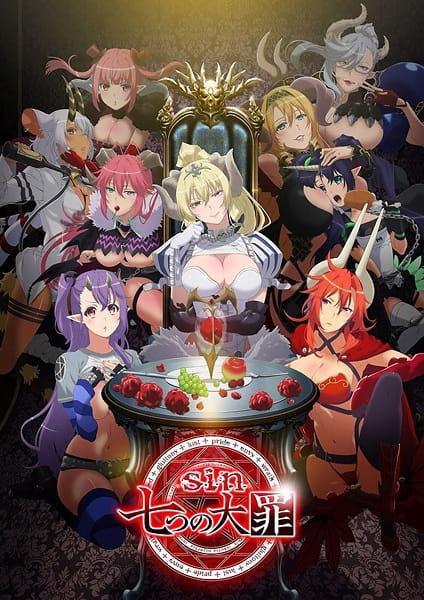
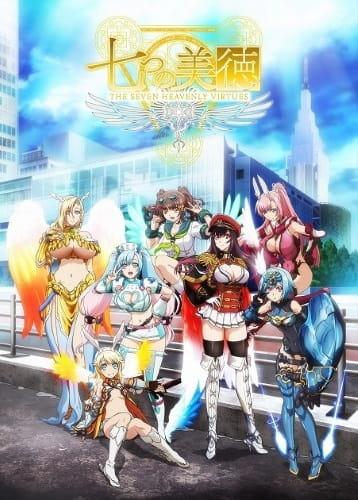
Lucifer, an Archangel who once led the Seven Heavenly Virtues, is cast out of Heaven after defying the Lord’s will. Her fall is briefly interrupted when she crashes through the roof of a high school church, where she’s seen by the quiet student Maria Totsuka, before continuing her descent into Hell.
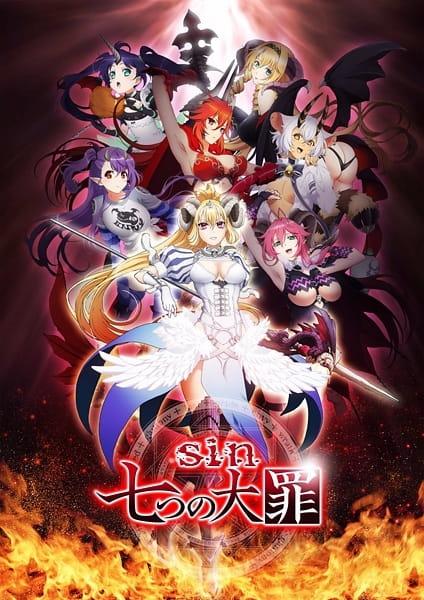
In the underworld, Lucifer is discovered by Leviathan, an aspiring Demon Lord and devoted admirer. Together they challenge the Seven Sins—Hell’s ruling authorities under Belial—but Lucifer is defeated, her divine power sealed by the Garb of Punishment that forces her into the form of a Demon Lord. Driven by vengeance, she returns to Earth with Leviathan at her side, binds Maria as her immortal servant, and begins a campaign to subdue the Seven Sins and break the curse placed upon her.
Otaku Consensus
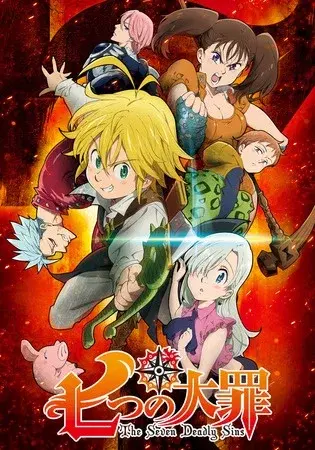
Seven Mortal Sins is received less as a polished fantasy-action series than as a deliberately excessive ecchi showcase, with Kinji Yoshimoto’s blunt direction and episodic revenge-tour pacing giving it a clear exploitation-anime identity. Its committed female-led demon cast and high-density erotic imagery are the main draw, but the dominant criticism is that the series feels thin and repetitive when judged as story-driven dark fantasy, especially beside the unrelated but frequently compared Seven Deadly Sins.
Why You Should Watch
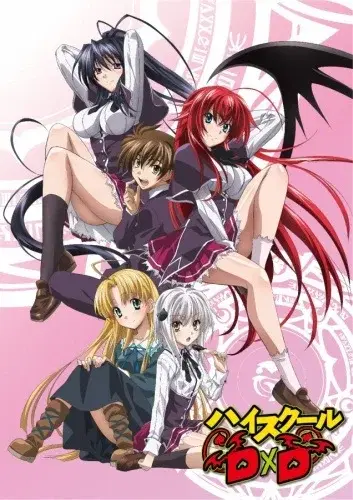
Watch Seven Mortal Sins if you want demon-lord pageantry, anti-hero posturing, yuri-coded rivalry, and near-constant erotic provocation without the shounen tournament scaffolding of something like The Seven Deadly Sins. It scratches the same late-night itch as High School DxD or Queen’s Blade, but with less emphasis on comedy-team dynamics and more on a traveling, episodic gauntlet of female antagonists. The appeal is specific: a primarily female cast, monster-girl designs, bondage imagery, and an unapologetically adult visual agenda. Viewers looking for tight power scaling or emotionally persuasive adventure will bounce off it; viewers who enjoy ecchi as spectacle, not garnish, will understand why it has remained visible despite weak aggregate scores.
Key Characters
- LLucifer
Lucifer is the series’ most useful lens: a proud anti-hero whose appeal comes from arrogance, humiliation, and refusal to become a conventional redemption-seeking fallen angel.
- LLeviathan
Leviathan stands out as the obsessive admirer figure, turning the show’s demon politics into a mix of devotion, rivalry, and yuri-flavored fan worship.
- MMaria Totsuka
Maria functions as the human pressure point in an otherwise demonic cast, grounding the series’ excess through a quieter presence fans often read as vulnerability amid domination rituals.
- BBelial
Belial gives the hierarchy of Hell a face, representing the show’s taste for regal, theatrical villainy over morally ambiguous worldbuilding.
What Makes It Stand Out
- 1
Kinji Yoshimoto handled both direction and series composition, giving the 12-episode run a unified late-night exploitation tone rather than the feel of a committee-softened fantasy adventure.
- 2
The show is an Artland and TNK co-production, a pairing that places it firmly in the 2010s TV-anime ecchi pipeline rather than the higher-gloss battle-shounen lane viewers may expect from the title.
- 3
Shouko Yasuda served as both character designer and chief animation director, making the female character designs central to the production identity rather than a secondary layer on top of the action.
- 4
AniList’s tag profile is unusually explicit even for ecchi anime: Nudity sits at 96%, Yuri at 86%, Female Harem at 77%, Group Sex at 65%, and Bondage at 60%, accurately signaling that erotic content is structural, not incidental.
- 5
The series uses an episodic travel-and-confrontation format, reflected in AniList’s high tags for Travel, Revenge, and Episodic, which makes it closer to a themed procession of demon encounters than a tightly escalating campaign.
Fun Facts & Trivia
- Fun fact 1
- Mia REGINA performed both the opening and ending themes, giving the show a consistent vocal identity across its broadcast package.
- Fun fact 2
- Hiroaki Tsutsumi composed the music, while Hiroto Morishita handled sound direction and Shouta Yaso handled sound effects, separating the score, vocal staging, and impact work across distinct staff roles.
- Fun fact 3
- The visual finishing pipeline credits Satoshi Fujita as director of photography and Tomomi Ishihara for special effects, two roles that matter heavily in a show built around glowing infernal imagery and skin-forward presentation.
- Fun fact 4
- Its reception is strikingly consistent across major anime databases: MAL lists it at 5.76 from 56,395 votes, while AniList places it at 52/100 with 527 favourites.
- Fun fact 5
- The TV run aired from April 15 to July 29, 2017, finishing as a compact 12-episode series rather than expanding into the multi-cour format associated with mainstream fantasy-action franchises.
Studios
- Artland
- TNK