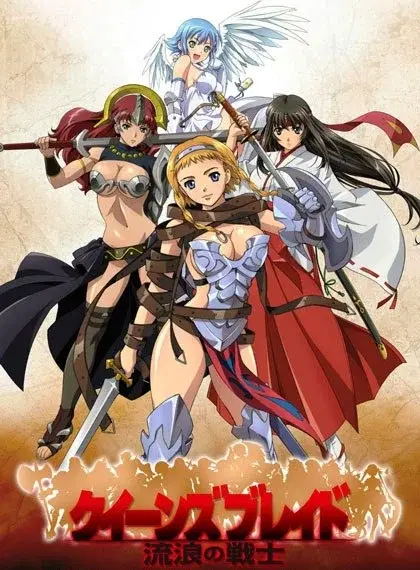
Bikini Warriors
ビキニ・ウォリアーズ
- Comedy
- Ecchi
- Fantasy
- Parody
- Episodes
- 12
- Duration
- 4 min per ep
- Aired
- Jul 8, 2015 to Sep 23, 2015
- Status
- Finished Airing
Synopsis
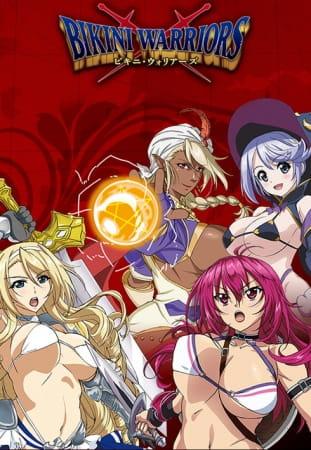
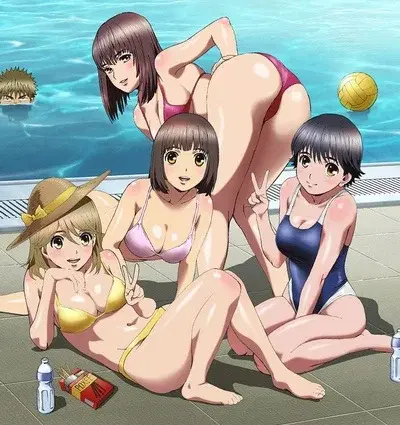
As darkness looms over the realm, a quartet of would-be saviors struggles to make even the smallest progress beyond the starting town. *Bikini Warriors* centers on a party of adventurers outfitted in famously impractical, revealing armor: the bold Fighter, a scatterbrained Paladin, a shy Mage, and a seductive Dark Elf.
Perpetually short on money, overly concerned with appearances, and often in over their heads, the group lurches from one misadventure to the next—sometimes retreating from dungeons, other times shaking down the very villagers they’re supposed to protect. Before they can face any greater evil, they’ll first have to learn how to tolerate one another long enough to survive.
Otaku Consensus
Bikini Warriors works best as a 12-part gag reel where Naoyuki Kuzuya’s short-form direction and Gou Tamai’s RPG-parody setups turn class fantasy, money grinding, and fanservice poses into quick punchlines; Episode 10 was specifically noted by The Fandom Post for making its escalating frustration gags both comic and titillating. Its reputation is otherwise accurately reflected by its 5.14 MAL score and 46/100 AniList score: viewers who enjoy lewd micro-comedy find it painless, while the dominant criticism is that the animation is visibly stilted and the fetishization overwhelms almost everything else.
Why You Should Watch
Watch Bikini Warriors if you want fantasy RPG parody stripped down to the parts many shows hide between scenes: loot anxiety, class-role stupidity, suspiciously convenient fanservice, and adventurers behaving like underpaid players. It scratches a sloppier, more explicit version of the KonoSuba itch, but closer to Queen’s Blade in how openly it treats character design as the main event. The 12-episode short format matters: jokes arrive before the premise can overstay, and the show is honest about prioritizing poses, transformations, and absurd party dynamics over lore. If you want a polished adventure, skip it. If you want a lewd, self-aware time capsule of mid-2010s ecchi fantasy with recognizable RPG satire and no ambition to become respectable, it delivers exactly that.
Key Characters
- FFighter
Fighter, originally designed by Hisasi, is the series’ clearest bikini-armor mascot: a sword-class pin-up whose visual absurdity is the joke before she even swings.
- PPaladin
Paladin plays as a deliberate class-parody reversal, taking the traditionally noble holy-warrior role and filtering it through scatterbrained party comedy.
- MMage
Mage, originally designed by Masatsugu Saitou, gives the show its embarrassment-comedy angle by contrasting a shy magic-user archetype with the anime’s aggressively exposed visual language.
- DDark Elf
Dark Elf, originally designed by Non Oda, is the production’s most direct embodiment of its elf, tanned-skin, and seduction-tag appeal rather than a conventional fantasy heroine.
What Makes It Stand Out
- 1
The series is structurally built as a short-form TV comedy: 12 episodes aired from July 8 to September 23, 2015, which keeps the parody closer to sketch comedy than serialized questing.
- 2
Animation production was handled by PRA and feel., but the show’s reputation is less about motion than layout and posing; multiple reviews criticized the physical movement and lip animation as notably limited.
- 3
Its character pipeline is unusually illustrator-driven, with separate original character design credits for Hisasi, Masatsugu Saitou, Rei Hiroe, Non Oda, and Tony, while Kousuke Murayama unified the anime designs.
- 4
The AniList tag profile makes its priorities unusually transparent: Nudity at 90%, Primarily Female Cast at 87%, Parody at 79%, Satire at 76%, Large Breasts at 73%, and Bondage at 55%.
- 5
Episode 10 has a small critical footprint of its own, with The Fandom Post highlighting how the episode turns repeated frustration into both a joke engine and a fanservice setup.
Fun Facts & Trivia
- Fun fact 1
- Naoyuki Kuzuya directed the anime, Gou Tamai handled series composition, and Kousuke Murayama served as the anime character designer, giving the short-form project a compact but clearly divided production hierarchy.
- Fun fact 2
- The original character design roster includes Rei Hiroe for Hunter and Tony for Valkyrie, alongside Masatsugu Saitou for Mage, Hisasi for Fighter, and Non Oda for Dark Elf.
- Fun fact 3
- The German localization credits list Dirk Müller twice: he handled both the ADR script and ADR direction.
- Fun fact 4
- Its database footprint is bigger than its score suggests: on MAL it has 45,302 votes, a popularity rank of #2395, and a much lower ranking placement of #14184.
- Fun fact 5
- AniList records 225 favourites for the show despite a 46/100 score, which neatly matches its cult-object status as an ecchi parody people either sample quickly or reject just as quickly.
Studios
- PRA
- feel.