Valkyrie Drive: Mermaid
ヴァルキリードライヴ マーメイド
- Action
- Erotica
- Fantasy
- Girls Love
- Military
- Super Power
- Episodes
- 12
- Duration
- 24 min per ep
- Aired
- Oct 10, 2015 to Dec 26, 2015
- Status
- Finished Airing
Synopsis
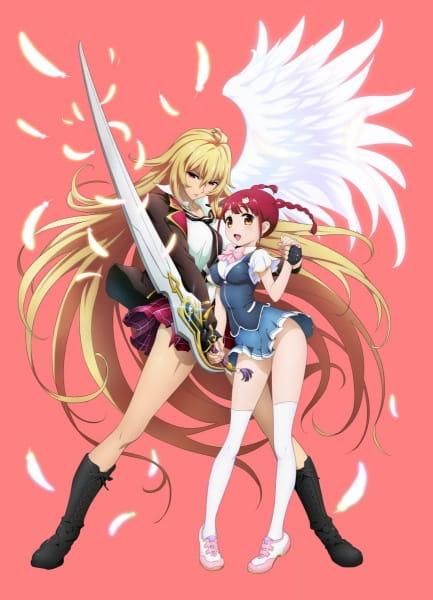
Sixteen-year-old Mamori Tokonome has grown used to being mocked at school for a surname that can be read as “virgin,” but her life takes a far stranger turn when she’s abducted during gym class. She comes to on Mermaid, a remote tropical island where she’s immediately thrust into danger with no idea why she’s there.
Her only lifeline is the composed and elusive Mirei Shikishima, who reveals Mamori’s hidden “Exter” power with a kiss—triggering a transformation that turns Mamori into a weapon, a cutlass born from arousal. To stay alive amid Mermaid’s shifting alliances and threats, the pair must rely on that intimate connection while crossing paths with figures like Charlotte, the cruel Liberator surrounded by Exters, the cunning and voracious Meifon, the enigmatic Akira Hiiragi, and the provocative biker duo Lady Lady.
Otaku Consensus
Valkyrie Drive: Mermaid earns its cult lane by letting Hiraku Kaneko's direction and Arms's TV-level production treat yuri softcore as choreographed action rather than a disposable extra; fans repeatedly single out the opening, ending, animation, and voice work as stronger than the premise suggests. The verdict stays mixed because the 12-episode structure is widely viewed as an excuse for erotic set pieces, with the thin story the most common and most damaging complaint.
Why You Should Watch
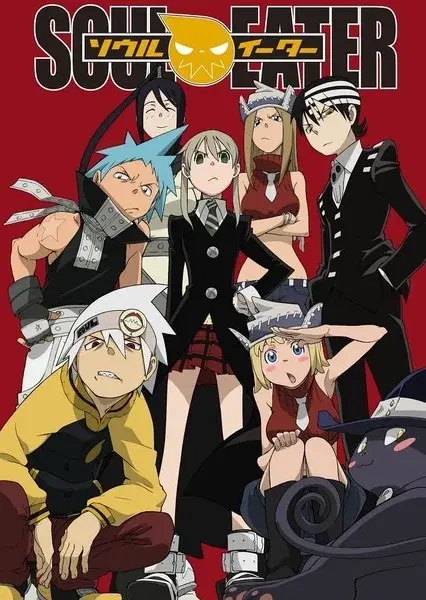
Watch Valkyrie Drive: Mermaid if you want ecchi action that commits to explicit yuri spectacle without hiding behind wink-and-nudge subtext. It scratches the same mechanical itch as Soul Eater’s weapon-partner battles, but pushes the activation ritual into unapologetic late-night erotica. The appeal is not intricate plotting; it is the collision of henshin theatrics, swordplay, tropical exploitation energy, and Arms’s willingness to animate softcore material with more polish than most adult OVAs receive. Viewers who like their fanservice tied directly to combat rules, power hierarchy, and body-horror-adjacent transformation gimmicks will get far more out of it than anyone looking for restrained Girls Love drama. Come for the audacity; stay if a strong opening, a cheeky ending, and shameless genre commitment sound like virtues rather than warnings.
Key Characters
- MMamori Tokonome
Mamori functions as the series' emotional stabilizer, giving its exploitation-heavy mechanics a point of vulnerability rather than letting every encounter play as pure provocation.
- MMirei Shikishima
Mirei is the cool-headed half of the central pairing, and her restraint is what makes the show's most outrageous power system read as partnership as much as fanservice.
- CCharlotte
Charlotte represents the series at its most openly decadent, turning the Liberator-and-Exter hierarchy into a visual shorthand for domination, entitlement, and spectacle.
- MMeifon
Meifon adds a scheming, appetitive energy to the cast, often feeling less like a standard ally or rival than a pressure point for the island's transactional power games.
What Makes It Stand Out
- 1
Arms gives the series the kind of TV production sheen that reviewers contrasted favorably with low-budget hardcore OVAs, making the erotic material feel tied to action staging rather than static pin-up interludes.
- 2
Hiraku Kaneko is credited as both director and character designer, which helps explain the show's unusually unified commitment to voluptuous designs, transformation imagery, and combat-as-fanservice framing.
- 3
The AniList tag profile is unusually blunt: Henshin at 97%, Large Breasts at 96%, Nudity at 94%, Yuri at 94%, and Swordplay at 88%, accurately signaling a show where the erotic and action labels are not separable categories.
- 4
Hiroaki Tsutsumi handles the music, while Hitomi Harada performs the opening theme and Yuka Iguchi with Mikako Izawa perform the ending theme; fan commentary specifically calls out the opening and ending as memorable pieces of the package.
- 5
AniList also tags Bondage at 75% and Rape at 72%, making the series more confrontational than a typical cheeky ecchi title and worth approaching as exploitation fantasy with content-warning baggage.
Fun Facts & Trivia
- Fun fact 1
- The anime aired as a 12-episode Fall 2015 TV series from October 10 to December 26, 2015, placing all of its escalation inside a single compact cour.
- Fun fact 2
- Its reception is numerically split across major databases: MyAnimeList lists it at 6.06/10 from 60,339 votes with popularity rank #1728, while AniList records a 55/100 score and 440 favorites.
- Fun fact 3
- Hideki Furukawa is credited with key animation on the opening, a notable detail for a series whose OP is repeatedly singled out by viewers as one of its strongest presentation elements.
- Fun fact 4
- Akiko Kikuchi contributed background art for episodes 1 through 4, grounding the early island setting before the show leans harder into faction conflict and erotic set pieces.
- Fun fact 5
- One recurring fan-critical description frames the core combat idea as 'Soul Eater, but with orgasms,' a crude but accurate capsule of why the series remains more memorable than many disposable ecchi action shows.
Studios
- Arms