Tawawa on Monday
月曜日のたわわ (Getsuyoubi no Tawawa)
- Ecchi
- Slice of Life
- CGDCT
- Workplace
- Episodes
- 12
- Duration
- 4 min per ep
- Aired
- Oct 10, 2016 to Dec 26, 2016
- Status
- Finished Airing
Synopsis
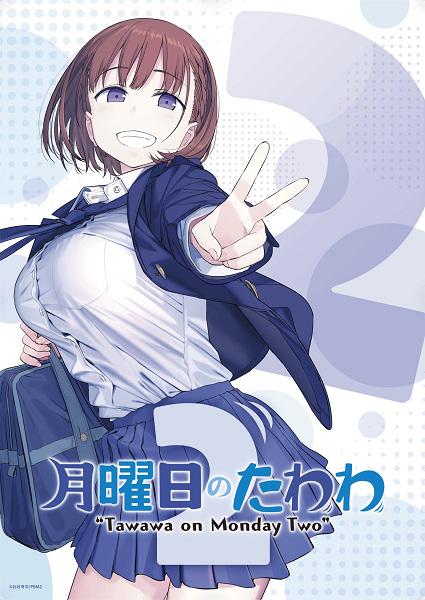
A regular office worker known as Oniisan starts each week with a familiar routine: on Monday mornings, he accompanies a high school girl named Ai-chan on the train to help keep her safe from unwanted hands during the crowded commute. Their time together is brief, but the repeated meetings gradually turn into an easy rapport as they learn small details about each other’s daily lives. To counter Oniisan’s usual Monday slump, Ai-chan offers small gifts as a bit of encouragement.
Tawawa on Monday follows Ai-chan and other girls—each noted for a shared, eye-catching trait—as they bring a little brightness to the start of the week for the men around them, from friends to coworkers, in a light slice-of-life vignette style with ecchi touches.
Otaku Consensus
Tawawa on Monday works best as a precision-engineered short: Kousuke Murayama and PINE JAM compress Kiseki Himura’s vignette concept into brisk episodic scenes, with Jun Nishimura and Yoshiaki Dewa’s gentle piano music giving the ecchi material a softer aftertaste than expected. Its reception remains niche rather than broadly acclaimed—MAL 6.39 and AniList 61 reflect a fanbase that enjoys the Monday mood-lifter format, while critics repeatedly fault the series for repetition and for reducing too many scenes to the same bust-focused visual joke.
Why You Should Watch
Watch Tawawa on Monday if you want a micro-dose of low-stakes comfort with unmistakable seinen fanservice, not a romance that asks for emotional investment or a comedy that builds elaborate punchlines. It scratches a similar short-form decompression itch to anime like I Can’t Understand What My Husband Is Saying, but its texture is closer to a workplace-and-commute sketchbook than a sitcom. The appeal is in the ritual: a few minutes of clean PINE JAM presentation, soft piano cues, and recurring adult routines turned into lightly teasing vignettes. Viewers who like CGDCT aesthetics but prefer office spaces, trains, and older male POV characters over school-club banter will understand why it has a dedicated niche despite middling aggregate scores.
Key Characters
- AAi-chan(VA: Sayaka Harada)
Ai-chan is the fan-facing emblem of the series, turning a simple CGDCT presence into a weekly emotional reset through Sayaka Harada’s soft, unfussy performance.
- KKouhai-chan(VA: Ai Kayano)
Kouhai-chan shifts the show’s energy toward office-life flirtation, making the workplace tag feel like a second format rather than a background detail.
- OOniisan(VA: Junji Majima)
Oniisan is written as a deliberately plain adult point of view, which is why fans tend to read him less as a hero than as the embodiment of Monday fatigue.
- SSenpai(VA: Yasuaki Takumi)
Senpai functions as the workplace counterpart to Oniisan, grounding the show’s teasing rhythm in office interactions instead of school-comedy chaos.
What Makes It Stand Out
- 1
PINE JAM’s production is built for short-form efficiency: tidy layouts, limited escalation, and repeatable commuter and office spaces take priority over plot momentum. That approach fits the AniList “Episodic” tag being the series’ strongest identifier at 81%.
- 2
The soundtrack is one of the most consistently praised elements, with Jun Nishimura and Yoshiaki Dewa’s music singled out in reviews for its cute, warm piano pieces. The score does more emotional work than the dialogue often does, especially in scenes meant to feel like a small weekly recharge.
- 3
The series’ seinen/ecchi identity is unusually explicit in its design language, and that is also its main fault line with critics. THEM Anime Reviews’ blunt summary that the show is “all about boobs” captures why the same visual motif reads as either the core appeal or the core limitation.
- 4
Its setting mix separates it from more common school-only CGDCT shorts: AniList tags place Office Lady at 77%, Trains at 76%, and Work at 60%. The show repeatedly uses adult routines and cramped public spaces as its slice-of-life engine.
- 5
The 12-episode structure aired from October 10 to December 26, 2016, giving the series a clean one-cour footprint without demanding the attention span of a full-length workplace comedy.
Fun Facts & Trivia
- Fun fact 1
- The anime began airing on Monday, October 10, 2016, and ended on Monday, December 26, 2016, neatly matching the title’s weekly framing.
- Fun fact 2
- Jun Nishimura is credited twice in the music department: as one of the composers and as music producer. Yoshiaki Dewa shares the music credit, which helps explain why the short has a more polished sound profile than many quick ecchi vignettes.
- Fun fact 3
- The production credits list two art directors, Akiko Kikuchi and Hiroki Matsumoto, an interesting detail for a compact 12-episode short where background atmosphere still matters to the commuter and office mood.
- Fun fact 4
- Kazuyoshi Mukaitouge served as animation producer while Kazuhiro Kanemitsu is credited as producer, placing clear production oversight around PINE JAM’s adaptation of Kiseki Himura’s original concept.
- Fun fact 5
- The database footprint shows a sharp niche split: MAL popularity sits much higher than its rank, while AniList records 450 favourites despite a 61/100 score. In other words, plenty of viewers sampled it, but its dedicated audience is much smaller and more specific.
Studios
- PINE JAM