The Royal Tutor
王室教師ハイネ (Oushitsu Kyoushi Heine)
- Comedy
- Historical
- Episodes
- 12
- Duration
- 23 min per ep
- Aired
- Apr 5, 2017 to Jun 21, 2017
- Status
- Finished Airing
Synopsis
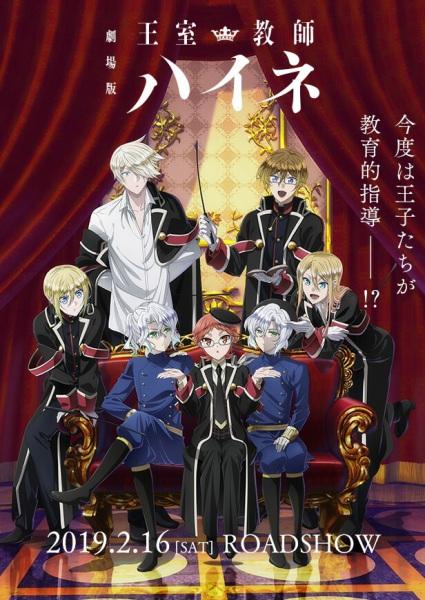
Heine Wittgenstein may be small enough to be mistaken for a child, but his poise and sharp intellect leave no doubt about the authority he carries. Summoned to the kingdom of Grannzreich by its king, Heine is tasked with a job that has defeated many before him: serving as royal tutor to four princes who stand in the line of succession.
Each heir brings a different kind of trouble to the classroom—Licht, the youngest, is an incorrigible flirt; Leonhard masks his age with immaturity; Bruno is serious and bookish; and Kai, the eldest, keeps everyone at arm’s length. As Heine works to earn their trust and shape them into worthy leaders, the daily comedy of clashing personalities is tempered by hints of secrets—both in Heine’s past and within the kingdom itself.
Otaku Consensus
The Royal Tutor lands as a warmly received one-cour comedy rather than a prestige historical drama, with a 7.45 MAL average from 69,263 votes and a 72/100 AniList score reflecting steady fan approval. Katsuya Kikuchi’s direction and Kimiko Ueno’s series composition work best when the show treats royal education as a brisk ensemble routine, giving Bridge’s adaptation a tidy prince-by-prince rhythm across 12 episodes. The common limitation is scale: the production is visually modest and dramatically safe, so viewers seeking dense court politics or lavish historical spectacle may find it slight.
Why You Should Watch
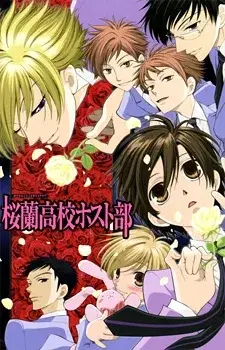
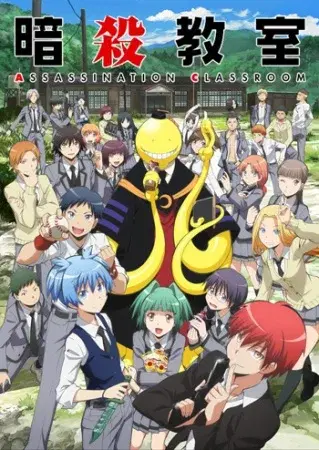
Watch The Royal Tutor if you want Assassination Classroom’s mentor-vs-problem-students appeal stripped of violence, or Ouran High School Host Club’s aristocratic banter without romantic chaos taking over. Its comedy is compact and theatrical: a small, unreadable educator bouncing off four contrasting royal personalities, with visual jokes built from chibi proportions and courtly formality. At 12 episodes, it is the rare historical-themed comedy that does not ask for lore homework; the pleasure is in etiquette drills, bruised egos, and the slow softening of a mostly male ensemble. Viewers who like character rehabilitation, dry deadpan reactions, and tidy one-cour pacing will get the most from it. Viewers who need action, heavy palace conspiracy, or lavish period spectacle should look elsewhere.
Key Characters
- HHeine Wittgenstein
Fans tend to latch onto the contrast between his childlike silhouette and immovable professional authority, a visual joke that also gives the series its sharpest deadpan rhythm.
- LLicht
Licht supplies the flirt-comedy angle, using social ease and unserious charm as a counterweight to the show’s stricter lessons in royal conduct.
- LLeonhard
Leonhard embodies the show’s tsundere classroom energy, with pride, panic, and sincerity colliding whenever he is forced to look less princely than he wants.
- BBruno
Bruno works as the intellectual foil, turning bookish seriousness into comedy whenever reverence for competence overwhelms royal decorum.
What Makes It Stand Out
- 1
Bridge produced the anime as a complete 12-episode Spring 2017 TV run, airing from April 5 to June 21, which gives it a compact one-cour shape rather than an open-ended gag-comedy sprawl.
- 2
The production’s tag profile is unusually precise: AniList marks Teacher at 98%, Male Protagonist at 93%, Primarily Male Cast at 77%, Historical at 75%, and Royal Affairs at 75%, making it a classroom comedy filtered through monarchy rather than a conventional school setting.
- 3
Rena Okuyama’s character design supports the series’ most recognizable visual contrast: formal royal silhouettes set against Heine’s deliberately diminutive, chibi-coded presence, reflected by AniList’s 60% Chibi tag.
- 4
Kimiko Ueno’s series composition keeps the comedy dialogue-driven, using etiquette, hierarchy, and personality clashes as the engine instead of action scenes or supernatural escalation.
- 5
The craft credits include Masanori Iizuka on prop design, Junko Nagasawa as art director, Keiichi Funada on color design, Tomoyuki Shiokawa as director of photography, and Mayumi Komori on editing, a staff structure suited to a period-flavored comedy where rooms, uniforms, and court objects carry much of the setting.
Fun Facts & Trivia
- Fun fact 1
- The anime is credited to original creator Higasa Akai and was adapted by Studio Bridge, the studio listed for the finished 2017 TV version.
- Fun fact 2
- On MyAnimeList, it sits at #2398 by rank and #1728 by popularity, a profile that matches its reputation as a well-liked niche comedy rather than a mainstream breakout.
- Fun fact 3
- AniList lists 676 favourites for the series, with Shounen at 51%, showing that its audience overlaps male-targeted comedy while still leaning heavily into character ensemble appeal.
- Fun fact 4
- Katsuya Kikuchi directed the anime, while Kimiko Ueno handled series composition, a pairing that helps explain the show’s emphasis on short-form comic timing and clean episode-to-episode structure.
- Fun fact 5
- The key animation-side credit list separates character design, prop design, main animation, art direction, color design, photography, and editing, with Rena Okuyama, Masanori Iizuka, Masahiko Itojima, Junko Nagasawa, Keiichi Funada, Tomoyuki Shiokawa, and Mayumi Komori all individually credited.
Studios
- Bridge