Convenience Store Boy Friends
コンビニカレシ (Konbini Kareshi)
- Romance
- School
- Episodes
- 12
- Duration
- 24 min per ep
- Aired
- Jul 7, 2017 to Sep 29, 2017
- Status
- Finished Airing
Synopsis
High school freshmen Haruki Mishima and Towa Honda juggle studying, club activities, and the everyday bustle of school life—while quietly finding their thoughts drifting toward romance. Haruki has carried a long-standing crush on Miharu Mashiki since childhood, and an unexpected run-in at a convenience store stirs those feelings back to the surface. Meanwhile, Towa becomes drawn to their class representative, Mami Mihashi, only to realize his interest isn’t returned.
With Haruki approaching Miharu cautiously and Towa pressing forward despite setbacks, the two best friends navigate the awkward hopes and disappointments that come with first love. As the school months pass, their chances at romance remain uncertain.
Otaku Consensus
Convenience Store Boy Friends earns its modest following through sincerity, soft character art, and Hayato Date’s restrained direction at Studio Pierrot, which favors everyday pauses over romantic spectacle. The common critical verdict is that its pacing lands in an awkward middle ground: too plain to work as memorable teenage drama, yet not loose or atmospheric enough to satisfy as pure slice-of-life comfort. Its MAL score of 6.26 and AniList score of 58 reflect a romance that light-genre fans may defend, but few critics consider essential.
Why You Should Watch
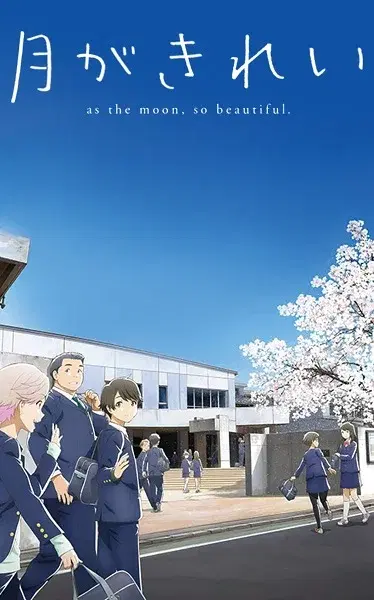
Watch Convenience Store Boy Friends if you want a low-volume school romance centered on hesitation, routine, and small emotional misreads rather than grand confessions or comedy chaos. It scratches a gentler version of the Tsuki ga Kirei itch, but with a more subdued male-lead focus and a recurring konbini atmosphere that turns ordinary after-school space into the show’s social anchor. The 12-episode format keeps it compact, and Sayaka Harada’s early script run gives the first stretch a consistent emotional rhythm. This is best for viewers who like romance as seasonal drift: club rooms, commutes, convenience-store stops, and the slow accumulation of awkward choices. If you need sharp banter, visual flash, or a high-impact finale, its quietness will feel closer to inertia than intimacy.
Key Characters
- HHaruki Mishima
Haruki is the reserved co-lead whose appeal depends on the viewer’s patience for romance built from guarded pauses rather than dramatic pursuit.
- TTowa Honda
Towa functions as the more openly impulsive counterweight to Haruki, giving the series its clearest contrast between acting on feelings and simply enduring them.
- MMiharu Mashiki
Miharu is written less as a flashy heroine than as a quiet emotional fixed point, fitting the show’s preference for understated character art and muted reactions.
- MMami Mihashi
Mami’s role brings a sharper edge to the otherwise fluffy romance framework, since her presence tests how the series handles affection that does not align neatly.
What Makes It Stand Out
- 1
Studio Pierrot, a studio better known among anime fans for large-scale television productions, applies a notably restrained visual mode here: soft character-focused scenes rather than action-driven spectacle.
- 2
The show’s identity is unusually tied to the convenience-store motif, strong enough for AniList to tag it as Konbini at 75%, making the setting a structural social waypoint rather than simple background dressing.
- 3
Sayaka Harada handled series composition and wrote episodes 1–3, 5, 7, and 9, giving much of the first three-quarters a single-writer continuity in tone and romantic tempo.
- 4
Tomomi Ishikawa’s character design is one of the elements critics singled out positively, with THEM Anime Reviews specifically noting the character art even while criticizing the drama.
- 5
Its reception is defined by a precise split: reviewers who value fluffy, easy romance respond to its sincerity, while detractors repeatedly call it bland, forgettable, and insufficiently compelling as teen drama.
Fun Facts & Trivia
- Fun fact 1
- Convenience Store Boy Friends aired as a 12-episode Summer 2017 TV anime, running from July 7 to September 29, 2017.
- Fun fact 2
- The opening theme was performed by Cellchrome, and the band is also credited for the opening lyrics, giving the OP a single-artist performance-and-writing identity.
- Fun fact 3
- Toshirou Fujii had a compact but notable production role: he directed episode 2 and storyboarded both episode 2 and episode 12, tying an early episode to the finale at the storyboard level.
- Fun fact 4
- Rie Oshika scripted episodes 10 and 12, meaning the closing stretch brought in a different credited writer from Sayaka Harada’s dominant early-episode run.
- Fun fact 5
- The anime’s database footprint shows a clear gap between visibility and acclaim: it has 37,897 MAL votes and a popularity rank of #2307, but sits much lower in ranking at #9409 with a 6.26 average.
Studios
- Studio Pierrot