Violet Evergarden: The Movie
劇場版 ヴァイオレット・エヴァーガーデン (Violet Evergarden Movie)
- Award Winning
- Drama
- Historical
- Military
- Workplace
- Episodes
- 1
- Duration
- 2 hr 20 min
- Aired
- Sep 18, 2020
- Status
- Finished Airing
Synopsis
Years after the Great War, Leidenschaftlich is changing quickly: a radio tower rises over the city, telephones are poised to replace handwritten correspondence, and the work of “Auto Memory Dolls” begins to fade in demand. Even so, Violet Evergarden’s reputation continues to grow through her steady success as a letter writer—though some wishes remain painfully out of reach.
Violet presses on in her search to understand emotions and what love truly means, holding tightly to a lingering hope that the man who once told her “I love you” might still be alive, despite the years that have passed.
Otaku Consensus
Violet Evergarden: The Movie lands as a high-prestige capstone: Kyoto Animation’s tactile direction under Taichi Ishidate, the carefully paced accumulation of Violet’s growth, and the Yuris letter thread give the film the kind of emotional payoff fans wanted from the series’ long-form character work. Its reception is overwhelmingly strong across fan metrics and reviews, but the recurring dissent is precise rather than dismissive: for some viewers, the final resolution narrows the story’s emotional possibilities and makes the ending feel less convincing than the journey.
Why You Should Watch
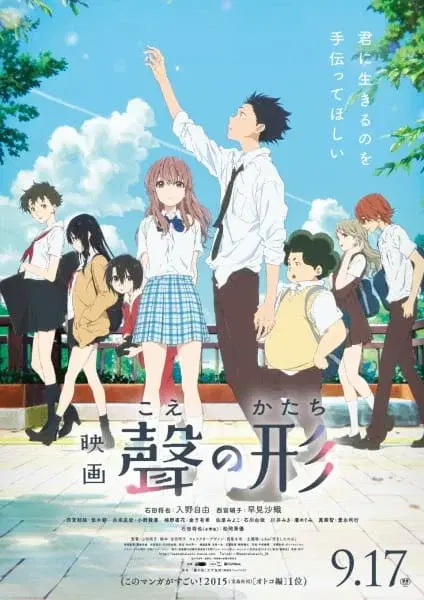
Watch this if you want a tearjerker that treats writing as craft, grief work, and historical artifact rather than as a convenient plot device. It is built for viewers who loved the emotional precision of Kyoto Animation’s A Silent Voice but want something more literary, adult-cast-focused, and openly sentimental, without action catharsis or fantasy spectacle. The film’s best hook is not whether it can make you cry; it is how it stages communication at the moment handwritten letters are becoming obsolete, turning a changing city, postal labor, and personal rehabilitation into one unified emotional argument. If you already value Violet as a character study, the movie rewards attention to restraint: pauses, unsent words, formal language, and the cost of finally naming an emotion.
Key Characters
- VViolet Evergarden
Violet remains compelling because the film measures her growth less through speeches than through professional discipline, emotional literacy, and the way fans can track years of rehabilitation in tiny changes of response.
- GGilbert
Gilbert functions as the story’s most contested emotional center, especially because the movie leans into the franchise’s Age Gap and Heterosexual tags rather than treating them as incidental background.
- YYuris
Yuris gives the film one of its sharpest late-stage tests of the Auto Memory Doll premise, compressing family love, limited time, and written legacy into a focused client arc.
What Makes It Stand Out
- 1
Kyoto Animation’s production approach is credited down to tactile specialties: Hiroyuki Takahashi and Minoru Oota are both listed for accessory design, a telling detail for a film where letters, tools, clothing, and keepsakes carry emotional weight.
- 2
The film is structured as a capstone rather than a reset, with reviews praising how it pays off the meticulous character development of the TV anime instead of relying on a standalone theatrical conflict.
- 3
Its setting is not just historical decoration: the radio tower and approaching spread of telephones place the Auto Memory Doll profession at a technological turning point, making the act of handwriting feel culturally endangered as well as personal.
- 4
The Yuris material is a standout structural counterweight to Violet’s own unresolved feelings, giving the movie a concrete letter-writing case that keeps the franchise’s workplace identity alive inside a larger romantic and tragic arc.
- 5
The visual identity is strongly staff-driven: Mikiko Watanabe is credited as both art director and art designer, Jouji Unoguchi also handles art design, Takaaki Suzuki oversees world design, and Yuuka Yoneda shapes the color design.
Fun Facts & Trivia
- Fun fact 1
- The film opened on September 18, 2020 and is cataloged as a single completed episode, which is why databases list it alongside series entries while treating it as a theatrical feature.
- Fun fact 2
- Its fan standing is unusually high for a sequel film: MyAnimeList lists it at 8.83 from 345,681 votes, with a rank of #36 and popularity of #319 in the provided data.
- Fun fact 3
- AniList reception closely matches the MyAnimeList enthusiasm, with an 87/100 score and 8,283 favorites, while its highest-weighted tag is Writing at 97%.
- Fun fact 4
- The tag profile reveals how viewers classify the movie beyond genre labels: Female Protagonist sits at 94%, Tragedy at 88%, Work at 80%, Historical at 76%, Rehabilitation at 75%, and Disability at 66%.
- Fun fact 5
- The core creative credits highlight continuity of authorship: Kana Akatsuki is credited as original creator, Taichi Ishidate as director, and Akiko Takase as character designer.
Studios
- Kyoto Animation