Fate/Grand Order: Absolute Demonic Front - Babylonia
Fate/Grand Order -絶対魔獣戦線バビロニア- (Fate/Grand Order: Zettai Majuu Sensen Babylonia)
- Action
- Fantasy
- Isekai
- Historical
- Mythology
- Episodes
- 21
- Duration
- 23 min per ep
- Aired
- Oct 5, 2019 to Mar 21, 2020
- Status
- Finished Airing
Synopsis
In A.D. 2016, humanity’s very foundation has been burned away by the Mage King Solomon. Chaldea—an underground organization of mages tasked with safeguarding the future—predicted the end back in 2015 and launched Operation Grand Order: a mission to correct historical Singularities created by Holy Grails scattered across time and space.
With Rayshift time travel, Chaldea’s last Master, Ritsuka Fujimaru, and his demi-servant Mash Kyrielight have already resolved six Singularities. Their next destination is the most perilous yet: Mesopotamia in B.C. 2655, during the Age of Gods. There, Demonic Beasts ravage the land, and the fortress city of Uruk stands as humanity’s final bulwark—led by King Gilgamesh, the King of Heroes, who has summoned Heroic Spirits and taken up magecraft to defend his people.
Fighting alongside Gilgamesh and his servants, Ritsuka and Mash must hold Uruk’s front line against relentless attacks and confront the Three Goddess Alliance, which seeks the destruction of humankind—while an even greater menace gathers, poised to awaken.
Otaku Consensus
CloverWorks' Babylonia is the Fate/Grand Order adaptation that most convincingly turns gacha scenario scale into event-anime momentum: Toshifumi Akai's direction and the dedicated action-direction bench keep the 21-episode Uruk campaign punctuated by showcase fights, while the longer TV format gives the seventh Singularity more room than the Camelot films. Its reputation is held back by real friction points: heavy franchise baggage, uneven fanservice-heavy female designs, and moments where Type-Moon archetypes feel louder than character depth.
Why You Should Watch
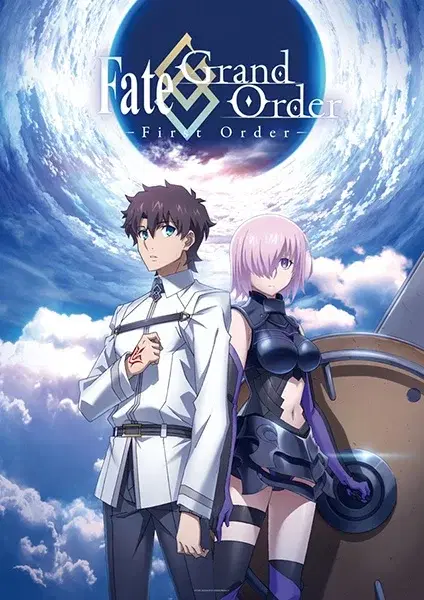
Watch Babylonia if you want Fate at its most maximalist: divine egos, kaiju-scale threats, spear-and-sword choreography, and the kind of weekly set-piece animation that makes a mobile-game chapter feel like a prestige TV event. It scratches the same itch as Fate/stay night: Unlimited Blade Works for Heroic Spirit matchups, but trades grail-war mystery for a siege-campaign rhythm closer to the pressure-cooker momentum of Attack on Titan. The ideal viewer already has at least First Order and episode 0 under their belt, or is comfortable being dropped into the seventh FGO chapter with terminology flying. What you get in return is not a clean beginner gateway, but a concentrated Type-Moon spectacle where CloverWorks treats almost every episode as an action showcase.
Key Characters
- AAna(VA: Yuu Asakawa)
A reserved spear user whose guarded presence gives the louder divine cast a colder, more tragic-feeling counterweight.
- RRitsuka Fujimaru(VA: Nobunaga Shimazaki)
More field commander than flashy combatant, Ritsuka works best as the player-avatar anchor whose appeal comes from persistence, trust, and emotional stamina.
- GGilgamesh(VA: Tomokazu Seki)
This version of the King of Heroes is memorable because Seki leans into administrator-mage authority, imperious comedy, and regal exhaustion rather than only arrogant swagger.
- IIshtar(VA: Kana Ueda)
Ishtar turns divine authority into a volatile mix of battle power, ego, comedy, and unmistakable Fate-series voice continuity through Kana Ueda.
What Makes It Stand Out
- 1
CloverWorks gives Fate/Grand Order's seventh game chapter a full 21-episode TV treatment, a notable contrast with the compressed film format used for the Camelot material in the common FGO anime route.
- 2
The production credits three separate action directors: Megumi Kouno, Touya Ooshima, and Isao Hayashi. That staffing emphasis matches the show's reputation for delivering a major animated combat beat in nearly every episode rather than saving all spectacle for the finale.
- 3
Its tag profile is unusually myth-heavy even by Fate standards: AniList marks Mythology at 95%, Magic at 93%, Kaiju at 90%, and Gods at 88%. That makes it feel less like an urban Holy Grail War and more like a full Age of Gods disaster campaign.
- 4
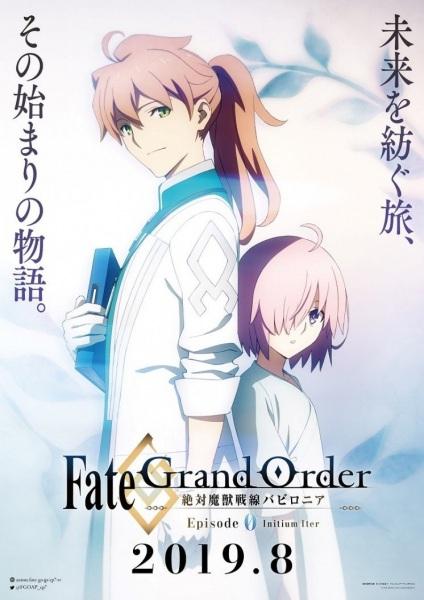
The adaptation is not built as a frictionless gateway; viewers and reviewers commonly place it after First Order, the two Camelot films, and the Initium Iter episode because it assumes the Grand Order framework is already understood.
- 5
Its fanservice is one of the recurring objections rather than a minor footnote: AniList tags Nudity and Monster Girl at 79%, and user criticism specifically calls out the uneven exposure and sexualized styling of female and young-looking character designs.
Fun Facts & Trivia
- Fun fact 1
- The series aired from October 5, 2019 to March 21, 2020, running 21 episodes across the fall 2019 and winter 2020 seasons.
- Fun fact 2
- Type-Moon and Kinoko Nasu are both credited as original creators, preserving the franchise's direct authorial link instead of positioning Babylonia as a loose spin-off.
- Fun fact 3
- Toshifumi Akai directed the series with Miyuki Kuroki as assistant director; the design pipeline lists Tomoaki Takase on character design, Shouta Iwasaki on sub-character design, and Kouta Michishita on prop design.
- Fun fact 4
- Its database reception sits in a strong but not untouchable band: 7.94 on MyAnimeList from 149,969 votes, MAL rank #850, MAL popularity #905, plus 78/100 and 2,341 favourites on AniList.
- Fun fact 5
- The voice cast carries recognizable Fate continuity: Tomokazu Seki returns as Gilgamesh, while Kana Ueda's Ishtar performance resonates with her long-running association with Rin Tohsaka in other Fate anime.
Studios
- CloverWorks