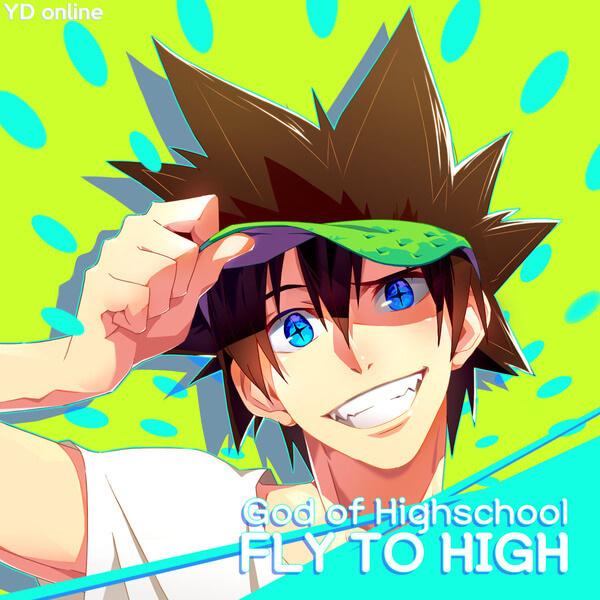
The God of High School
THE GOD OF HIGH SCHOOL ゴッド・オブ・ハイスクール
- Action
- Fantasy
- Martial Arts
- Urban Fantasy
- Episodes
- 13
- Duration
- 23 min per ep
- Aired
- Jul 6, 2020 to Sep 28, 2020
- Status
- Finished Airing
Synopsis
The God of High School kicks off a nationwide tournament to crown the strongest Korean high school fighter. Anything goes in the ring—every martial arts style, weapons, and any tactic that leads to victory are allowed. The champion earns a single wish, with no limits on what can be asked for.
Taekwondo prodigy Jin Mo-Ri enters after receiving an invitation and quickly crosses paths with karate practitioner Han Dae-Wi and swordswoman Yu Mi-Ra, each driven by personal motives. As the competition escalates, the bouts grow increasingly brutal and unpredictable—an intensity that only fuels Mo-Ri’s excitement.
Behind the tournament’s straightforward promise of proving strength, something else is at work. Political candidate Park Mu-Jin watches the matches closely, hinting at a hidden agenda that Mo-Ri and his new allies will soon be forced to confront as they chase the title of “God of High School.”
Otaku Consensus
The God of High School lands as a showcase for Seong-Hu Park and MAPPA: its strongest material is the early run of martial-arts bouts, where rotoscoped body mechanics, hard cuts, and urban-fantasy escalation give the adaptation a charge few 2020 action shows matched. Its divisive reputation, with a 7.07 MAL score and 70/100 AniList score despite massive popularity, comes from the same source as its appeal: breakneck pacing that privileges spectacle over plot clarity and character development. The verdict is simple: an elite action reel attached to a compressed story that leaves many viewers impressed, hyped, and underfed.
Why You Should Watch
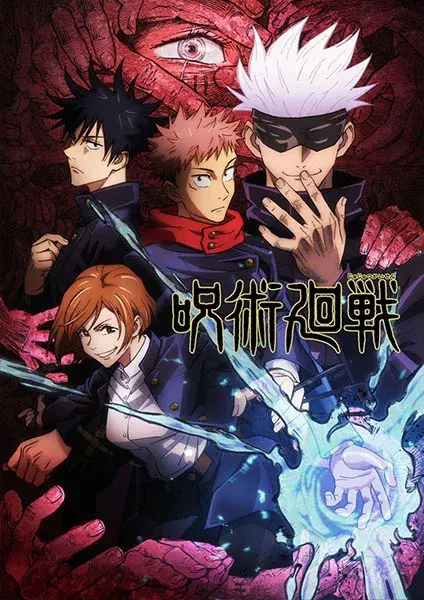
Watch The God of High School if you want hand-to-hand combat with the speed of a highlight reel and none of the slow-burn training-arc downtime. It scratches a similar itch to Baki for martial-arts excess and Jujutsu Kaisen for MAPPA-polished urban-fantasy momentum, but its flavor is more tournament-carnival than horror-action. The draw is physicality: kicks snap with readable body mechanics, swordplay sits beside bare-knuckle striking, and the camera treats impacts like punctuation. Viewers who need careful worldbuilding before escalation may bounce off the 13-episode sprint; viewers who judge action anime by choreography, rhythm, and how often a fight makes them rewind will find exactly what the discourse promised.
Key Characters
- JJin Mo-Ri
Jin Mo-Ri is the show’s kinetic center, a taekwondo prodigy whose appeal comes less from brooding hero drama than from the sheer joy he takes in testing bodies, styles, and limits.
- HHan Dae-Wi
Han Dae-Wi gives the trio its grounded weight, bringing a karate-based fighting style and a more serious emotional register to a series otherwise driven by acceleration.
- YYu Mi-Ra
Yu Mi-Ra stands out through swordplay in a largely fist-forward cast, giving the action a different geometry whenever her weapon-based style takes over the screen.
- PPark Mu-Jin
Park Mu-Jin is memorable because he operates like an observer with institutional power rather than a standard rival, turning the combat spectacle into something visibly managed and politically charged.
What Makes It Stand Out
- 1
MAPPA’s production is frequently singled out for fight animation rather than only character art, with AniList tagging rotoscoping at 80% and CGI at 52%, reflecting how much the series leans on motion, camera movement, and hybrid action staging.
- 2
Director Seong-Hu Park’s action-forward approach gives the anime its identity: reviews consistently praise the fights as the reason to watch even when they criticize the writing around them.
- 3
The anime is a single-cour, 13-episode finished adaptation that aired from July 6 to September 28, 2020, making its pacing unusually aggressive for a battle series with martial arts, super powers, cult elements, and urban-fantasy escalation all competing for space.
- 4
Its reception profile is unusually split: it sits at MAL popularity #191 with over 567,000 votes, while its MAL rank of #4515 and 7.07 score show how widely watched yet contested it became.
- 5
The series’ identity is distinctly international for a Japanese TV anime, coming from Yong-Je Park’s Korean manhwa/Webtoon source and carrying AniList’s “Foreign” tag at 73% alongside “Martial Arts” at 96% and “Urban Fantasy” at 90%.
Fun Facts & Trivia
- Fun fact 1
- The original creator is Yong-Je Park, and the anime’s visibility helped cement The God of High School as one of the major manhwa-to-anime conversation pieces of 2020.
- Fun fact 2
- Series composition was handled by Kiyoko Yoshimura, while Manabu Akita provided character designs, placing the show’s compressed structure and fight-readable silhouettes under separate key creative leads.
- Fun fact 3
- The visual department lists both Sachiko Nishiguchi and Kuniko Iwatani as art directors, with Ami Kutsuna on color design and Shigeki Asakawa as director of photography, a staff spread that helps explain the show’s polished but highly kinetic urban presentation.
- Fun fact 4
- Kisuke Koizumi served as sound director, and outside reviews singled out the audio as solid and the music as catchy even when criticism focused on the story’s construction.
- Fun fact 5
- On AniList, the anime holds 6,546 favourites and a 70/100 score, closely mirroring its MAL reception: a large fanbase, strong action loyalty, and persistent debate over adaptation pacing.
Studios
- MAPPA