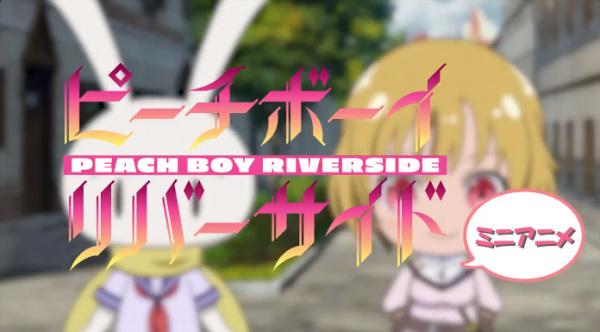
Peach Boy Riverside
ピーチボーイリバーサイド
- Action
- Adventure
- Fantasy
- Gore
- Episodes
- 12
- Duration
- 23 min per ep
- Aired
- Jul 1, 2021 to Sep 16, 2021
- Status
- Finished Airing
Synopsis
In a fantasy world strained by conflict between humans, demihumans, and oni, Princess Saltorine “Sally” Aldike sets out on a journey in search of Mikoto Kibitsu. Traveling beyond the sheltered perspective of her lineage, she begins to uncover hard truths about the world—most notably, the oni’s overwhelming power, said to be great enough to threaten humanity’s survival.
Sally carries a mysterious gift: a peach-shaped sigil that grants her superhuman strength capable of bringing down formidable oni. Even with that advantage, she tries to avoid judging others by race and holds onto the hope that humans, demihumans, and oni might one day coexist. Mikoto, who bears the same power with far greater control, chooses a far harsher path—dedicating himself to hunting and tormenting oni without restraint. Each time their paths intersect, their shared ability becomes a deciding force between the possibility of peace and the pull toward total destruction.
Otaku Consensus
Peach Boy Riverside lands as a divisive shounen-fantasy adaptation: Asahi Production gives its 12-episode run enough blunt-force action, comedy beats, and gore to satisfy viewers who like their road fantasies jagged rather than polished. The verdict is dominated by one production choice—the scrambled broadcast order—which many fans and critics say damages pacing, world immersion, and character development unless the series is watched chronologically; its coexistence theme also drew criticism for being heavy-handed.
Why You Should Watch
Watch Peach Boy Riverside if you want a bloodier, less tidy fantasy road anime that treats monster-hunting as an ideological argument rather than just a power ladder. It scratches a bit of the Demon Slayer itch through folklore-flavored demon violence, but trades that series’ elegant training-progression polish for abrasive moral clashes, kemonomimi/demihuman world texture, and bursts of comedy that keep the tone from becoming nonstop grimdark. The best use case is specific: queue it in chronological order, not broadcast order, and you get a more coherent action-adventure with two radically different answers to the same power. If you enjoy shounen fantasy with gore, monster girls, elves/demihumans, and messy prejudice allegories without needing premium-tier animation or subtle messaging, this is a compact 12-episode curiosity worth sampling.
Key Characters
- SSaltorine Aldike(VA: Haruka Shiraishi)
Sally is compelling because her royal naïveté is gradually tested against the show’s racial hostility, making her less a standard princess lead than a stubborn argument for empathy.
- MMikoto Kibitsu(VA: Nao Touyama)
Mikoto is the colder draw: a demon-hunter figure whose controlled peach power makes him exhilarating in fights and uncomfortable as a moral counterweight to Sally.
What Makes It Stand Out
- 1
The anime’s most famous production choice is its non-chronological broadcast order, a decision that became central to the reception rather than a minor formatting quirk. Fan discussion and later reviews frequently recommend chronological viewing as the stronger version of the series.
- 2
Its AniList tag profile is unusually clear about its appeal: Female Protagonist at 92%, Demons at 85%, Travel and Kemonomimi at 79%, Gore at 73%, and Monster Girl at 72%. That combination points to a travel-fantasy structure with harsher violence than the character designs may initially suggest.
- 3
Asahi Production handled the 12-episode TV run, which aired from July 1 to September 16, 2021. The short single-cour format gives the series a compressed rhythm, especially when paired with the controversial episode sequencing.
- 4
The adaptation’s creative chain is distinctive: Cool-kyou Shinja is credited with the original story, Yohane with the original character designs, and Satomi Kurita and Masato Katou with the anime character designs. That split helps explain the series’ blend of cute fantasy silhouettes and much bloodier shounen action.
- 5
Its reception numbers tell the story of a visible but polarizing title: MAL lists it at 6.24 from 76,750 votes with popularity at #1391, while AniList places it at 60/100 with 626 favourites. It is far more discussed than its ranking alone would imply.
Fun Facts & Trivia
- Fun fact 1
- Keiichirou Oochi is credited with series composition, which is notable because the anime’s episode arrangement became the main talking point in both fan threads and reviews.
- Fun fact 2
- The lead voice cast pairs Haruka Shiraishi as Sally with Nao Touyama as Mikoto, giving the central duo two established seiyuu with very different vocal energies.
- Fun fact 3
- The visual staff list separates character, prop, art, color, and photography roles: Takuya Imakado handled prop design, Takayoshi Fukushima served as art director, Yoshihiro Sono handled art design, Maki Saitou handled color design, and Naho Hasegawa was director of photography.
- Fun fact 4
- Review summaries consistently split the audience into two camps: viewers who found the action-comedy-drama mix compelling, and viewers who felt the scattered storytelling undercut character development and immersion.
- Fun fact 5
- Although its mythology tag sits at 60% on AniList, the title and central naming draw on the broad cultural footprint of Momotaro-style demon-slaying folklore rather than presenting a straight retelling.
Studios
- Asahi Production