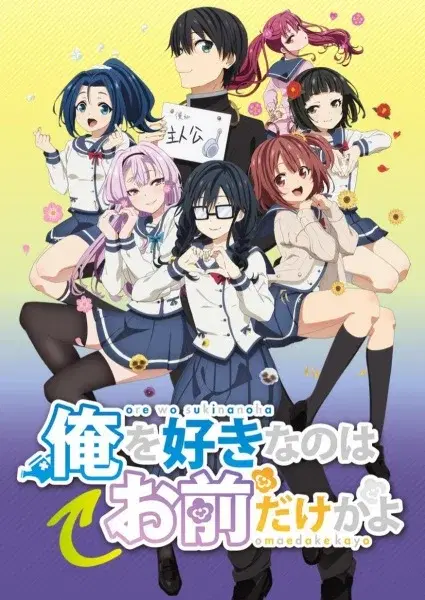
Osamake: Romcom Where the Childhood Friend Won't Lose
幼なじみが絶対に負けないラブコメ (Osananajimi ga Zettai ni Makenai Love Comedy)
- Comedy
- Romance
- Harem
- School
- Episodes
- 12
- Duration
- 23 min per ep
- Aired
- Apr 14, 2021 to Jun 30, 2021
- Status
- Finished Airing
Synopsis
Sueharu Maru has grown up alongside Kuroha Shida, one of Hozumino High School’s most admired girls. Bright, friendly, and doting in an older-sister sort of way, Kuroha attracts constant attention—so when she suddenly confesses her feelings to Sueharu, it catches him off guard. He turns her down, unable to see her romantically, especially with his heart still set on his first love: the school’s idol and celebrated author, Shirokusa Kachi.
After a chance encounter convinces Sueharu he might finally be able to reach Kachi, he learns she already has a boyfriend, leaving him crushed. That’s when Kuroha returns with an unexpected plan: the two of them should team up and get revenge.
Otaku Consensus
Osamake is a polarizing Doga Kobo school romcom whose defenders point to its wholesome tone, brisk single-cour pacing, and revenge-game structure as the reason it remains easy to binge. The dominant criticism is equally consistent: viewers who reject it tend to find the cast’s mind games shallow, the motives thin, and the comedy more irritating than clever. Its 6.06 MAL score and 58/100 AniList score match the verdict: a popular but divisive harem comedy with a sharper hook than its execution can always support.
Why You Should Watch
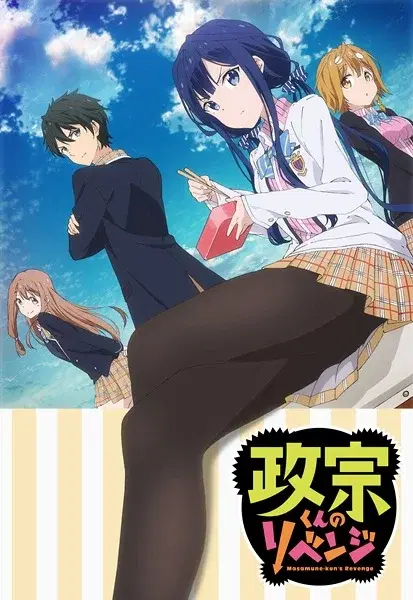
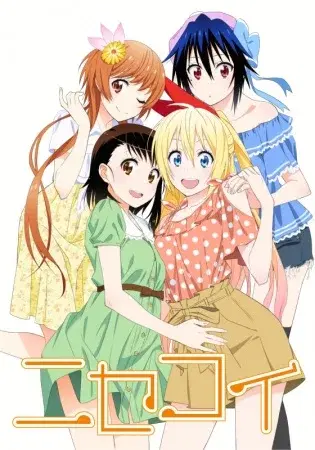
Watch Osamake if you want a romcom that treats teenage romance like petty strategy warfare rather than pure wish fulfillment. It scratches some of the same harem-comedy itch as Nisekoi, but filters it through the revenge-flavored escalation of something closer to Masamune-kun’s Revenge, with school-club maneuvering, performance, and public image baked into the romantic chaos. The appeal is not quiet emotional realism; it is watching a love triangle turn into a loud social chessboard where everyone is performing a version of themselves. Viewers who enjoy Doga Kobo’s clean, character-focused school-comedy packaging and can handle exaggerated motives will get the most out of it. Viewers looking for grounded romantic progress or deeply psychological characterization should approach it as a guilty-pleasure farce, not a prestige romance.
Key Characters
- SSueharu Maru
Sueharu is the type of harem lead fans debate because his insecurity and pride make him less a blank self-insert than a walking trigger for romantic retaliation.
- KKuroha Shida
Kuroha is the title’s selling point: a childhood-friend heroine framed not as doomed nostalgia, but as the most proactive operator in the romantic battlefield.
- SShirokusa Kachi
Shirokusa brings the series its idol-author angle, giving the love triangle a public-facing celebrity aura instead of limiting it to ordinary classroom crush dynamics.
What Makes It Stand Out
- 1
Doga Kobo produced the anime as a compact 12-episode TV run, airing from April 14 to June 30, 2021. That single-cour structure is central to why positive viewers describe the pacing as neither rushed nor sluggish.
- 2
The adaptation’s visual identity is built around Ui Shigure’s original character designs, with director Takashi Naoya also credited for character design. Atsushi Soga handled sub-character design, while Hiroyuki Ogura and Megumi Matsumoto handled prop design.
- 3
AniList’s tag profile shows how unusual the series’ romcom recipe is: Love Triangle sits at 98%, but Acting and School Club both register at 79%, Revenge at 70%, Idol at 54%, and Crossdressing at 40%. That mix explains why the show often feels more like a staged social contest than a standard confession comedy.
- 4
Its reception profile is unusually split between visibility and approval: MAL lists it at 6.06/10 with 130,098 votes, a low rank of #10593, but a much higher popularity position of #954. In practice, many anime fans tried it, while far fewer endorsed it strongly.
- 5
The official streaming listing places it under Comedy, Drama, and Romance, with content advisories for suggestive dialogue, sexualized imagery, and profanity. It was also offered with a wide subtitle spread including English, German, Latin American Spanish, European Spanish, French, Italian, Brazilian Portuguese, Russian, and Arabic.
Fun Facts & Trivia
- Fun fact 1
- The anime credits Shuuichi Nimaru for the original story and Ui Shigure for the original character design, tying the adaptation’s identity closely to its source-material creators rather than treating it as a purely studio-led reinvention.
- Fun fact 2
- Takashi Naoya carried two major creative credits on the project: director and character designer. Matsuo Asami served as assistant director, giving the production a clearly defined top-level direction team.
- Fun fact 3
- The design staff was split into specialized roles: Atsushi Soga handled sub-character design, Hiroyuki Ogura and Megumi Matsumoto handled prop design, and Genta Makabe handled color design.
- Fun fact 4
- The series’ official copyright line is ©2021 Shuichi Nimaru/KADOKAWA CORPORATION/OSAMAKE Partners, reflecting a standard production-committee model built around the original creator, publisher, and anime stakeholders.
- Fun fact 5
- AniList lists 1,039 favorites for the series despite its 58/100 score, which captures its cultier side: even among broadly mixed reviews, it retained a dedicated pocket of fans who connected with its harem chaos.
Studios
- Doga Kobo