Kiki's Delivery Service
魔女の宅急便 (Majo no Takkyuubin)
- Adventure
- Award Winning
- Comedy
- Drama
- Fantasy
- Urban Fantasy
- Workplace
- Episodes
- 1
- Duration
- 1 hr 43 min
- Aired
- Jul 29, 1989
- Status
- Finished Airing
Synopsis
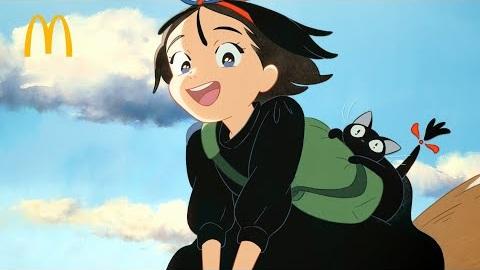
Thirteen-year-old Kiki is a witch-in-training following a long-held tradition: spend a year away from home to earn her place as a proper witch. With only her broomstick and her black cat, Jiji, she leaves her family behind and sets off to find a town where she can make a life on her own.
Kiki arrives in the seaside city of Koriko and quickly learns that independence isn’t as simple as it sounds, especially when she has nowhere to stay. A chance meeting with Osono, who runs a small bakery, gives Kiki a roof over her head—so long as she helps out by making deliveries. Taking to the skies for work, Kiki starts a broomstick courier service and, through her growing connections with the townspeople, begins to discover what responsibility and self-reliance truly mean.
Otaku Consensus
Kiki's Delivery Service endures because Hayao Miyazaki turns a modest coming-of-age fantasy into a precise study of work, burnout, and confidence, with Studio Ghibli's hand-drawn flight animation making emotion legible through movement rather than speeches. Critics and fans broadly agree that Kiki's growth feels earned and realistic, reflected in its strong 8.24 MAL score and 81/100 AniList score, while the recurring complaint is that its low-conflict, episodic story can feel slighter than viewers expect from Ghibli's more dramatic classics.
Why You Should Watch
Watch Kiki's Delivery Service if you want the emotional clarity of Whisper of the Heart and the domestic fantasy scale of The Secret World of Arrietty without a villain, war, or grand mythology crowding the frame. It is one of Miyazaki's best films about competence: how a young person learns routines, negotiates adult spaces, and discovers that talent can vanish when self-trust does. The appeal is in the texture of work: deliveries, bakery rhythms, awkward customer encounters, and the physical comedy of a broomstick that never feels like a superhero vehicle. Viewers who love Ghibli's quieter craft, especially animation that treats flying as personality rather than spectacle, will find this more emotionally specific than its simple setup suggests.
Key Characters
- KKiki
Kiki is beloved because her confidence problems are not framed as melodrama but as a practical, recognizable crisis of growing up, working, and being seen by adults.
- JJiji
Jiji functions as more than a cute familiar: his dry reactions give the film much of its comedy while also externalizing Kiki's private doubts.
- OOsono
Osono stands out as the kind of grounded adult Ghibli writes unusually well, offering support without turning Kiki's independence into a lecture.
What Makes It Stand Out
- 1
The film's fantasy is deliberately urban rather than mythic: AniList's strongest setting tags include Urban Fantasy, Coastal, Urban, Work, and Aviation, which captures how the magic is embedded in daily errands and city life.
- 2
Hayao Miyazaki's direction makes flight character-specific; contemporary criticism often notes that the way characters move through the air in his films reveals temperament, and Kiki's broomstick scenes are clumsy, practical, and expressive rather than purely majestic.
- 3
Katsuya Kondou's character designs favor readable body language over ornate fantasy costuming, helping the film sell small emotional shifts through posture, hesitations, and facial timing.
- 4
Hiroshi Oono's art direction and Michiyo Yasuda's color design give Koriko its warm seaside identity, making the city feel inviting without erasing the social distance Kiki feels inside it.
- 5
The editing by Takeshi Seyama supports a gentle, episodic rhythm: the film accumulates meaning through jobs, meetings, and pauses rather than building toward a conventional antagonist-driven fantasy plot.
Fun Facts & Trivia
- Fun fact 1
- Kiki's Delivery Service is adapted from the work of Eiko Kadono, making it one of Studio Ghibli's literary adaptations rather than an original Miyazaki story.
- Fun fact 2
- The film was released in Japan on July 29, 1989, placing it early in Studio Ghibli's feature-film identity, before later international breakout titles helped define the studio for Western audiences.
- Fun fact 3
- A recent theatrical re-release brought the film to IMAX screens for the first time, following a broader pattern of high-profile Ghibli reissues that also included Princess Mononoke, Whisper of the Heart, and The Secret World of Arrietty.
- Fun fact 4
- Its database footprint shows unusual staying power for a 1989 film: over 432,000 MAL voters, a #368 popularity ranking, and 7,526 AniList favourites indicate that it remains a core gateway Ghibli title.
- Fun fact 5
- The title logo was credited to both Akira Michikawa and Kaoru Mano, a small production detail that reflects how carefully Ghibli packaged the film's identity beyond animation and storyboards.
Studios
- Studio Ghibli