Mary and the Witch's Flower
メアリと魔女の花 (Mary to Majo no Hana)
- Adventure
- Fantasy
- Mahou Shoujo
- School
- Episodes
- 1
- Duration
- 1 hr 42 min
- Aired
- Jul 8, 2017
- Status
- Finished Airing
Synopsis
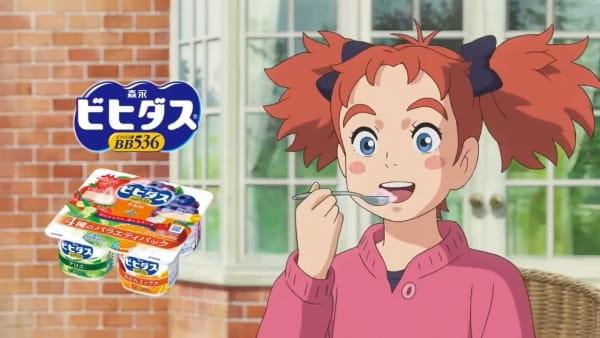
Mary Smith, a well-meaning but accident-prone girl with untamed red hair, moves in with her great-aunt Charlotte and quickly finds the countryside quiet and isolating. Her days take an unexpected turn when she notices a cat that seems to shift colors from one sighting to the next. Following it into the woods, Mary discovers a bleak clearing where little grows—except for a small patch of vivid blue flowers unlike anything she’s seen. The estate’s gardener identifies them as “Fly-by-Night,” a rare bloom rumored to be coveted by witches for its extraordinary magical power.
When the cat reappears after dark, it leads Mary back into the forest to a weathered broom hidden near a twisted tree. After smearing Fly-by-Night on the broom by mistake, it flares to life and carries her into the night sky, depositing her at Endor College for Witches. Mistaken for a new pupil, Mary is swept into a dazzling world of spellcraft and secrets, where she has to rely on herself—and learn that appearances can be deceiving.
Otaku Consensus
Studio Ponoc’s debut landed as an assured family fantasy rather than a revolution: critics and viewers repeatedly singled out Hiromasa Yonebayashi’s brisk direction, the hand-drawn flight staging, and a Mary Stewart adaptation that stays clear enough for children without condescending. Its MAL 7.27 and AniList 71 response matches the verdict: uplifting and visually polished, but often judged too visibly indebted to the Ghibli grammar its ex-Ghibli staff helped create.
Why You Should Watch
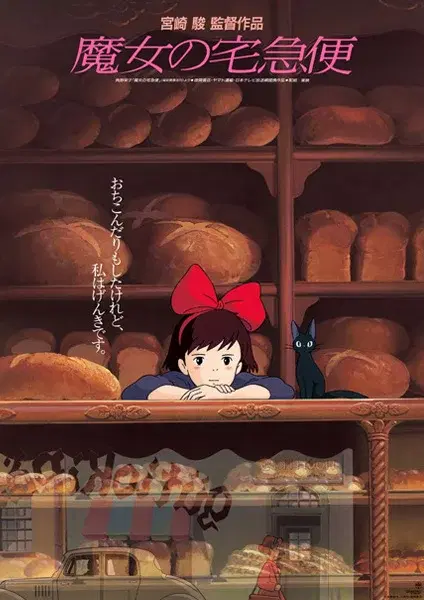
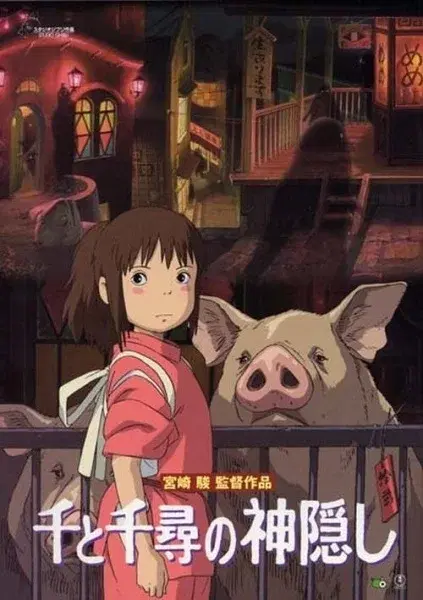
Watch Mary and the Witch’s Flower if you want a compact, kid-accessible fantasy adventure with old-school theatrical animation, but without the emotional devastation or mythic density of heavier Ghibli-era landmarks. It scratches the same itch as Kiki’s Delivery Service in its airborne exhilaration and young heroine energy, while its school-of-magic detour gives it a lighter, more storybook flavor than Spirited Away. The appeal is in craft: swooping camera logic during flight, expressive physical comedy, and a score by Takatsugu Muramatsu that treats wonder as momentum rather than wallpaper. Viewers who enjoy fantasy films that respect children’s intelligence, move quickly, and keep their moral conflicts legible will get the most from it.
Key Characters
- MMary Smith
Mary stands out because the film frames her clumsiness and insecurity as active dramatic fuel, making her growth feel like a child learning agency rather than a predestined heroine unlocking power.
- CCharlotte
Charlotte gives the film its grounded domestic counterweight, anchoring the magical escalation in the quiet rhythms of a countryside household.
What Makes It Stand Out
- 1
Mary and the Witch’s Flower was Studio Ponoc’s first feature film, and much of the conversation around it comes from watching former Studio Ghibli talent establish a new studio identity under immediate comparison pressure.
- 2
Hiromasa Yonebayashi both directed and co-wrote the film, with Riko Sakaguchi also credited on the script, giving the adaptation a unified, classical adventure-film shape rather than an episodic school-fantasy structure.
- 3
The film’s flight sequences were repeatedly highlighted in reviews for their strong angles, perspective shifts, and fast movement, making aerial motion one of its most praised pieces of animation craft.
- 4
Takatsugu Muramatsu composed the music, while SEKAI NO OWARI performed the theme song, pairing orchestral fantasy scoring with a mainstream Japanese pop presence.
- 5
Key animation credits include Shinji Ootsuka, Hideki Hamasu, and Akiyo Okuda, a reminder that the film’s reputation rests heavily on individual animator craft rather than digital spectacle.
Fun Facts & Trivia
- Fun fact 1
- The film is based on work by British author Mary Stewart, whose credit as original creator places the project in the lineage of Japanese animated adaptations of Western children’s literature.
- Fun fact 2
- It opened in Japan on July 8, 2017, as a single theatrical feature rather than a television series, which is why database listings show one episode despite its feature-film format.
- Fun fact 3
- Studio Ponoc’s launch became part of the film’s identity because reviewers immediately framed it against Studio Ghibli, noting that many animators had moved from Ghibli to the new company.
- Fun fact 4
- Hiromasa Yonebayashi’s dual role as director and scriptwriter made him the central creative voice on the project, not just the visual supervisor.
- Fun fact 5
- Its database reception is positive but measured: MAL lists it at 7.27 from 59,963 votes, while AniList records a 71/100 score and 403 favourites.
Studios
- Studio Ponoc