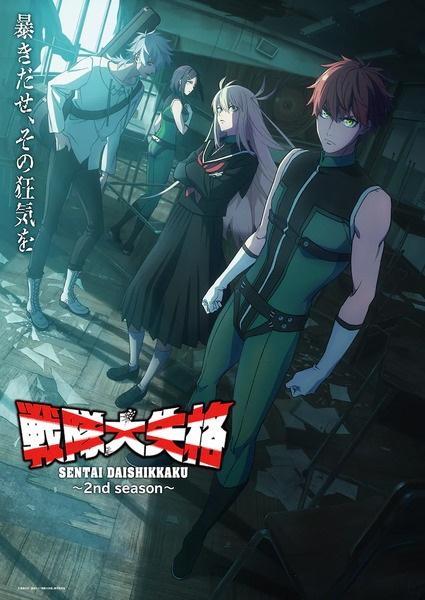
Go! Go! Loser Ranger!
戦隊大失格 (Sentai Daishikkaku)
- Action
- Fantasy
- Urban Fantasy
- Episodes
- 12
- Duration
- 23 min per ep
- Aired
- Apr 7, 2024 to Jun 30, 2024
- Status
- Finished Airing
Synopsis
For 13 years, the Nefarious Monster Army has surfaced from beneath its floating fortress every Sunday, staging a fresh bid to conquer Earth. The public cheers as the Dragon Keepers arrive to “defeat” them—yet the truth is far less heroic. After the monsters were largely wiped out during the first invasion, the weekly battles became a carefully maintained performance: the Keepers collect glory, while the weakest surviving monsters, known as Dusters, are spared as long as they keep playing the part.
One Duster, Sentouin D, refuses to endure that humiliation any longer. Escaping the fortress, he crosses paths with the enigmatic ranger Yumeko Suzukiri and learns that the Dragon Keepers’ strength hinges on their Divine Artifacts, the weapons tied to their transformations and special abilities. With Suzukiri’s help, D infiltrates the garrison of Red Keeper Sousei Akabane, determined to turn the rigged war against the heroes and carve out a future for his kind.
Otaku Consensus
Go! Go! Loser Ranger! lands as a clever, meaner-edged sentai inversion whose best material is in its early stretch, where Keiichi Satou’s direction, Yostar Pictures’ color-heavy presentation, and the moving-location fight choreography give the adaptation more bite than its elevator pitch suggests. The divided reception is also earned: viewers who wanted sharper satire or airtight shounen power logic often cite slow middle pacing, forced absurd comedy, and underdeveloped side personas as the season’s real weaknesses.
Why You Should Watch
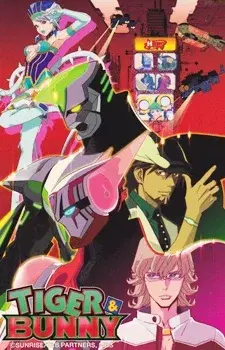
Watch this if you want superhero anime with institutional rot, disguise games, and tokusatsu iconography without the clean moral comfort of a standard hero academy story. It scratches a related itch to Tiger & Bunny’s costumed-public-spectacle angle and My Hero Academia’s suspicion of hero society, but trades aspirational growth for infiltration, resentment, and survival. The season is best for viewers who enjoy watching a hostile system get mapped from the inside: rules, ranks, weapons, publicity, and loopholes matter as much as punches. It is not the tightest power-scaling show, and its comedy can overplay the absurdity, but the appeal is watching a bright, Sunday-morning-hero aesthetic get treated like a rigged workplace thriller.
Key Characters
- SSentouin D(VA: Yuusuke Kobayashi)
D is compelling because his pettiness, rage, and refusal to stay disposable make him feel less like a chosen-one hero than a cornered worker learning how to weaponize a bad system.
- YYumeko Suzukiri(VA: Yumika Yano)
Suzukiri stands out as the series’ most slippery presence, the kind of ally whose calm competence makes every favor feel like it has a second invoice attached.
- HHibiki Sakurama(VA: Daishi Kajita)
Hibiki gives the cast its most useful moral pressure point, contrasting the show’s cynicism with someone still trying to treat justice as more than branding.
- SSousei Akabane(VA: Yuuichi Nakamura)
Akabane’s appeal comes from how thoroughly he embodies heroic charisma as a form of authority, making him memorable even before the audience knows where his limits are.
What Makes It Stand Out
- 1
Yostar Pictures produced the 12-episode TV anime, giving the adaptation a cleaner, brighter visual identity than the grimness of its power structure might suggest; online discussion specifically singled out the first four episodes for the added effect of color, sound, and animation.
- 2
The show’s action is built around movement through varied spaces rather than repeated room-bound clashes; viewer commentary has specifically praised the choreography and the fact that fights do not stay locked to one small arena.
- 3
Its genre mix is more espionage and survival than a straight superhero parody: AniList tags it at Espionage 84%, Henshin 82%, Survival 79%, and Tokusatsu 93%, which explains both its niche appeal and the frustration from viewers expecting broader comedy.
- 4
The first cour aired from April 7 to June 30, 2024, placing it squarely in the Spring 2024 season as a compact adaptation rather than a long-running weekly sentai spoof.
- 5
The production credits include Keiichi Satou as director, Takashi Igari as assistant director, Keiichirou Oochi on series composition, Gakuto Gonbei as art director, Naoto Kondou on color design, and Jun Kubota as director of photography, indicating a staff structure with separate attention to visual tone and serialized structure.
Fun Facts & Trivia
- Fun fact 1
- Original creator Negi Haruba is also widely known for The Quintessential Quintuplets, making Go! Go! Loser Ranger! a sharp genre pivot from romantic comedy to anti-superhero urban fantasy.
- Fun fact 2
- The title logo design is credited to Saya Takagi, a small but notable production credit for a series whose identity depends heavily on parodying clean, toyetic hero branding.
- Fun fact 3
- Editing is credited to both Hiroshi Okuda and Takaya Takahashi, an unusual detail worth noting on a season where pacing became one of the most debated points among viewers.
- Fun fact 4
- Reception is closely aligned across major anime databases: MyAnimeList lists it at 7.3/10 from 83,220 votes, while AniList reports 72/100 with 1,490 favorites.
- Fun fact 5
- A Hulu-focused review framed the show as a modern riff on the Japanese sentai tradition of the 1970s, while also noting that its absurd comedy can feel forced even when the anti-hero hook remains watchable.
Studios
- Yostar Pictures
![[Oshi No Ko]](/_next/image?url=https%3A%2F%2Fd111jwrw4u3bt.cloudfront.net%2Fanime-posters%2Fposter-52034.webp&w=1920&q=75)