My Wife Has No Emotion
僕の妻は感情がない (Boku no Tsuma wa Kanjou ga Nai)
- Comedy
- Romance
- Sci-Fi
- Mecha
- Episodes
- 12
- Duration
- 23 min per ep
- Aired
- Jul 2, 2024 to Sep 17, 2024
- Status
- Finished Airing
Synopsis
Takuma Kosugi is a busy office worker with little time to manage life at home, so he buys a used housekeeping robot named Mina. Efficient and dependable, she quickly becomes essential to his routine. After a long day and a few too many beers, Takuma half-jokingly asks Mina to be his wife—only for her to accept the proposal in earnest, setting them on an unexpected path of living together like a married couple.
As they settle into this new arrangement, Takuma and Mina begin sharing quiet outings and everyday experiences, from picnics to a day at the beach, and their bond steadily deepens. Yet in a world where romance between humans and robots is still viewed as strange, they have to navigate public skepticism and decide whether their relationship can truly work—and how to show others they mean it.
Otaku Consensus
My Wife Has No Emotion earns its modest but loyal following by committing to gentle domestic sci-fi instead of turning its human-robot marriage hook into ecchi comedy or melodrama. Fumihiro Yoshimura’s low-key direction and Mitsutaka Hirota’s slice-of-life pacing make the family-life material feel sincere, while Miki Sakurai’s music and Sora Tokino’s “Okaerinasai” reinforce the show’s soft, stay-at-home mood. The common criticism is equally consistent: Tezuka Productions’ visual presentation is plain, often apartment-bound, and short on the character depth or animation energy that would push it beyond a niche comfort watch.
Why You Should Watch
Watch My Wife Has No Emotion if you want Chobits’ human-and-android relationship questions without the early-2000s ecchi framing, or if you like romance anime that treat cohabitation, routine, and social discomfort as the real drama. This is not a mecha-action show despite the robot theme; it is a seinen domestic comedy built from small rituals, awkward etiquette, and the slow normalization of an unconventional household. Viewers tired of love triangles, confession delays, and shouty rom-com escalation will find its directness refreshing. Its best audience is the slice-of-life fan who values a quiet twelve-episode mood piece over spectacle, and who can accept simple visuals in exchange for a strangely earnest look at artificial intelligence, marriage, and family life.
Key Characters
- TTakuma Kosugi
Takuma is compelling less as a romantic ideal than as a lonely working adult whose practical dependence on technology gradually exposes how unprepared he is for emotional responsibility.
- MMina
Mina is the show’s central talking point: a housekeeping robot whose literalness makes the comedy work while keeping the audience focused on whether care can exist without conventional emotional expression.
What Makes It Stand Out
- 1
Tezuka Productions gives the series a deliberately modest visual identity, with reviewers noting plain character designs and a heavy reliance on Takuma’s apartment rather than elaborate sci-fi worldbuilding. That limitation became one of the show’s biggest divides: intimate for fans, visually flat for detractors.
- 2
The series composition by Mitsutaka Hirota favors domestic increments over plot escalation, using everyday couple and family-life beats to test the relationship’s social boundaries. This structure is why the show is often described as wholesome and easy to follow rather than dramatic or twist-driven.
- 3
Its genre mix is unusually literal: AniList tags Robots and Artificial Intelligence at 100%, but Marriage at 90% and Family Life at 86%, making it closer to domestic speculative fiction than a conventional robot anime. The Mecha theme is present through Mina’s nature, not through battles or engineering spectacle.
- 4
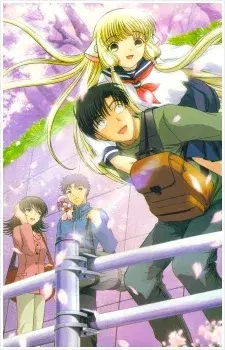
Critics repeatedly positioned it near Chobits, but with a cleaner, less ecchi approach and a more down-to-earth tone. That comparison helps define the appeal: it revisits the “can a person and an artificial being form a legitimate bond?” question through household normalcy rather than fanservice.
- 5
The opening theme “Okaerinasai” by Sora Tokino was singled out positively even in a mixed first-impression review, fitting the show’s emphasis on return, home, and routine. Miki Sakurai’s score supports the same gentle atmosphere rather than pushing the sci-fi elements into thriller territory.
Fun Facts & Trivia
- Fun fact 1
- The anime aired as a complete 12-episode summer 2024 series from July 2 to September 17, 2024, and finished with a MyAnimeList score of 6.73 from 26,189 votes. Its MAL popularity rank of #3064 is much stronger than its critical rank of #6358, reflecting a niche title that reached more viewers than its rating suggests.
- Fun fact 2
- Jirou Sugiura is credited as the original creator, while the anime adaptation was directed by Fumihiro Yoshimura with series composition by Mitsutaka Hirota and character designs by Tsuyoshi Sasaki. The production also lists Jirou Kouno as art director, Megumi Furuya as color designer, Yoshie Itou as director of photography, Yuri Tamura as editor, and Takumi Itou as sound director.
- Fun fact 3
- Tezuka Productions’ recent résumé mentioned by reviewers includes Girlfriend, Girlfriend, The Quintessential Quintuplets, and My Home Hero, which made this show’s restrained visual approach stand out even more. One early review specifically argued it looked weaker than those studio comparisons.
- Fun fact 4
- AniList users classified the series heavily around concept rather than action: Robots and Artificial Intelligence both sit at 100%, Marriage at 90%, Family Life at 86%, Heterosexual at 79%, Seinen at 77%, and Male Protagonist at 70%. The low Iyashikei tag at 10% is notable because many positive reactions still describe the experience as calming and wholesome.
- Fun fact 5
- Across web commentary, the show’s reception split into two clear camps: viewers who enjoyed its wholesome, trope-light domestic rhythm and viewers who found it dull or thinly characterized. One positive review explicitly hoped for a second season to see the “futuristic family” evolve, which captures the fanbase’s interest in continuation over spectacle.
Studios
- Tezuka Productions