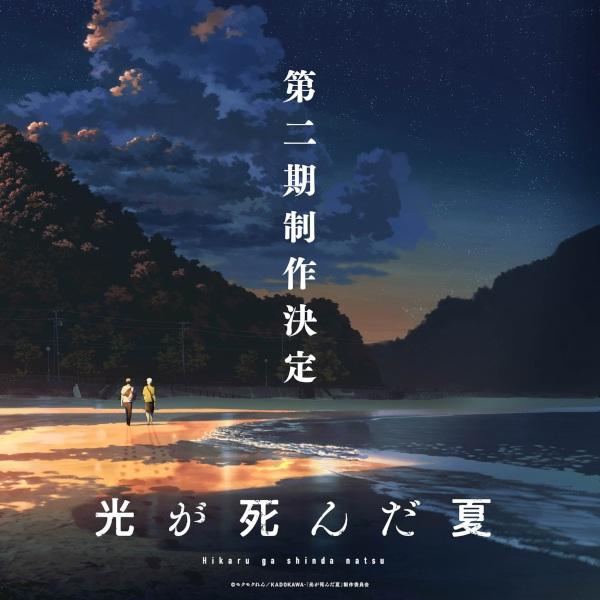
The Summer Hikaru Died
光が死んだ夏 (Hikaru ga Shinda Natsu)
- Horror
- Mystery
- Supernatural
- Mythology
- Psychological
- Urban Fantasy
- Episodes
- 12
- Duration
- 22 min per ep
- Aired
- Jul 6, 2025 to Sep 28, 2025
- Status
- Finished Airing
Synopsis
Six months after Hikaru Indou vanished in the mountains, he turns up again a week later with no memory of what happened. Yoshiki Tsujinaka can’t shake the feeling that the friend who returned isn’t the same Hikaru he knew, and when he finally confronts him, the truth surfaces: “Hikaru” reveals a monstrous form and pleads for Yoshiki’s silence, insisting he doesn’t want to kill him.
In spite of what he is, “Hikaru” carries an unsettling innocence—marveling at summer heat, rural life, and the simple sensations of moving through the world in a human body. Yoshiki, still raw with grief, chooses to hold on to this presence even if it’s built on borrowed memories, but the longer they keep the secret, the more it feels like something dangerous has followed Hikaru back down from the mountains and into their village.
Otaku Consensus
The Summer Hikaru Died landed as one of 2025’s most respected horror anime because CygamesPictures and Ryouhei Takeshita treat Mokmok Len’s material as a slow-pressure chamber, not a scare-delivery machine. Critics and viewers singled out the first episode’s goosebump-level reveal, the detailed animation, and the confidence to let some of the strongest episodes run on interpersonal unease rather than visible horror. The main caveat is built into that strength: viewers looking for constant gore or weekly shock set pieces may find the relationship-heavy middle stretch too quiet.
Why You Should Watch
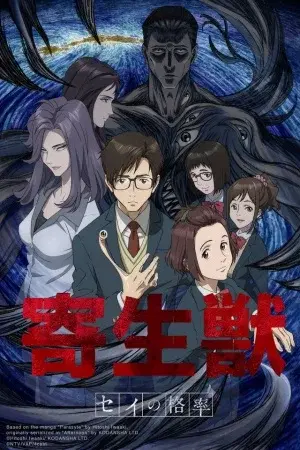
Watch The Summer Hikaru Died if you want Japanese horror that sweats, waits, and watches you back, without turning into a monster-of-the-week routine. It scratches a similar itch to Shiki’s rural dread and Parasyte’s body-horror intimacy, but its real hook is the emotional discomfort: the terror comes from affection, recognition, and the possibility that love can become complicity. The 12-episode run is compact enough to sustain its mystery, while the direction gives silence and ordinary summer textures as much weight as grotesque imagery. If you prefer supernatural anime where the scariest question is not “what is it?” but “why do I still want it near me?”, this is the 2025 title to prioritize.
Key Characters
- YYoshiki Tsujinaka
Yoshiki stands out because he is written less as a clean horror victim than as someone whose grief, suspicion, and attachment keep contradicting each other in ways fans found painfully believable.
- HHikaru Indou
Hikaru’s appeal lies in the “monster boy” tension: a familiar presence filtered through inhuman curiosity, making even gentle moments feel tender and wrong at the same time.
What Makes It Stand Out
- 1
CygamesPictures produced the 12-episode adaptation, and the series’ detailed animation was repeatedly singled out in reception as central to its oppressive atmosphere rather than mere visual polish.
- 2
Ryouhei Takeshita is credited as both director and series composition writer, giving the anime an unusually unified control over episode rhythm, reveal timing, and the balance between horror scenes and quieter relationship material.
- 3
AniList’s tag profile is unusually specific for a TV horror: Monster Boy at 97%, Rural at 95%, Tragedy at 93%, Cosmic Horror at 92%, Body Horror at 88%, Mythology at 88%, and Curses at 80%. That combination explains why the show reads less like standard ghost-story horror and more like folklore, intimacy, and existential contamination colliding.
- 4
Multiple reviews emphasized that some of the show’s strongest episodes contain little or no conventional horror, a structural choice that makes interpersonal tension part of the scare architecture instead of a break from it.
- 5
The series was also discussed internationally as a Netflix Original anime from Japan, with critics noting its genre blend of horror, slice-of-life texture, supernatural mystery, and slight LGBTQ+ elements.
Fun Facts & Trivia
- Fun fact 1
- Mokmok Len is credited as the original creator, while the anime’s core adaptation control sits with Ryouhei Takeshita, who handled both direction and series composition.
- Fun fact 2
- The character-design pipeline was broader than the headline credit suggests: Yuuichi Takahashi handled character design, with Shouko Nagasawa, Mai Watanabe, and Hiroko Saigan credited for sub-character design.
- Fun fact 3
- The production credits separate atmosphere-building roles clearly: Kouhei Honda served as art director, Yoshihiro Sono handled art design, and Ryuunosuke Ouji was credited for prop design.
- Fun fact 4
- Its database reception was consistent across major fan platforms: MAL recorded an 8.02/10 from 120,366 votes, while AniList listed an 81/100 score and 5,433 favourites.
- Fun fact 5
- Although MAL lists no formal theme category for the show, AniList users heavily tagged it with Boys’ Love at 74%, Unrequited Love at 78%, and Philosophy at 77%, reflecting how much of the conversation focused on emotional subtext rather than only supernatural mechanics.
Studios
- CygamesPictures