Cultural Exchange With a Game Centre Girl
ゲーセン少女と異文化交流 (Game Center Shoujo to Ibunka Kouryuu)
- Comedy
- Romance
- Love Status Quo
- Episodes
- 12
- Duration
- 23 min per ep
- Aired
- Jul 6, 2025 to Sep 28, 2025
- Status
- Finished Airing
Synopsis
On Valentine’s Day, young English girl Lily Baker heads to an arcade with one goal: win a stuffed toy from the claw machine. After hours of trying and coming up empty, she’s ready to call it quits—until employee Renji Kusakabe steps in, grabs the prize, and offers it to her as a small Valentine’s gesture. Lily’s cultural expectations turn the moment into something much bigger in her mind, and she takes it as a confession.
Drawn back to the arcade to see Renji again, Lily and Renji start trading a notebook, using it to share thoughts about games, daily life, and the differences between their cultures. What begins as a friendly exchange becomes a steady routine of arcade visits and growing familiarity—while Lily, convinced romance is on the table, sets her sights on making Renji fall for her.
Otaku Consensus
Cultural Exchange With a Game Centre Girl lands as a modest, comfort-first summer 2025 romance: critics and viewers respond best to Toshihiro Kikuchi’s relaxed slice-of-life pacing, the early language-barrier comedy, and Lily’s incremental social growth around the arcade. The recurring complaint is that its most distinctive hook weakens over time, with reviews noting that English dialogue and the exchange notebook become less central while the show settles into a narrower, more conventional cute-romance routine. Its reception reflects that ceiling: amiable enough for iyashikei-romance viewers, but too visually plain and structurally lightweight to rise above mid-tier status.
Why You Should Watch
Watch this if you want an arcade-flavored romance that stays soft, low-conflict, and emotionally safe rather than chasing melodrama. It scratches a gentler version of the Hi Score Girl itch, less about competitive gaming history and more about everyday contact, language awkwardness, and the ritual of returning to the same hangout. Viewers who enjoy love-status-quo comedies will get the most out of it: the appeal is in repeated small interactions, not big romantic escalation. It is also a good fit if you like iyashikei shows with a slightly international angle, especially early on when the series uses English, Japanese study, and notebook communication as actual texture. Skip it if you need sharp visual direction, deep cultural analysis, or a broad tour of gaming culture.
Key Characters
- LLily Baker
Lily is the show’s strongest source of charm because her Japanese improvement, cultural misreadings, and earnest persistence give the comedy a visible learning curve rather than just a repeating gag.
- RRenji Kusakabe
Renji functions as the calm center of the series, with fan discussion often focusing on how his understated kindness keeps the romance in a gentle love-status-quo lane.
What Makes It Stand Out
- 1
The series foregrounds two unusually explicit romance tags for a light comedy: Age Gap at 87% and Language Barrier at 83% on AniList, making its hook more specific than the average arcade rom-com setup.
- 2
Early episodes use English dialogue and a shared notebook as structural devices for communication, a detail reviewers praised before noting that both elements become less prominent later in the run.
- 3
Nomad produced the 12-episode adaptation as a complete Summer 2025 broadcast, airing from July 6 to September 28, 2025.
- 4
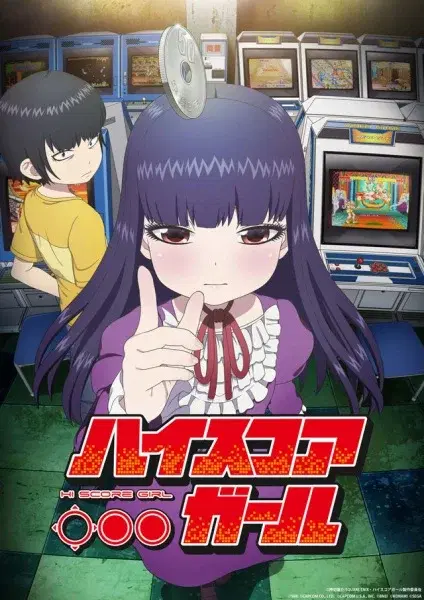
The show’s gaming identity is intentionally narrow: reviews describe the arcade as a cozy social base more than a broad exploration of video game culture, which separates it from the more historically game-obsessed Hi Score Girl comparison raised by The Outerhaven.
- 5
Yukiko Shigemitsu is credited for both costume design and color design, a notable production overlap for a series whose AniList tags include Cosplay at 60%.
Fun Facts & Trivia
- Fun fact 1
- The anime is based on Hirokazu Yasuhara’s original work, with Toshihiro Kikuchi directing and Yasunori Yamada handling series composition.
- Fun fact 2
- Rikiya Okano served as character designer, while the background side of the production lists Yuu Nishiyama as art director and Kenta Masuda on art design.
- Fun fact 3
- Critical reception was split across outlets: Bubbleblabber called it sweet and comforting, Reasons to Anime found it serviceable but disappointed by the fading language-exchange element, and Anime News Network graded both sub and dub harshly.
- Fun fact 4
- Its aggregate reception sits in the same modest band across databases: MAL lists a 6.64 score from 12,852 votes, AniList lists 64/100 with 193 favourites, and IMDb shows 6.3/10.
- Fun fact 5
- Sound direction was handled by Yasunori Ebina, while Anime News Network singled out the music as one of the less criticized production elements despite giving the overall series a low grade.
Studios
- Nomad