Hi Score Girl
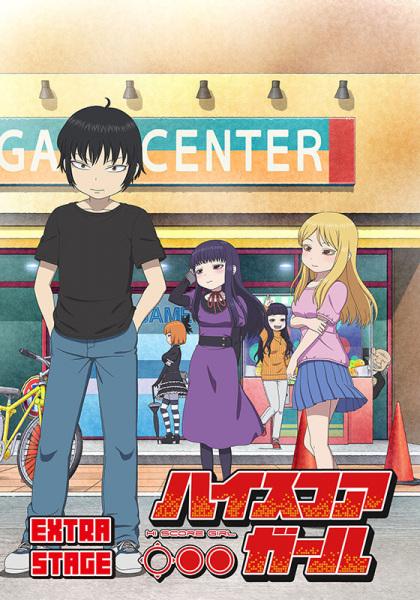
ハイスコアガール (High Score Girl)
- Comedy
- Romance
- Love Polygon
- School
- Video Game
- Episodes
- 12
- Duration
- 24 min per ep
- Aired
- Jul 14, 2018 to Sep 29, 2018
- Status
- Finished Airing
Synopsis
In 1991, arcade games are the center of youth culture, even as the idea of becoming a professional gamer still feels like an impossible long shot. Sixth-grader Haruo Yaguchi lives for the local arcade scene, where his skill has earned him a reputation—and a healthy dose of confidence. That pride takes a sudden hit when his classmate Akira Oono soundly defeats him in *Street Fighter II*.
Akira seems untouchable: wealthy, attractive, and academically gifted. Haruo has never cared about any of that, convinced that his one unquestioned strength is gaming. Faced with a rival who can match and surpass him, he’s torn between resentment and the thrill of finally finding someone who can truly challenge him on equal footing.
Otaku Consensus
Hi Score Girl earns its strong niche reputation, reflected in its 7.74 MAL score, 75/100 AniList score, and 7.9 IMDb rating, by letting Yoshinobu Yamakawa’s direction and Tatsuhiko Urahata’s series composition turn arcade obsession into character language rather than decoration. Critics and fans respond most to its sharp shift from gag-driven school comedy into earnest drama-romance over only a few episodes, while the recurring caveat is that J.C.Staff’s full-CG presentation can be a visual hurdle before the emotional timing clicks.
Why You Should Watch
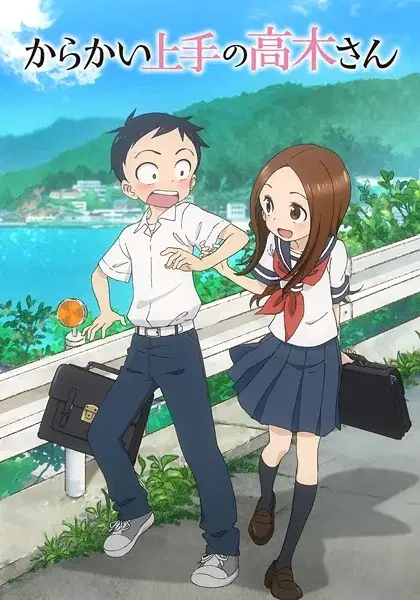
Watch Hi Score Girl if you want a romance built on rivalry, rhythm, and social awkwardness without the usual harem bloat or sugary confession treadmill. It scratches some of the same itch as Teasing Master Takagi-san in its competitive push-pull, but trades classroom teasing for the tactile culture of early-’90s arcades and the bruised pride of kids who communicate better through play than words. The appeal is not just nostalgia; it is how games become a measuring stick for insecurity, affection, class difference, and growing up. Viewers who bounced off glossy rom-com wish fulfillment may appreciate its oddball seinen edge, slapstick abrasiveness, and willingness to let childish behavior stay genuinely childish before it becomes moving.
Key Characters
- HHaruo Yaguchi
Haruo is compelling because the show treats his gamer identity as both a talent and a flaw, making his growth feel tied to how he learns to read people as carefully as he reads a match.
- AAkira Oono
Akira stands out as an ojou-sama character whose presence is conveyed less through speeches than through timing, reactions, slapstick, and the pressure she puts on everyone around her.
What Makes It Stand Out
- 1
J.C.Staff produced the season as a full-CGI TV anime, a conspicuous choice for a school romantic comedy and one reflected in AniList’s 89% Full CGI tag. The result gives the series a toy-like physicality that makes its slapstick and game-cabinet body language feel distinct from standard 2D rom-coms.
- 2
The series uses gaming as structure rather than garnish: reviews specifically note how it moves from comedy into drama and romance within a few episodes, making the emotional escalation feel like progression through increasingly demanding stages.
- 3
Youko Shimomura is credited for the music, a particularly apt staff choice for an anime so tied to arcade-era game culture. Her involvement gives the soundtrack a production link to the very medium the series is analyzing emotionally.
- 4
Tatsuhiko Urahata’s series composition keeps the 12-episode season tightly focused, avoiding the sprawling detours common to school romance adaptations. That compact pacing is a major reason the tonal shift from gag comedy to investment in the cast lands quickly.
- 5
The show’s tag profile is unusually specific: Video Games at 99%, Love Triangle at 86%, Urban at 84%, Ojou-sama at 84%, and Seinen at 62%. That combination signals a romance that is more socially textured and niche-culture-driven than its broad Comedy/Romance genre labels suggest.
Fun Facts & Trivia
- Fun fact 1
- Hi Score Girl is based on Rensuke Oshikiri’s original work and was adapted by J.C.Staff as a 12-episode TV season airing from July 14, 2018 to September 29, 2018.
- Fun fact 2
- The production credits list Yuusuke Suzuki as CG Director and Shingo Fukuyo as Director of Photography, underlining that the show’s CGI was not a minor embellishment but a core production pipeline.
- Fun fact 3
- Etsuko Yakushimaru is credited for theme song performance, adding an offbeat pop sensibility to a series already built around an unusual mix of retro gaming, slapstick, and romantic tension.
- Fun fact 4
- Its audience footprint is larger than its niche premise suggests: MAL lists it with 148,052 votes, a 7.74 score, rank #1318, and popularity #996, while AniList records 1,971 favourites.
- Fun fact 5
- The web reception is broadly positive but not unqualified: reviews praise the feeling of childhood immersion and Haruo’s development, while also noting that the series is strong despite visible issues, most commonly its divisive CG look and oddball rom-com approach.
Studios
- J.C.Staff