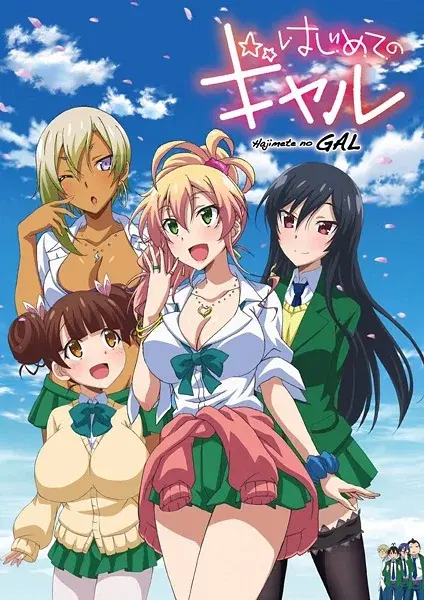
Yamada's First Time: B Gata H Kei
B型H系 (B-gata H-kei)
- Comedy
- Ecchi
- Romance
- School
- Episodes
- 12
- Duration
- 24 min per ep
- Aired
- Apr 2, 2010 to Jun 18, 2010
- Status
- Finished Airing
Synopsis
First-year high schooler Yamada is widely seen as gorgeous and seemingly flawless, yet she’s fixated on an unusual personal objective: sleeping with 100 men before graduation. Her levelheaded best friend, Miharu Takeshita, quickly points out the obvious problem—Yamada has no experience with boys at all.
Behind the bravado is a private insecurity, leaving Yamada convinced her first partner should be another virgin who won’t intimidate her. After a chance meeting, she chooses the timid, ordinary Takashi Kosuda—an aspiring photographer known more for his kindness than his confidence—as her target. As Yamada juggles awkward advances, competition for Kosuda’s attention, and her own impulses, her “plan” starts to blur with something more genuine the closer they become.
Otaku Consensus
B Gata H Kei lands as a divisive but memorable 2010 school ecchi-romcom: Yuusuke Yamamoto’s brisk direction and Satoru Nishizono’s 12-episode structure make it easy to marathon, while HAL Film Maker keeps the tone lighter than the premise suggests. Its strongest defenders point to the fast pacing, female-led embarrassment comedy, and unexpectedly gentle romance mechanics; the most common criticism is that the humor can feel repetitive or thin when the central gag does not connect.
Why You Should Watch
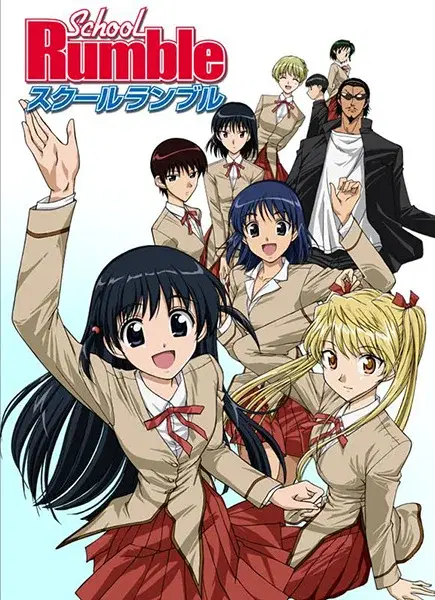
Watch B Gata H Kei if you want an ecchi school comedy where the joke is not conquest but panic, ego, and romantic inexperience colliding in public. It scratches a similar itch to School Rumble’s misunderstanding-driven chaos, but with a more openly sexual early-2010s seinen edge; it also lands closer to a compact rom-com than the harem power fantasy its premise may imply. The 12-episode length matters: the series moves quickly, rarely getting trapped in filler, and reviews that defend it consistently praise how marathonable it is. It is especially suited to viewers who like tsundere comedy, female-protagonist embarrassment humor, and awkward first-romance energy without wanting something as mean-spirited or explicit as the setup sounds.
Key Characters
- YYamada
Yamada is the series’ engine because the comedy runs on the gap between her glamorous, tsundere self-image and the total lack of practical confidence underneath it.
- TTakashi Kosuda
Takashi Kosuda stands out less as a harem lead than as a soft-spoken counterweight, with his photography interest giving the romance a quieter observational texture.
- MMiharu Takeshita
Miharu Takeshita functions as the grounded best-friend filter, turning Yamada’s grandstanding into comedy by immediately puncturing the logic behind it.
What Makes It Stand Out
- 1
HAL Film Maker produced the anime as a complete 12-episode TV run airing from April 2 to June 18, 2010, giving it the compact feel reviewers often cite as a reason it plays well in one or two sittings.
- 2
The adaptation is built around a female protagonist rather than the usual male wish-fulfillment center; AniList’s tag weighting reflects that clearly, with Female Protagonist at 92% and Tsundere at 76%.
- 3
The creative staff combines Yuusuke Yamamoto as director, Satoru Nishizono on series composition, and Kazuyuki Fudeyasu on script work, which helps explain the show’s emphasis on rapid gag escalation over long dramatic arcs.
- 4
Music is credited to Hitoshi Fujima, Junpei Fujita, and Elements Garden, placing the series’ sound in the hands of composers associated with polished pop-anime arrangement rather than throwaway sitcom scoring.
- 5
Its reception profile is unusually lopsided: despite a modest MAL score of 6.82 and rank of #5807, it sits at MAL popularity #666 with 227,936 votes, marking it as a widely sampled title with sharply split reactions.
Fun Facts & Trivia
- Fun fact 1
- Youko Sanri is credited both as the original creator and for the original character design, so the anime’s core visual identity is directly tied to its source author rather than being wholly reinterpreted for TV.
- Fun fact 2
- AniList records a 64/100 score and 693 favourites, closely matching the broader mixed reception seen in reviews that call it either a breezy rom-com or a comedy without enough staying power.
- Fun fact 3
- The AniList tag mix is more specific than the basic genre labels suggest: alongside Comedy, Ecchi, Romance, and School, it carries Photography at 73%, Seinen at 72%, Parody at 60%, Ojou-sama at 60%, and Gods at 40%.
- Fun fact 4
- Review coverage repeatedly notes that the series is less raunchy in execution than its headline premise implies, with several critics framing it as lighthearted romantic comedy rather than pure shock-value ecchi.
Studios
- HAL Film Maker