Sister Princess
シスター・プリンセス
- Comedy
- Drama
- Romance
- Harem
- Episodes
- 26
- Duration
- 23 min per ep
- Aired
- Apr 4, 2001 to Sep 26, 2001
- Status
- Finished Airing
Synopsis
Wataru Minakami, an honor student, misses out on his preferred high school after a computer error derails his entrance exam results. Soon after, he learns he’s been admitted to Stargazer Hill Academy, located on the enigmatic Promised Island, and is sent there at his father’s urging.
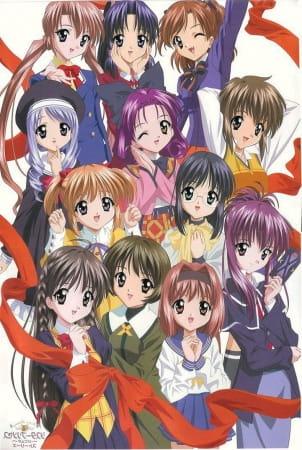
No sooner does Wataru arrive than he’s surrounded by twelve bright, endearing girls—each insisting she’s his younger sister. As he begins to navigate life on the island and form bonds with his unexpected “siblings,” questions emerge about the circumstances that brought them all to Promised Island in the first place.
Otaku Consensus
Sister Princess endures less as a universally loved romance than as a revealing artifact of early-2000s bishoujo TV: its 6.38 MAL score and 60/100 AniList score match a show whose sincerity, soft Zexcs presentation, and patient two-cour ensemble format appeal strongly to genre historians and character-archetype devotees. Its chief liability is also its identity: the 26-episode harem/family-life structure can feel repetitive, and the incest-coded framing remains the barrier that keeps many viewers from embracing its comedy and sentiment.
Why You Should Watch
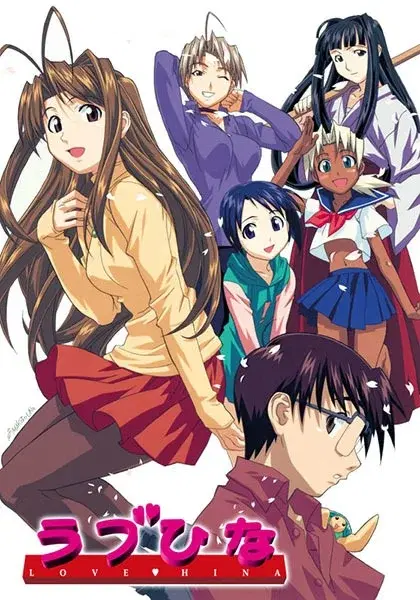
Watch Sister Princess if you want a turn-of-the-millennium harem series without the modern escalation of meta jokes, battle elements, or constant genre deconstruction. It scratches a neighboring itch to Love Hina’s early-2000s harem boom and To Heart’s gentle character-route atmosphere, but its appeal is more archival: Naoto Tenhiro’s designs, Sakurako Kimino’s character-first concept, and Zexcs’ soft TV finish preserve a very specific era of bishoujo media. The show is best for viewers who enjoy comparing archetypes, vocal performances, and old-school romantic comedy rhythms across a large ensemble. If you need tight plotting or aggressive payoff, it will test you; if you want earnest family-life melodrama packaged as harem comfort viewing, it is unusually pure in its commitment.
Key Characters
- WWataru Minakami(VA: Kenji Nojima)
Wataru is a notably passive harem lead whose honor-student anxiety makes him function less like a conqueror and more like a viewer surrogate being pulled through the franchise’s emotional catalog.
- KKaren(VA: Natsuko Kuwatani)
Karen is the franchise’s emblematic little-sister archetype, remembered for setting the series’ tone of direct, unironic affection.
- SSakuya(VA: Yui Horie)
Sakuya gives the ensemble its more glamorous romantic charge, standing out as one of the sisters who makes the series’ harem and family-life labels collide most visibly.
- KKaho(VA: Hisayo Mochizuki)
Kaho brings a bright, energetic contrast to the softer sentimental material, making her one of the easier entry points for viewers who prefer comedy over melodrama.
What Makes It Stand Out
- 1
The anime is a full two-cour 26-episode TV production, airing from April 4 to September 26, 2001, which gives it a slower ensemble rhythm than many later single-cour harem adaptations.
- 2
Zexcs handled the animation during the studio’s early years, and the series reflects an early-digital TV look built around readable character art rather than elaborate action staging.
- 3
The adaptation keeps the franchise’s original creative identity visible: Sakurako Kimino is credited for the original story, while Naoto Tenhiro’s original character designs are adapted for animation by Yasunari Nitta.
- 4
Its database tag profile is unusually specific for a romance-comedy harem: AniList marks Female Harem at 95%, Incest at 73%, Ensemble Cast and Family Life at 70%, plus Robot and Real Robot tags that point to the show’s occasional mechanical oddities.
- 5
The production credits separate oversight across several roles, with Matsuo Asami as chief director, Kiyotaka Oohata directing episodes 1–12, Toshimichi Ootsuki as chief supervisor, and Masaharu Amiya managing series composition.
Fun Facts & Trivia
- Fun fact 1
- Sister Princess originated as a Dengeki G’s Magazine reader-participation bishoujo project before becoming a TV anime, which helps explain its emphasis on discrete character appeal rather than conventional romantic competition.
- Fun fact 2
- Naoto Tenhiro’s original designs are central to the franchise’s identity, and the anime’s staff explicitly credits both character design and additional design works, including Yasunari Nitta, Hideki Hashimoto, and Tadashi Shida.
- Fun fact 3
- The show’s reception numbers place it firmly in cult territory rather than mainstream classic status: it sits at 6.38/10 on MyAnimeList with 9,757 votes, MAL rank #8173, and popularity #4777.
- Fun fact 4
- AniList records only 47 favourites for the series, a tiny number for a 26-episode TV anime from a major bishoujo-media franchise, underscoring how niche its active modern fandom has become.
- Fun fact 5
- The credited staff structure is unusually layered for a gentle harem comedy, listing a chief director, director, assistant director, chief supervisor, series composer, character designer, and two design-works credits.
Studios
- Zexcs
No community data yet. Be the first to add Sister Princess to your list!
![Baby Princess 3D Paradise 0 [Love]](/_next/image?url=https%3A%2F%2Fd111jwrw4u3bt.cloudfront.net%2Fanime-posters%2Fposter-10196.webp&w=1920&q=75)